Ch. 1free to read
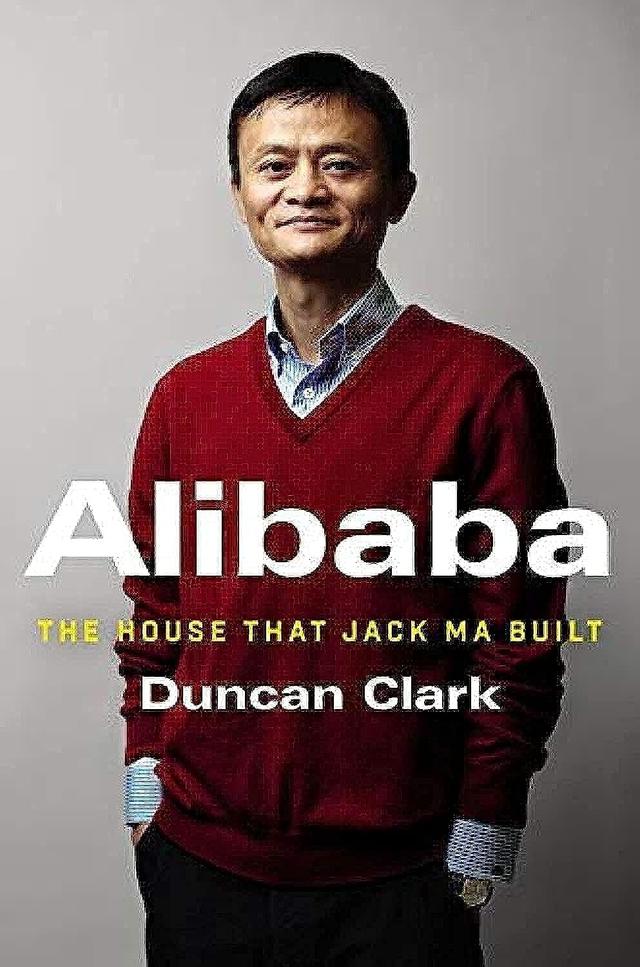
Alibaba
What It’s About
A captivating insider account of how a teacher built one of the world’s most valuable companies, rivaling Walmart and Amazon, and how he forever transformed the global economy.
Three Key Ideas
The Iron Triangle Model
Alibaba's dominance rests on three mutually reinforcing pillars: an asset-light marketplace, an orchestrated logistics network, and an escrow-based payments system.
Culture as Competitive Moat
Jack Ma built a quasi-civilization inside Alibaba, with martial-arts nicknames, mass weddings, and shared values that kept people loyal through years of losses.
Constraints Drive Innovation
Having no money, no technology, and no plan forced Alibaba into a platform model that turned poverty into structural advantage over inventory-heavy Western rivals.
Read a Sample
In the autumn of 2014, a fifty-year-old former English teacher walked onto the floor of the New York Stock Exchange for the largest stock market flotation in history. Alibaba raised nearly twenty-two billion dollars that day, and twenty-five billion once the underwriters sold extra shares. When trading began shortly before noon, the shares jumped thirty-six percent. By the end of the week, Jack Ma was the richest person in China. He was also a man who still cheerfully tells audiences that he doesn't understand how coding works.
Duncan Clark's book is the story of how that happened. But it's more useful than a billionaire biography. Clark first met Jack Ma in the summer of 1999, when Alibaba was eighteen people working out of a third-floor apartment in Hangzhou. You could count the cofounders by the toothbrushes jammed into the mugs by the sink. Clark turned down the chance to buy a few hundred thousand shares at thirty cents each, a decision he calculates has cost him about thirty million dollars. He spent the next two decades watching from unusually close range as Jack built the platform. It now handles nearly two-thirds of every parcel delivered in China and reaches more than four hundred million buyers a year. What follows is the story of that company. It's also a field guide to how modern China actually works. And it's a master class in the skills you need to build something colossal in a market that everyone else keeps getting wrong.
There are a small number of lessons to take from this story, and three of them are worth carrying from the very start. The first is that Alibaba's poverty shaped it. In Jack's own phrasing, the company began with no money, no technology and no plan, and because it couldn't afford to own inventory, it built a market instead. The second is that the people who win in an unfamiliar market refuse to import the wrong template. They start from what local buyers, sellers and regulators actually do and want. In China, that reality includes the state, a constant and sometimes invisible third partner. The third is a line Jack uses to onboard new hires: today is brutal, tomorrow is more brutal, but the day after tomorrow is beautiful. Alibaba built a culture around that line, one that could lose money for years and still keep showing up.
Who It’s For
- Anyone who wants to understand how China's internet economy actually works from the inside.
- Anyone who is building a marketplace or platform and wants a real-world blueprint for rapid scaling.
- Anyone who is studying how company culture can substitute for capital in sustaining a business through crises.
- Anyone who wants to understand why Western tech companies keep failing when they enter unfamiliar markets.
About the Author: Duncan Clark
Duncan Clark is a British investment adviser and author based in Beijing who has advised technology companies and investors in China for more than two decades. He founded BDA China, an advisory firm focused on the Chinese technology and telecommunications sector.
Clark first met Jack Ma in 1999 when Alibaba was still eighteen people working out of a Hangzhou apartment, giving him an unusually close vantage point on the company's entire rise. His long-standing access to Alibaba's founders and the broader Chinese internet industry shapes the book's authority and detail.