Ch. 1free to read
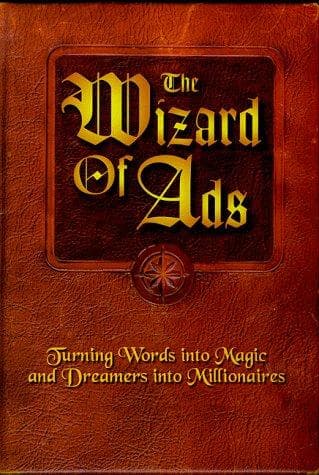
The Wizard of Ads
What It’s About
The product itself rarely wins. What sells is the story people want to tell about it. Drawing from thirty years writing radio ads, Roy H. Williams discovered a simple truth: people's attention isn't captured by volume, but by something genuinely interesting. Learn why emotions decide first and logic follows, and how to speak to what your audience actually wants—not what they claim to need.
Read a Sample
The Wizard of Ads: Summary
The mousetrap nobody wanted
A trap manufacturer named Chester M. Woolworth once decided to build the perfect mousetrap. He built it. The old trap was flimsy and single-use. Woolworth's was durable, cleaner, a cleverer piece of engineering, and it cost more. Then he sat back and waited for the line to form outside his gate.
Nobody came. It turned out that nobody wants to wash a dead mouse out of an expensive device when the cheap one can be thrown away with the mouse still in it. The better product failed. The worse one stayed on the market.
Everybody knows the line people quote at moments like this: build a better mousetrap and the world will beat a path to your door. It is attributed to Ralph Waldo Emerson. Except Emerson never wrote it. An ad writer named Elbert Hubbard later claimed he had composed it and hung Emerson's name on it. But the line was already in print under Emerson's name in 1889, seven years after the philosopher died. The real Emerson line sits in his journal, February 1855, and it reads like a market price list: corn, wood, boards, pigs, chairs, knives, crucibles, church organs. The famous version cuts the whole inventory, keeps one image, and moves the strongest words to the end.