 English
 Magyar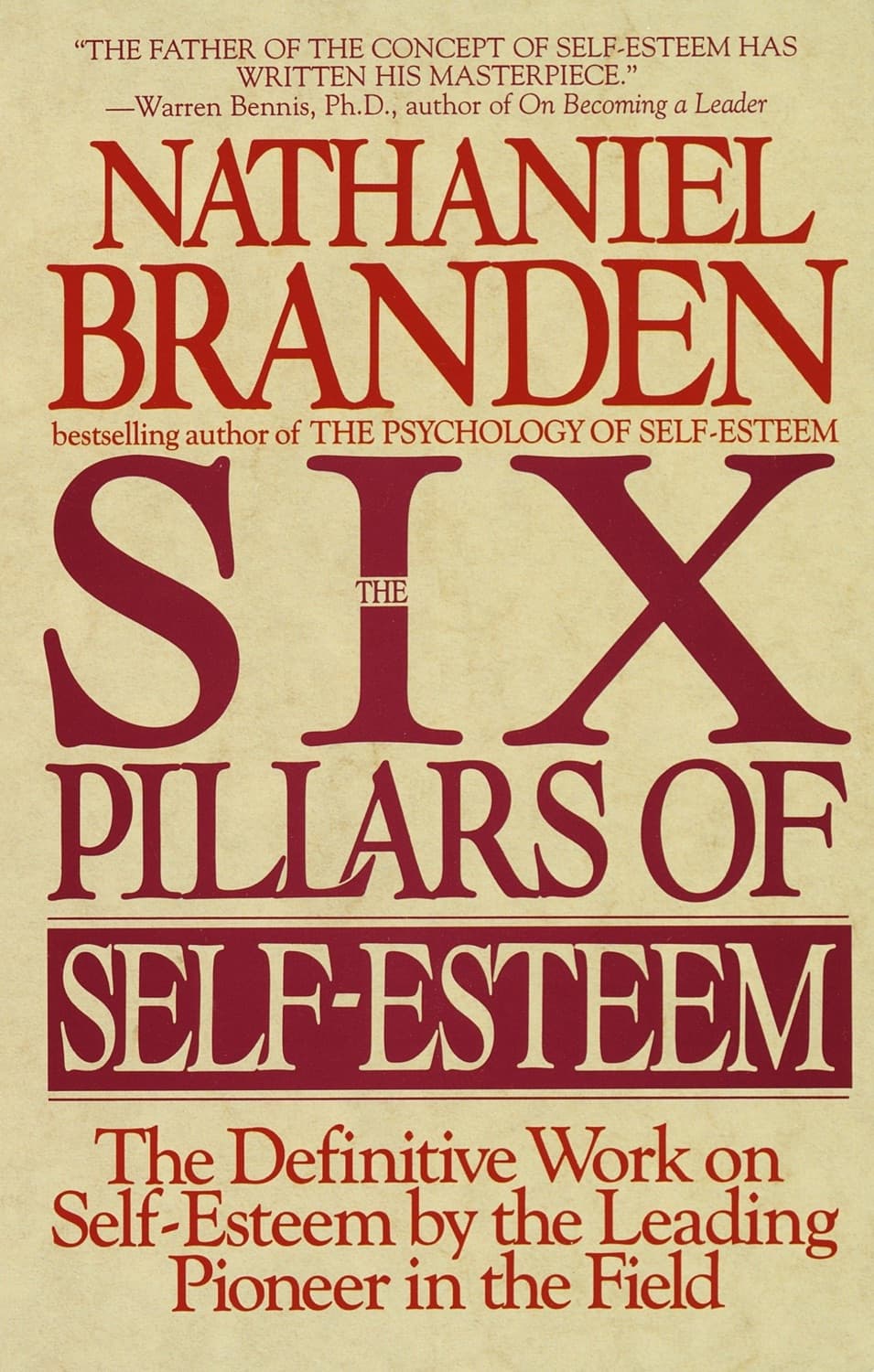
The Six Pillars of Self-Esteem
Nathaniel Branden
Free download · 500+ book summaries
What is The Six Pillars of Self-Esteem about?
The most rigorous book ever written about self-esteem. Psychotherapist Nathaniel Branden argues self-esteem is built through six daily practices, not affirmations: living consciously, self-acceptance, self-responsibility, self-assertiveness, living purposefully, personal integrity. The clinical foundation of the entire self-help genre.
Key ideas of The Six Pillars of Self-Esteem
Two Components of Self-Esteem
Genuine self-esteem requires both self-efficacy (trust in your own mind) and self-respect (the conviction that your life and happiness are worth pursuing).
Six Actionable Daily Practices
Self-esteem is built through six repeatable practices: living consciously, self-acceptance, self-responsibility, self-assertiveness, living purposefully, and personal integrity.
Pseudo-Self-Esteem and Its Costs
Narcissism, empty praise programs, and status-seeking are counterfeits that mimic self-esteem without building its internal foundation, leaving people fragile under pressure.
Read an excerpt from the summary
The Six Pillars of Self-Esteem — Nathaniel Branden
Patricia was in her mid-twenties when she came to Branden's therapy practice. She had spent eight years with a man who, in his better moments, did love her -- but also regularly interrupted her, mocked her ideas, and blamed her when things went wrong in his own career. What struck Branden most was not the anger she brought into the room, not the humiliation, not even the fear. She brought certainty. "There's something wrong with me," she kept repeating. She was not there to analyze what the man had done. She was there to understand what she had done wrong. The only explanation she would accept for what had happened was one that lived inside herself.
Branden had heard variations of this pattern for decades. Different people, different backgrounds, different presenting symptoms -- the common denominator always the same. At the deepest level, the person did not believe they were entitled to live well, to think clearly, to claim what they wanted. This was not depression, not anxiety in the clinical sense. It was something more foundational: a deficit of self-esteem.
He first began working on the problem consciously in 1954, at twenty-four years old, studying psychology at New York University while running a small therapy practice. He went to the library looking for existing work on the subject. The indexes of psychology books did not contain the term. Freud had traced low self-regard to the child's discovery of its inability to sexually possess a parent. Alfred Adler connected feelings of inferiority to physical insufficiency and the simple fact that adults are bigger and stronger. Neither satisfied Branden. What he observed in clinical work was more universal and more fundamental: a continuous inner tribunal from which no one was excused, an inescapable self-judgment that either supported or undermined every choice and relationship a person had.
Like it?
Continue in the appWho is it for?
- Anyone who suspects their self-sabotage at work or in relationships runs deeper than habits or bad luck.
- Anyone who wants a rigorous psychological framework for self-esteem, not affirmations or feel-good slogans.
- Anyone who leads a team and wants to understand how their own inner foundation shapes the people around them.
- Anyone who has achieved success on paper but carries a persistent, quiet fear of being found out.
About the author: Nathaniel Branden
Nathaniel Branden (1930-2014) was a psychotherapist and the central figure in the modern self-esteem movement. He published his first major work on the subject, The Psychology of Self-Esteem, in 1969, at a time when the word barely appeared in psychology indexes. Over the following decades he developed his own therapeutic methods and wrote over a dozen books on self-esteem and psychological health.
In his early career Branden was closely associated with Ayn Rand, serving as her intellectual protege and the main organizer of the Objectivist movement in North America. The relationship lasted eighteen years and ended badly. He later wrote candidly about how that experience illustrated his own failures of self-assertiveness and personal integrity, making The Six Pillars of Self-Esteem as much a personal reckoning as a clinical argument.
Read it in 47 minutes
The summary of The Six Pillars of Self-Esteem and 500+ more books await in the BookBase app.