 English
 Magyar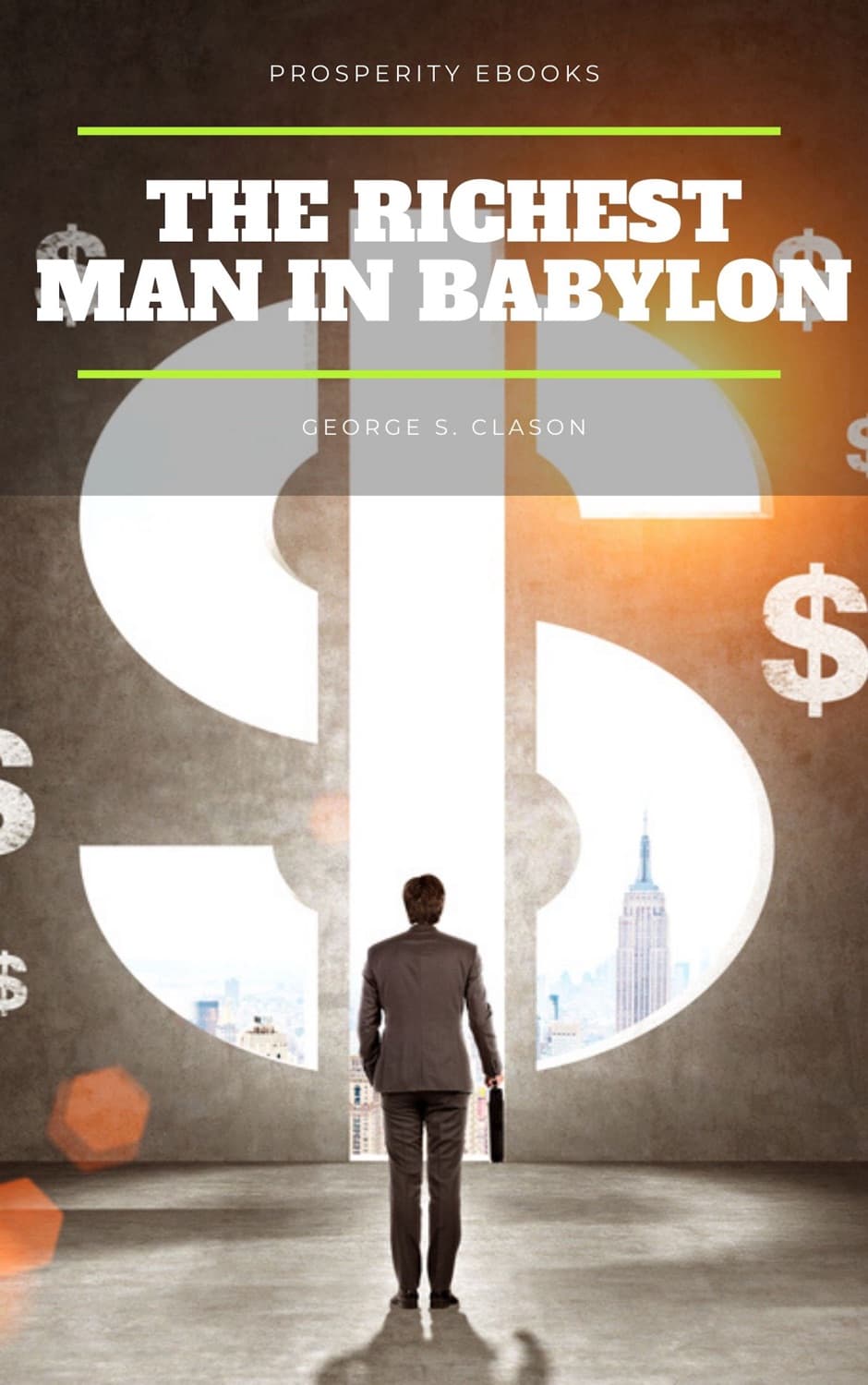
The Richest Man in Babylon
George S. Clason
Free download · 500+ book summaries
What is The Richest Man in Babylon about?
Personal finance, told as ancient parables. George Clason's 1926 book frames timeless money principles (pay yourself first, make your gold work, control your expenses) as stories from ancient Babylon. The classic that quietly underpins almost every modern personal-finance bestseller.
Key ideas of The Richest Man in Babylon
Pay Yourself First
Saving one-tenth of every paycheck before spending anything else is the single foundational habit from which all personal wealth grows.
Make Money Work for You
Saved coins must be put to work through sound investments so their earnings generate further earnings over time.
Guard Against Bad Advice
Never take financial advice from someone without genuine experience in the matter, because ignorant counsel is paid for with your own savings.
Read an excerpt from the summary
The Richest Man in Babylon
*George S. Clason*
It is late afternoon in Babylon, and Bansir the chariot-builder is sitting on the low wall that borders his modest courtyard, staring at an unfinished chariot in the dust below. He has been sitting there for an hour. Maybe two. The chisel is in his hand but the chisel has not moved, because something worse than laziness has overtaken him -- a slow, creeping awareness that has been trying to surface for years and has finally broken through. His wife glances at him from the doorway. Her eyes flick to the nearly empty food jar and back to him. She says nothing. She does not need to.
Kobbi the musician appears at the gate, his lyre slung over one shoulder, his face carrying that particular expression of a man who is about to ask for something he already suspects he cannot have. He needs two shekels. Just until after the nobleman's feast, he says. Just for a few days. Bansir looks at him for a long moment and says quietly that two shekels would be his entire fortune. Kobbi sits down on the wall beside him.
Two old friends. Two skilled craftsmen. Two men who have worked every day of their adult lives in the richest city the ancient world has ever known. And between them, not enough coin for a decent meal.
They sit and watch a line of water bearers shuffle past, slaves bent under heavy goatskins, faces empty, feet raising small clouds of dust. Kobbi is the one who finally says it out loud. "We are no better off than these men. We are free -- and we have nothing." They have earned good money across the years. They have built reputations. They have improved their crafts. And somehow, always, at the end of every month, the purse is as empty as it was at the beginning.
Like it?
Continue in the appWho is it for?
- Anyone who earns a steady income but finds their purse just as empty at the end of every month as at the start.
- Anyone who wants to understand the core principles of personal finance through engaging, memorable stories rather than dry instruction.
- Anyone carrying debt who needs a practical, step-by-step framework for paying it off while still building savings.
- Anyone who has let promising opportunities pass by waiting for certainty that never arrives.
About the author: George S. Clason
George S. Clason was an American author and businessman best known for this 1926 collection of parables set in ancient Babylon. He originally published the stories as pamphlets distributed through banks and insurance companies.
Clason drew on the actual archaeological record of Babylon, where excavators found hundreds of thousands of clay tablets recording loans, contracts, and repayment schedules. His insight was that the financial anxieties of ancient Babylonians and modern readers are essentially the same.
Read it in 44 minutes
The summary of The Richest Man in Babylon and 500+ more books await in the BookBase app.