 English
 Magyar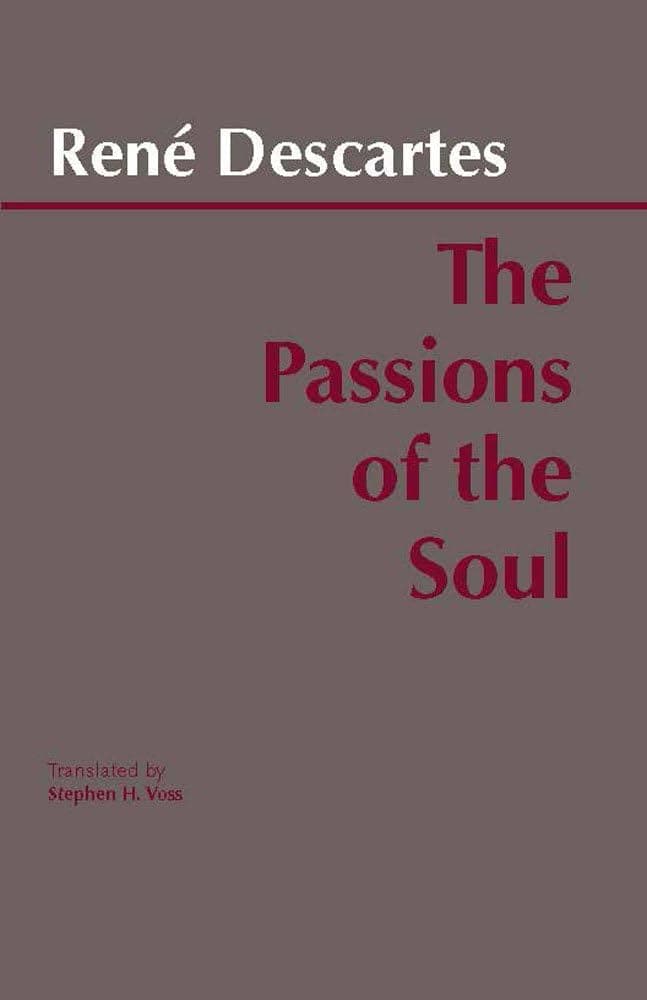
The Passion of the Soul
René Descartes
Free download · 500+ book summaries
What is The Passion of the Soul about?
Descartes' last philosophical book, Les Passions de l'Ame (The Passions of the Soul), was written in French and printed in the Netherlands, then published in Amsterdam and Paris in 1649. It seems that the Parisian release was organized by a "friend," whose anonymous letters and Descartes' responses serve as the preface.
Key ideas of The Passion of the Soul
Body as Emotional Machine
Descartes shows how animal spirits, a fine fluid in the nerves, produce every passion without any conscious direction from the soul.
Six Primary Passions
Wonder, love, hatred, desire, joy, and sadness are the root emotions from which every other feeling is built or derived.
Generosity as Master Virtue
True self-command comes from recognizing that only the free use of your own will is genuinely yours, and resolving to use it well.
Read an excerpt from the summary
A Mathematician Writes About Feelings
Picture a man at his wife's funeral. His face is wet, his chest heaves, and everyone around him sees a husband undone by grief. Yet Descartes asks us to imagine something stranger. In the deepest part of that same man's soul, a quiet joy may be stirring at the very moment his body weeps. The sadness is genuine. So is the joy. They sit side by side, one belonging to the body's commotion, the other to something the soul has worked out for itself. That single image — sorrow and gladness lodged in one person at once — is the puzzle this book sets out to solve.
It is an odd subject for René Descartes. He made his name with geometry and with a method of doubt so severe that he was willing to question whether the world existed at all. He is the man who decided he could be sure of only one thing to start with: that he was thinking. So why would a philosopher of pure reason spend his final book on the wet, messy, irrational business of human emotion?
The short answer is a princess. In the years before he wrote this, Descartes carried on a long correspondence with Elisabeth of Bohemia, a sharp and persistent thinker who kept pressing him on the question he least wanted to face. If the mind is one kind of thing and the body is a completely different kind of thing, how on earth do they touch? How does a decision, which has no weight and takes up no space, move an arm made of flesh? And how does a stubbed toe, which is pure flesh, produce the felt sting of pain in something immaterial? Elisabeth would not let it go, and to his credit, neither would he. *The Passions of the Soul*, published in 1649, just months before he died in the cold of a Swedish winter, is in large part his attempt to give her an honest answer.
Like it?
Continue in the appWho is it for?
- Anyone who wants to understand where emotions come from and how the body produces them.
- Anyone who struggles with feelings that override their better judgment and wants practical tools for self-mastery.
- Anyone interested in the history of philosophy and how Descartes bridged reason and human emotion.
- Anyone curious about what a rigorous thinker has to say about love, anger, wonder, and the good life.
About the author: René Descartes
René Descartes (1596-1650) was a French philosopher, mathematician, and scientist whose work shaped the foundations of modern Western thought. He is best known for his method of radical doubt and the declaration that thinking itself is the one certain starting point, summarized in the phrase cogito ergo sum.
He made major contributions to geometry and optics, and his insistence on mechanistic explanations of nature influenced science for generations. The Passions of the Soul, published in 1649, was his final book, completed partly in response to a sustained philosophical correspondence with Princess Elisabeth of Bohemia.
Read it in 37 minutes
The summary of The Passion of the Soul and 500+ more books await in the BookBase app.