 English
 Magyar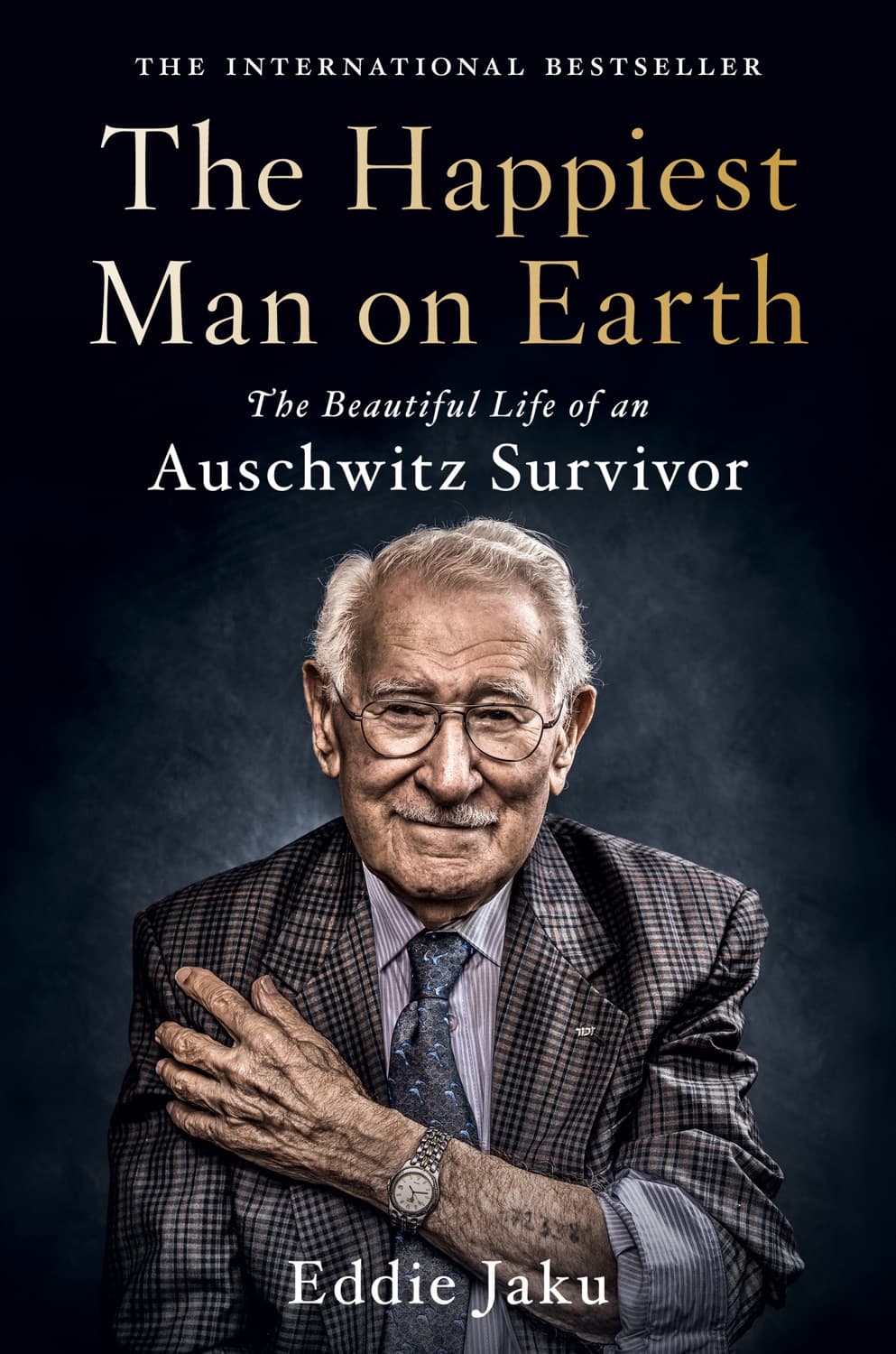
The Happiest Man on Earth
Eddie Jaku
Free download · 500+ book summaries
What is The Happiest Man on Earth about?
A 100-year-old Holocaust survivor explains how to choose happiness anyway. Eddie Jaku lived through Buchenwald and Auschwitz, lost his entire family, and rebuilt a life of joy in Australia. His memoir is part testimony, part field manual on gratitude, friendship, and the daily decision to keep loving. Written at 99.
Key ideas of The Happiest Man on Earth
Hatred as Self-Destruction
Carrying hatred after profound loss costs the survivor more than the perpetrators, making its deliberate rejection a form of self-preservation.
Friendship as Survival Structure
At Auschwitz, a single true friendship provided the practical and psychological support that made survival physically possible on specific days.
Happiness as Daily Choice
Choosing where to direct attention each morning, not denying loss, is how Jaku rebuilt a livable life from the ruins of everything he had known.
Read an excerpt from the summary
The Happiest Man on Earth
At five in the morning on November 10, 1938, ten men with sledgehammers broke down the front door of a house in Leipzig, Germany. Abraham Jaku was alone inside. His parents were away celebrating their wedding anniversary. He was eighteen years old, still asleep, and he heard Lulu -- his German shepherd -- barking downstairs before the first blow landed. The dog rushed the men at the door. One of them pulled out a pistol and shot her. When Abraham came downstairs, the men beat him until he could not stand. They broke furniture, smashed glass, destroyed paintings that had hung on the walls for two hundred years. Then they dragged him out into the street.
That was Kristallnacht. The Night of Broken Glass. Across Germany and Austria, organized squads of SS men and Hitler Youth were doing the same thing to Jewish homes, synagogues, and businesses. Ninety-one Jews were killed that night in documented attacks. Thirty thousand were arrested and sent to concentration camps. Abraham was taken to Buchenwald.
This is how Eddie Jaku's story begins. Not with heroism. Not with a neat arc of triumph over evil. It begins with a dog being shot and a boy getting beaten in his own home while his parents were out.
Jaku -- born Abraham Salomon Jakubowicz on April 14, 1920 -- would go on to survive Buchenwald, Auschwitz-Birkenau, and two death marches. His mother Lina and his father Isidore were murdered in a gas chamber on the day they arrived at Auschwitz. His tattoo number was 172338. He was liberated in 1945, emigrated to Australia in 1950, and died in Sydney on October 12, 2021, at the age of 101.
Like it?
Continue in the appWho is it for?
- Anyone who wants to understand how a person rebuilds meaning after catastrophic loss.
- Anyone who struggles with resentment or anger and wonders whether letting it go is possible without forgiving.
- Anyone who underestimates the importance of close friendship and wants a concrete argument for tending it.
- Anyone who finds gratitude advice hollow and needs to hear it grounded in the most extreme possible circumstances.
About the author: Eddie Jaku
Eddie Jaku was born Abraham Salomon Jakubowicz in Leipzig, Germany, on April 14, 1920. He survived Buchenwald, Auschwitz-Birkenau, and two death marches before being liberated by American forces in 1945. He emigrated to Australia in 1950 and settled in Sydney, where he raised a family and worked as a precision engineer.
From 1992 until his death, he volunteered as a guide at the Sydney Jewish Museum, speaking at more than two thousand schools over three decades. He published his memoir at the age of one hundred and donated all royalties to the museum. He died in Sydney on October 12, 2021, at the age of 101.
Read it in 43 minutes
The summary of The Happiest Man on Earth and 500+ more books await in the BookBase app.