 English
 Magyar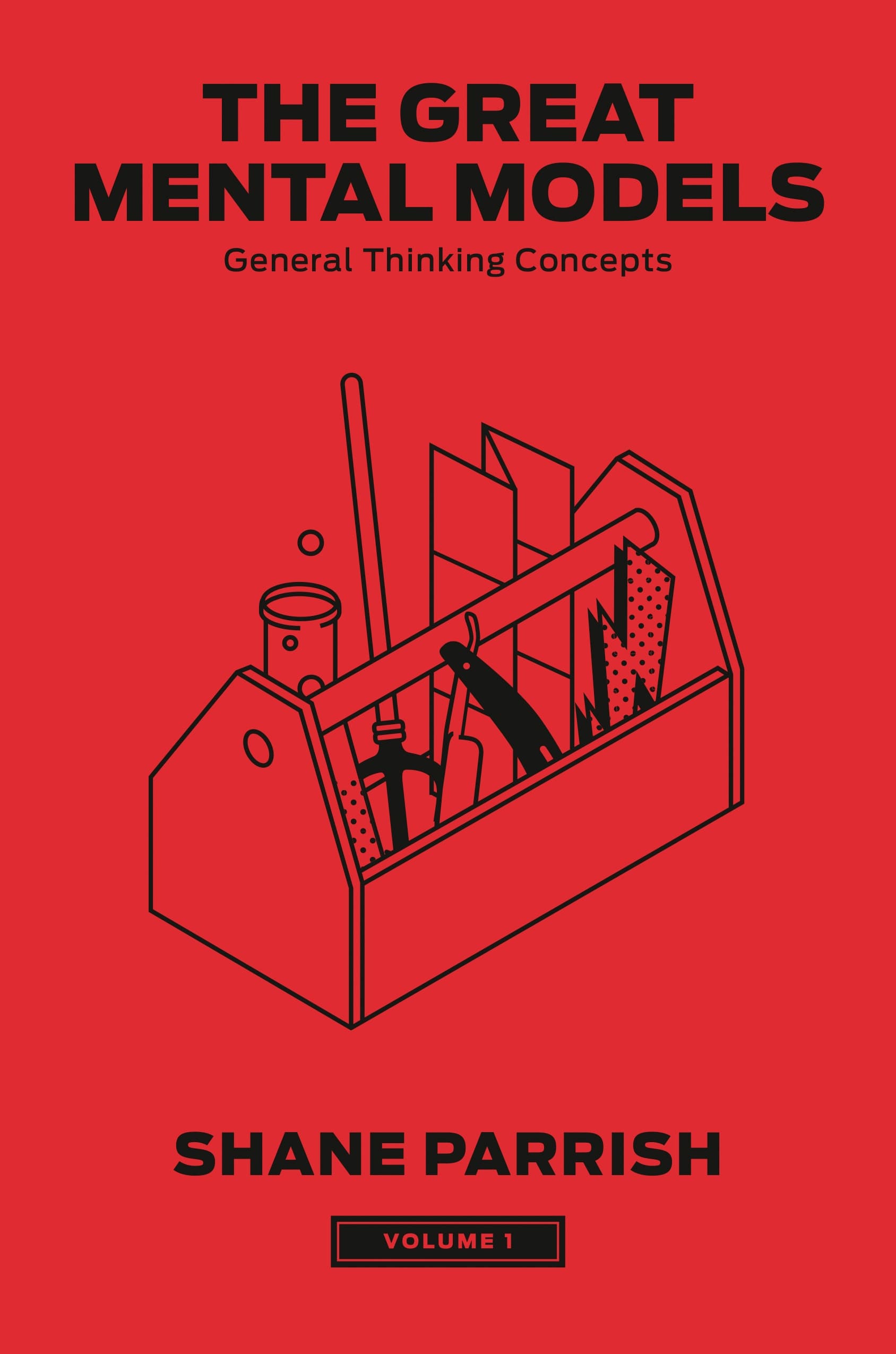
The Great Mental Models 1-3
Rhiannon Beaubien
Free download · 500+ book summaries
What is The Great Mental Models 1-3 about?
The Great Mental Models focuses on the importance of developing correct thinking processes and how we can improve our decision-making by directing our efforts more efficiently.
Key ideas of The Great Mental Models 1-3
Mental Models as Thinking Tools
A latticework of models from multiple disciplines removes blind spots that no single field of expertise can fix.
Map vs. Territory
Every model is a reduction of reality with edges where it breaks down, so checking those edges before acting is essential.
Second-Order Consequences
Actions almost always produce effects beyond the immediate outcome, and tracing two or three steps forward prevents most avoidable mistakes.
Read an excerpt from the summary
The Great Mental Models 1–3
Opening: The Wrestler Who Lost His Power
There's a Greek myth that explains why so many smart people make bad decisions.
Antaeus was a wrestler, son of Poseidon and Gaia, undefeated for years. His secret was simple. He drew his strength from contact with the earth, his mother. As long as his feet stayed on the ground, no one could beat him. Heracles figured it out. Instead of trying to overpower him, Heracles lifted Antaeus into the air and held him there until his strength drained away.
Shane Parrish opens his three-volume series with this myth because it captures what happens when thinking floats free of reality. We build elaborate theories. We trust frameworks we never test. We argue from authority instead of evidence. Like Antaeus in Heracles's grip, our thinking loses its power.
Parrish runs Farnam Street, a learning project he started after watching his own intellectual life unravel. He was two weeks into a job at an intelligence agency when the planes hit on September 11, 2001. His computer science degree suddenly looked useless against the kind of problems he was being asked to solve. Later, in an MBA program, he sat through an open-book exam and realized he could pass without learning anything. That was the moment he discovered Charlie Munger and the idea that changed everything: build a latticework of mental models from every major discipline, and you'll outthink the specialist every time.
The series compresses eight years of that work. Volume one covers nine foundational thinking concepts. Volume two pulls models from physics, chemistry, and biology. Volume three handles systems and mathematics. The promise fits in one Peter Bevelin line: "I don't want to be a great problem solver. I want to avoid problems."
Like it?
Continue in the appWho is it for?
- Anyone who wants to make better decisions by building a structured, cross-disciplinary way of thinking.
- Anyone who finds themselves repeating the same strategic mistakes in work or personal projects.
- Anyone who leads teams and needs to anticipate second-order effects of policy and incentive changes.
- Anyone who wants a practical system for evaluating ideas, managing risk, and spotting their own blind spots.
About the author: Rhiannon Beaubien
Shane Parrish is the founder of Farnam Street, a learning project focused on decision-making, mental models, and the art of thinking clearly. He began developing the ideas in this series after a career shift into intelligence work exposed the limits of narrow, specialist thinking.
Rhiannon Beaubien is a writer and researcher at Farnam Street who co-authored the Great Mental Models series with Parrish, distilling his years of research into a structured three-volume format.
Read it in 53 minutes
The summary of The Great Mental Models 1-3 and 500+ more books await in the BookBase app.