 English
 Magyar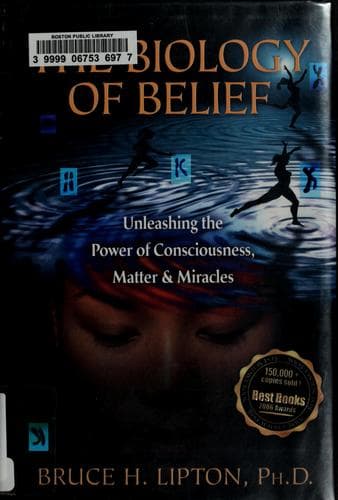
The Biology of Belief
Bruce H. Lipton
Free download · 500+ book summaries
What is The Biology of Belief about?
Your genes don't determine you. Your beliefs do. Your cells respond to your thoughts, not just your DNA. When you understand how stress and belief literally shape your body, the game changes. It's not overnight, but the story you've been told about yourself can be rewritten. That's what Bruce Lipton discovered.
Read an excerpt from the summary
The Biology of Belief: Why Your Genes Don't Decide Who You Are
It's 1952, London. A fifteen-year-old boy lies on the operating table, and his skin looks like tanned leather armor. A hard, black, cracked layer covers him almost head to toe, with only a palm-sized patch of healthy skin left on his chest. The doctors had tried skin grafts, in vain. At school the boy is treated like a monster. His last hope is a young doctor, Albert Mason, who trusts a single method: hypnosis.
Under hypnosis, Mason convinces the boy that the skin on one of his arms will heal, that it will turn smooth and pink. A week later the arm really does clear up. Whole, healthy skin. Mason proudly reports the success to the surgeon who had struggled with the boy for months. And then comes the cold shower. The surgeon tells him the boy had never had a wart in his life. What Mason took for an innocent skin complaint was in fact congenital ichthyosis: an inherited disease considered incurable, one the textbooks held to be coded into the genes.
Mason only cured the boy because he didn't know it was impossible. He was convinced he was treating a stubborn wart, and that conviction somehow seeped into the boy's body. This is where the story turns genuinely unsettling. When Mason later tried to heal others the same way, he already knew he was facing an "incurable" genetic defect, and he was never able to repeat the miracle. Decades later he explained the failure in a single sentence: "I was acting."
How can a mere conviction make a disease written into the genes disappear? And if belief really is a force this powerful, then how far are we truly prisoners of our genes? The cell biologist Bruce Lipton staked his career on this question, and his answer turned his entire worldview on its head. His book circles three big questions. Do genes really run us? How does a thought rewrite the body? And why, even as adults, do we keep repeating the patterns we picked up before the age of seven?
Like it?
Continue in the appRead it in 63 minutes
The summary of The Biology of Belief and 500+ more books await in the BookBase app.