 English
 Magyar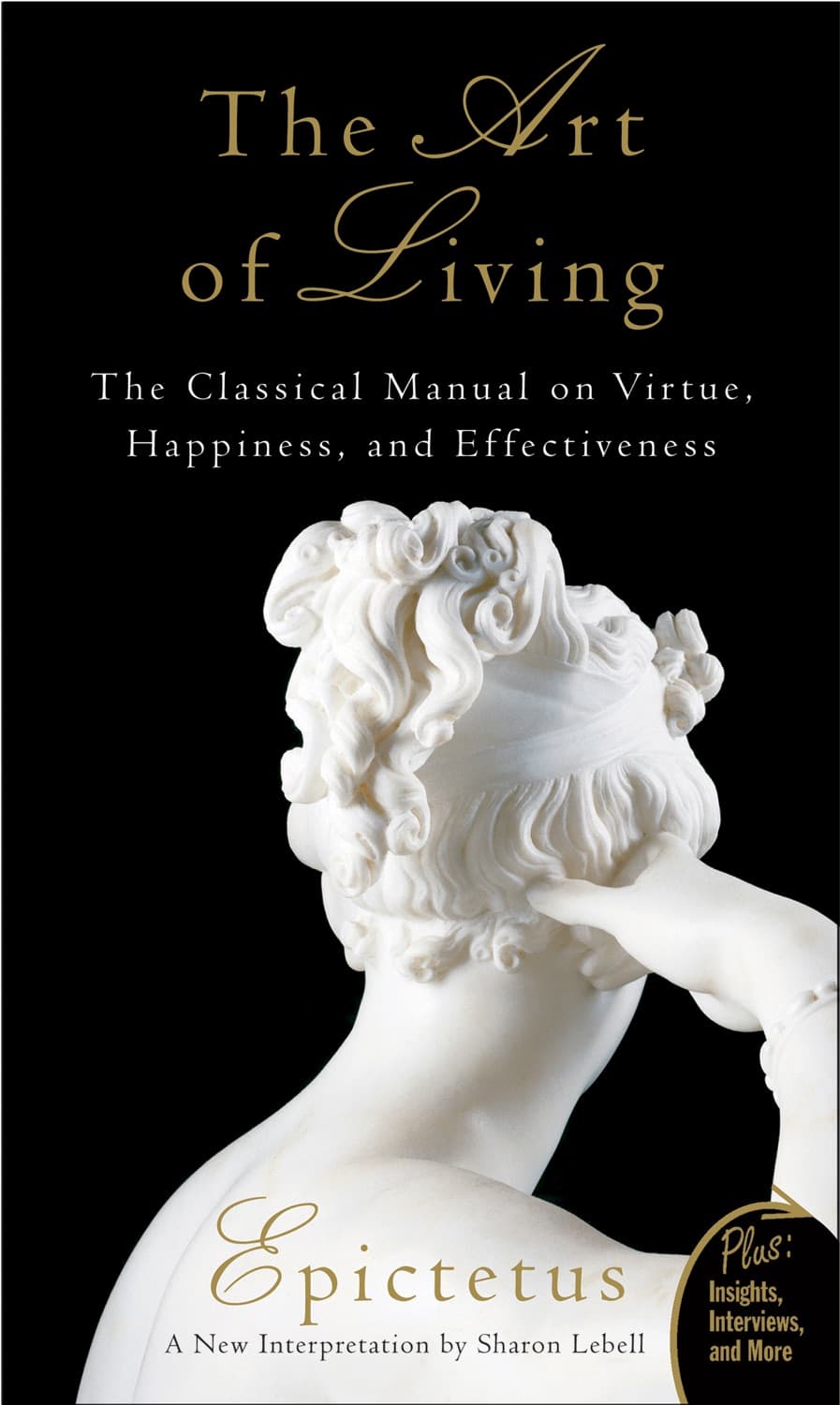
The Art of Living
Epictetus
Free download · 500+ book summaries
What is The Art of Living about?
A timeless distillation of Stoic wisdom from Epictetus, offering practical guidance for navigating life with clarity, composure, and integrity. Learn to focus on what is within your control, accept what is not, and cultivate the inner freedom that turns everyday challenges into opportunities for growth and lasting fulfillment.
Key ideas of The Art of Living
The Dichotomy of Control
Almost all human suffering comes from trying to control things that are not ours to control, while neglecting the inner responses that are.
Desires as Trained Habits
Most of what we crave is not a true need but an inherited habit, and examining it honestly is the first step to wanting more wisely.
Happiness as Daily Practice
Happiness is not a destination to reach once circumstances improve, but an ongoing choice enacted in small, concrete decisions each day.
Read an excerpt from the summary
The Art of Living — summary
The slave who taught Rome how to be free
A young boy is dragged off in chains. He has no name worth remembering, no parents listed in any record, and no way out. He is sold into slavery in Rome around the year 55, and his owner, a brutal man named Epaphroditus, decides one day to twist the boy's leg in a piece of equipment to see what happens. The boy looks up calmly and says, "If you keep going, you will break it." His master keeps going. The leg snaps. The boy says, "I told you so."
That boy, the one with the broken leg and the unnervingly steady eyes, grew up to become Epictetus, one of the most quoted teachers in human history. Marcus Aurelius read him obsessively. Roman senators sat at his feet. Two thousand years later, a Navy pilot named James Stockdale survived seven and a half years in a Vietnamese prison camp by reciting his lessons in his head, and credited Epictetus directly with keeping him sane. When Stockdale ejected from his plane over North Vietnam in 1965, he later said he was leaving the world of technology and entering the world of Epictetus. He arrived in that camp with broken bones and left seven years later with his inner life essentially intact. That is a field test of the philosophy most writers never have to face.
What is strange is that Epictetus never wrote a word. Everything we have comes from a student named Arrian who took notes during his lectures. Sharon Lebell, the modern interpreter whose version we are reading, took those scattered teachings and arranged them into ninety-three short, blunt instructions on how to live. She calls it The Art of Living, and the title is exact. This is not a book of philosophy in the dusty academic sense. It is a manual. It tells you, with the bedside manner of a slightly stern grandfather, how to stop torturing yourself with the things you cannot change, and how to actually enjoy the brief life you have been given.
Like it?
Continue in the appWho is it for?
- Anyone who feels anxious, overwhelmed, or exhausted by things they cannot change.
- Anyone who wants a practical, no-nonsense framework for building genuine inner calm.
- Anyone drawn to Stoic philosophy but looking for a short, readable entry point.
- Anyone who suspects that most of their suffering is self-generated and wants tools to address that.
About the author: Epictetus
Epictetus was a Greek Stoic philosopher born into slavery around 50 AD in Hierapolis, in what is now Turkey. He was brought to Rome as a slave, and after being freed he founded a school of philosophy in Nicopolis where he taught for decades. He never wrote anything himself. All of his surviving teachings come from notes taken by his student Arrian, compiled into works known as the Discourses and the Enchiridion.
Sharon Lebell is an American author and musician who produced this accessible modern interpretation of Epictetus's teachings. Her version arranges the core Stoic instructions into short, direct chapters intended for readers with no prior background in ancient philosophy.
Read it in 43 minutes
The summary of The Art of Living and 500+ more books await in the BookBase app.