 English
 Magyar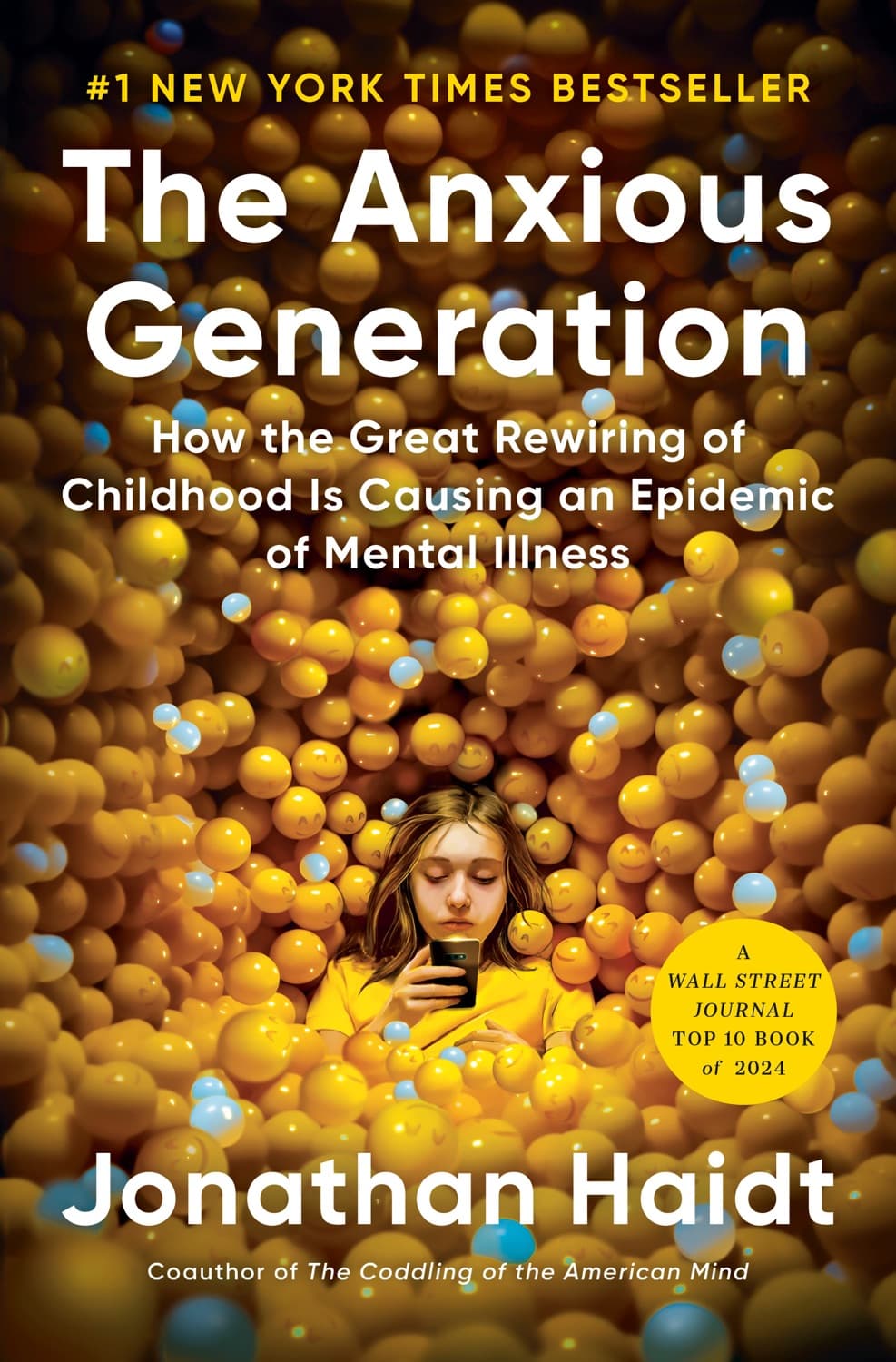
The Anxious Generation
Jonathan Haidt
Free download · 500+ book summaries
What is The Anxious Generation about?
What the smartphone did to Gen Z. Social psychologist Jonathan Haidt walks through the collapse of teen mental health between 2010 and 2015, in lockstep with iPhone adoption and the rise of social media. Data, neuroscience, and four concrete reforms parents and societies need to make to reverse the damage.
Key ideas of The Anxious Generation
Phone-Based Childhood Crisis
Between 2010 and 2015, adolescent depression, self-harm, and suicide rates surged across the developed world in direct lockstep with smartphone and social media adoption.
Four Distinct Developmental Harms
Smartphones damage young people through social deprivation, sleep destruction, attention fragmentation, and deliberate platform-engineered addiction, each amplifying the others.
Collective Action Is the Only Fix
Individual parenting choices cannot solve what is fundamentally a shared social environment problem, making coordinated reforms by schools, governments, and tech companies essential.
Read an excerpt from the summary
The Anxious Generation — summary
In 2013, a Boston mother noticed something shifting in her fourteen-year-old daughter Emily. Emily had always been outgoing — the kind of kid who organized neighborhood games, who talked her way through dinner, who came home from school buzzing with stories about friends. Then she got an iPhone and an Instagram account. Within months, Emily stopped inviting friends over. She stayed up past midnight scrolling through filtered photos, comparing herself to classmates who seemed prettier, happier, more popular. Her grades slipped. She started complaining of stomachaches before school. She stopped eating breakfast. When her mom tried to take the phone away, Emily broke down sobbing: "You don't understand, Mom. If I'm not on there, I don't exist." Her mother was watching her daughter disappear into a device — and she had no idea how to pull her back.
Jonathan Haidt, a social psychologist at NYU's Stern School of Business and the author of The Righteous Mind, spent a decade collecting stories like Emily's. He talked to parents, teachers, school counselors, pediatricians, and teenagers themselves. He pored over national datasets tracking mental health, screen time, and social behavior. What he found was not a handful of troubled kids but an entire generation in crisis — and a set of causes that are both terrifyingly clear and surprisingly fixable. This summary will walk you through the evidence that phone-based childhood is rewiring young brains, explore the four specific harms doing the most damage, and lay out the concrete steps parents, schools, and governments can take to reverse the trend before it gets worse.
Like it?
Continue in the appWho is it for?
- Anyone who is raising children or teenagers in the age of smartphones and social media.
- Anyone who wants to understand why adolescent mental health collapsed so suddenly in the early 2010s.
- Anyone working in education, pediatrics, or public policy and looking for evidence-based reforms.
- Anyone who senses that screen-based childhood is doing real damage but needs the data to act.
About the author: Jonathan Haidt
Jonathan Haidt is a social psychologist and professor at NYU's Stern School of Business. He is best known for his research on moral psychology, political polarization, and the social foundations of human behavior.
He is the author of several widely read books, including The Righteous Mind and, with Greg Lukianoff, The Coddling of the American Mind. The Anxious Generation draws on more than a decade of data collection and collaboration with researchers tracking adolescent mental health trends worldwide.
Read it in 47 minutes
The summary of The Anxious Generation and 500+ more books await in the BookBase app.