 English
 Magyar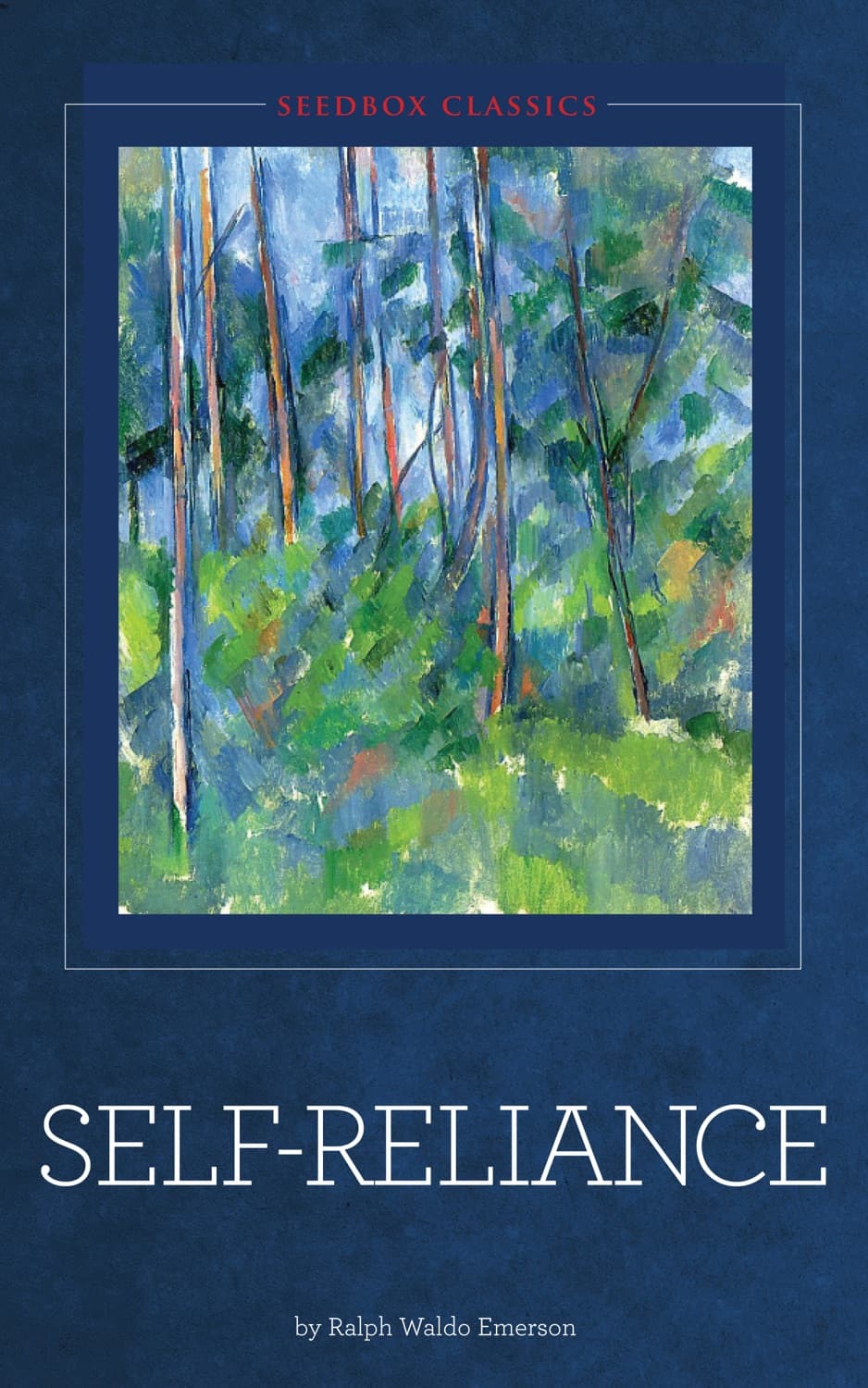
Self-Reliance
Ralph Waldo Emerson
Free download · 500+ book summaries
What is Self-Reliance about?
The 1841 essay that defined American individualism. Ralph Waldo Emerson's blunt, urgent argument that you must trust your own mind, distrust conformity, and refuse to live a life borrowed from others. Short, dense, and still electric. Required reading for anyone trying to figure out what they actually believe.
Key ideas of Self-Reliance
Trust Your Own Perceptions
The deepest layer of your mind connects to a universal intelligence, and dismissing your own thoughts in favor of others is the root of intellectual conformity.
Conformity as Spiritual Surrender
Society operates like a joint-stock company, offering security in exchange for independent judgment, and most people accept that deal without noticing the cost.
Original Thought over Consistency
Revising your views as you learn is not weakness but honesty, and clinging to past positions to appear consistent is a form of self-betrayal.
Read an excerpt from the summary
Self-Reliance
*Ralph Waldo Emerson, 1841*
A man at his desk in Concord
Picture a study in a modest white house in Concord, Massachusetts, in the late 1830s. Pine furniture, a small fireplace, books in piles. The window faces a meadow that runs down to a stand of trees, and just beyond it, the Old Manse where Hawthorne will soon write. The man at the desk is in his mid-thirties. He has buried his first wife, Ellen, when she was nineteen. He has resigned from the pulpit of Boston's Second Church because he could not bring himself, in good conscience, to administer the Lord's Supper. He has crossed the Atlantic, met Coleridge in his cluttered London rooms, met an aging Wordsworth in the Lake District, met Carlyle on a Scottish farm. He has come home with no church, no salary, and no clear plan, and he has decided to make his living by talking to American audiences about what he actually believes.
He is reading a poem written by another man, an eminent painter. Something in it lights him up. Then it stings him. The thought in the poem is one he himself had thought, weeks ago, and dismissed as too odd, too small, too his. Now it comes back to him "with a certain alienated majesty," wearing another man's name. He writes the sentence down. It will become the most famous diagnosis in American letters: "In every work of genius we recognize our own rejected thoughts: they come back to us with a certain alienated majesty."
He keeps writing. He writes about a young child playing in the parlor, sovereign in his own mood, courting nobody. He writes about the boy in the playhouse pit who passes verdicts on the people walking past, and means them. He writes that society is a joint stock company in which the members agree, for the price of bread, to surrender the liberty and culture of the eater. He writes the line that will outlive him by two centuries: "Trust thyself: every heart vibrates to that iron string." He puts the sheets in a drawer. A few years later, in 1841, they will go into a slim volume titled *Essays*. The piece is called "Self-Reliance." It is a little over fifteen thousand words long. It will not let American readers alone for the next hundred and eighty years.
Like it?
Continue in the appWho is it for?
- Anyone who wants to understand the philosophical roots of American individualism and original thinking.
- Anyone who finds themselves performing agreement in meetings rather than saying what they actually believe.
- Anyone who has watched a competitor ship the product they themselves had thought of and set aside.
- Anyone who feels their professional identity has drifted from their actual convictions and wants language to diagnose it.
About the author: Ralph Waldo Emerson
Ralph Waldo Emerson (1803-1882) was an American essayist, lecturer, and poet who became the central voice of the Transcendentalist movement in New England. Born in Boston to a Unitarian minister father, he studied at Harvard and was ordained before resigning from the pulpit in 1832, unable to administer communion in good conscience. That break marked a decisive turn toward secular moral philosophy.
From his home in Concord, Massachusetts, Emerson built a career as an itinerant lecturer and published the essays that would define a generation of American thought. His circle included Henry David Thoreau, Margaret Fuller, and Nathaniel Hawthorne. Walt Whitman credited him as a direct inspiration for Leaves of Grass, and Friedrich Nietzsche copied passages from his work into personal notebooks. He remains one of the most quoted writers in American letters.
Read it in 43 minutes
The summary of Self-Reliance and 500+ more books await in the BookBase app.