 English
 Magyar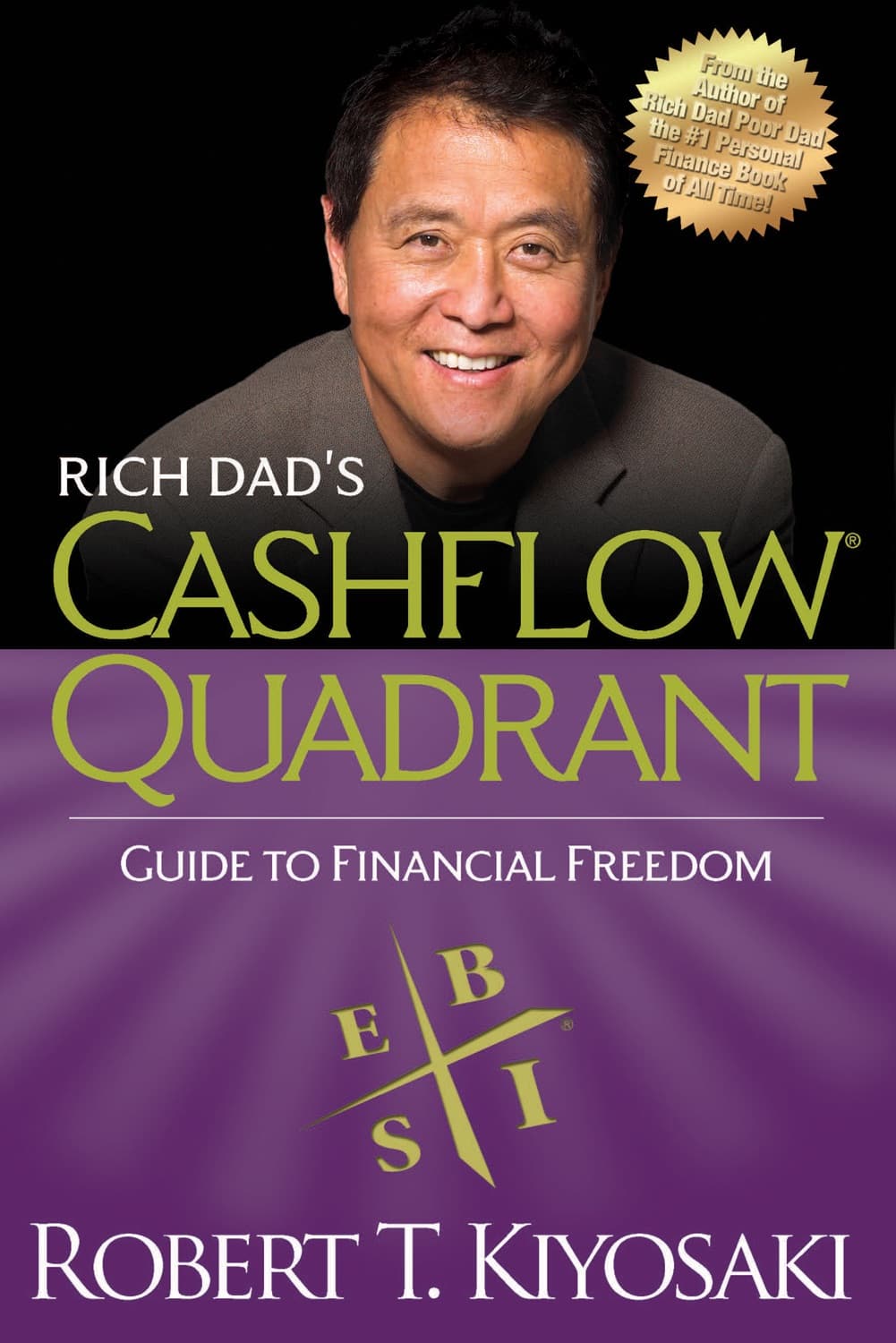
Rich Dad's Cashflow Quadrant
Robert Kiyosaki
Free download · 500+ book summaries
What is Rich Dad's Cashflow Quadrant about?
The follow-up to Rich Dad Poor Dad. Robert Kiyosaki maps the four ways money flows into a life: employee, self-employed, business owner, investor. Each quadrant has its own mindset, tax structure, and ceiling. A clear-eyed look at why most people are stuck on the left side, and what it takes to move right.
Key ideas of Rich Dad's Cashflow Quadrant
The Four Income Quadrants
Every income source falls into one of four categories, Employee, Self-employed, Business owner, or Investor, each with distinct mindsets, tax treatment, and earning ceilings.
Mindset Over Tactics
Moving from left to right on the quadrant is primarily an identity shift, because the beliefs that make a good employee or self-employed professional actively block wealth-building.
Tax Asymmetry Favors Capital
Earned income carries the highest effective tax rates, while passive and portfolio income benefit from lower rates, depreciation strategies, and structures unavailable to wage earners.
Read an excerpt from the summary
Rich Dad's Cashflow Quadrant
In the winter of 1985, Robert and Kim Kiyosaki were sleeping in the back seat of a borrowed brown Honda. They had burned through their savings, could not make rent, and had nowhere to stay. Their friends offered a couch for a few weeks. Then that ran out too. The car became their address. By Robert's account, they had walked away from steady paychecks, failed at their first business, and were starting over with nothing except a set of convictions about money that most people around them thought were wrong.
That period lasted about nine months. It ended when the two of them built a business that generated enough cash to cover their expenses without requiring either of them to show up for work every day. The turnaround was not dramatic. It did not happen because Robert got a raise or Kim landed a better job. It happened because they stopped selling their time and started building systems. They crossed, in Kiyosaki's language, from the left side of a diagram to the right side. And that crossing, he argues, is the most consequential financial move a person can make.
Rich Dad's Cashflow Quadrant was published in 1998 as the follow-up to Rich Dad Poor Dad, which had become one of the best-selling personal finance books in history. Where the first book explained the philosophy of financial independence through the contrast between two father figures -- one who worked for money, one who made money work for him -- the sequel gets more specific. It asks a question that the first book largely left unanswered: how, exactly, do you make the transition? What does it require? And why is it so hard?
Like it?
Continue in the appWho is it for?
- Anyone who earns a salary and has never thought critically about how their income type affects their long-term wealth.
- Anyone who is self-employed and suspects they have built a demanding job rather than a scalable business.
- Anyone who wants a plain-language explanation of how taxes treat employment income differently from investment returns.
- Anyone who has read Rich Dad Poor Dad and wants a more concrete framework for actually making the financial transition.
About the author: Robert Kiyosaki
Robert Kiyosaki is an American entrepreneur, investor, and author best known for the Rich Dad Poor Dad series, one of the best-selling personal finance franchises in publishing history. He built his public profile through a combination of real estate investing, business ventures, and financial education.
His work has attracted both devoted readers and serious critics. Kiyosaki has acknowledged that the Rich Dad mentor figure in his books was a composite rather than a single real person, and his business entity Rich Global LLC filed for bankruptcy in 2012 after a court judgment. His ideas are most useful when read as a conceptual framework rather than a tactical playbook.
Read it in 45 minutes
The summary of Rich Dad's Cashflow Quadrant and 500+ more books await in the BookBase app.