 English
 Magyar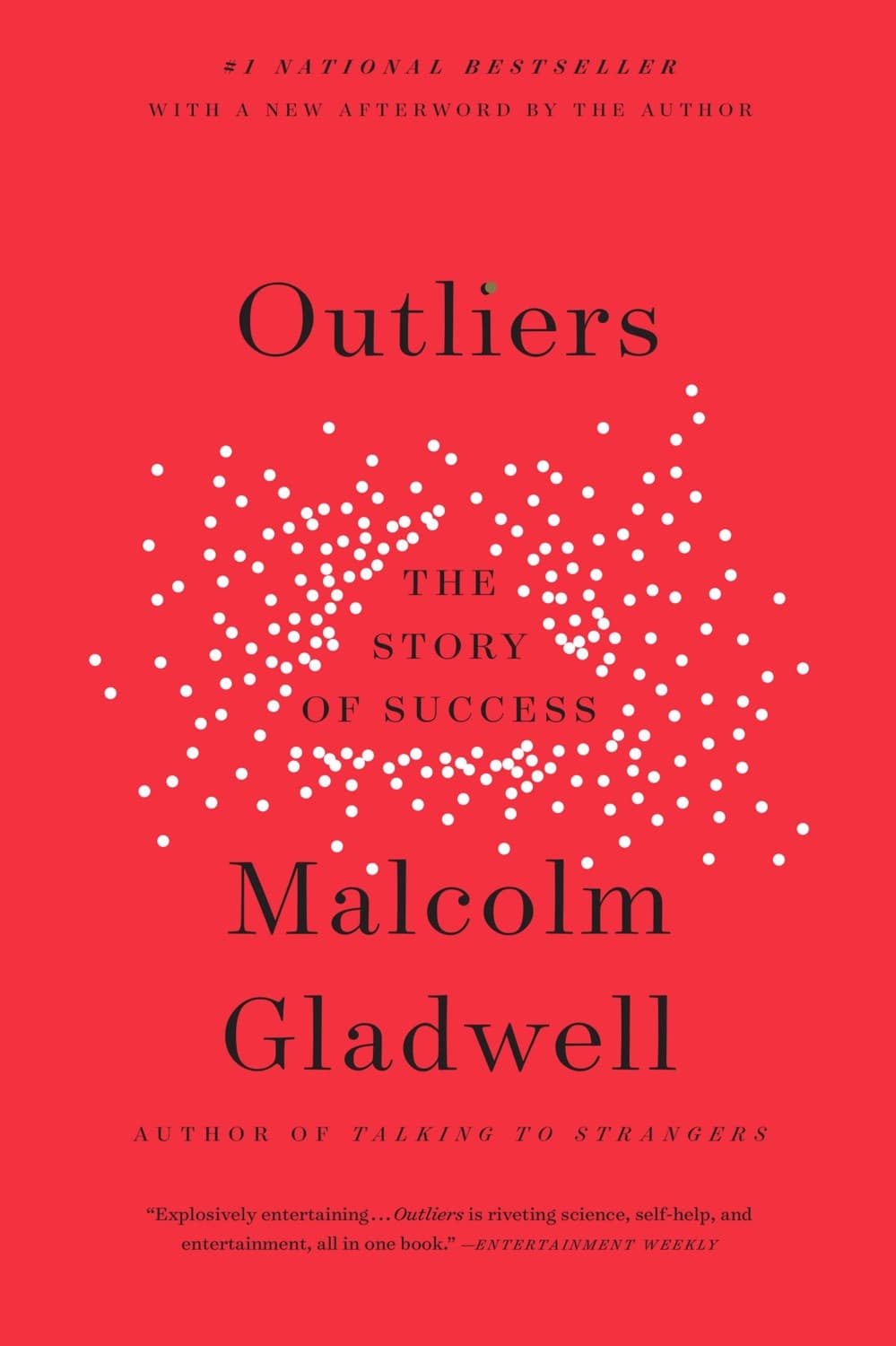
Outliers
Malcolm Gladwell
Free download · 500+ book summaries
What is Outliers about?
What really makes high performers high performers. Malcolm Gladwell unpacks the unseen advantages, birth dates, hidden cultural legacies, ten thousand hours of practice, that explain why some people end up extraordinary while equally talented peers don't. The book that put a name to the success patterns hiding in plain sight.
Key ideas of Outliers
Hidden Advantages of Success
Exceptional achievers benefit from timing, birth dates, cultural legacies, and early access to opportunity that most people never receive.
Ten Thousand Hours of Practice
World-class expertise requires roughly 10,000 hours of deliberate practice, and accumulating those hours depends heavily on access and circumstance.
Cultural Legacy Shapes Performance
Deep-rooted cultural patterns, from rice-farming work ethics to hierarchical communication norms, directly shape how individuals learn and make decisions.
Read an excerpt from the summary
Outliers
In 1961, a physician named Stewart Wolf was visiting a small town in eastern Pennsylvania called Roseto. Wolf was not there for the scenery. He had heard something strange from a local doctor: the people of Roseto almost never died of heart attacks. This was peculiar, because heart disease was the leading killer of Americans under sixty-five at the time. Wolf dug in. He collected death certificates going back decades and had every resident over twenty-one examined. The results were extraordinary. Men over sixty-five in Roseto were dying of heart disease at roughly half the national rate. Below sixty-five, the death rate was virtually zero. There was no heart disease. Almost none at all.
Wolf spent years trying to explain it. He checked the local water. He looked at the region's geography. He examined the diets of Roseto residents. They ate meatballs fried in lard. They put salami and hard and soft cheeses on their bread. Forty-one percent of their calories came from fat. They were not especially active. Many of them smoked. Their cholesterol levels were no better than anyone else's. Yet they were not dying of heart attacks.
Wolf eventually concluded that the explanation had nothing to do with genes, diet, or geography. It was the community itself. Roseto had been founded by immigrants from a village in southern Italy who had arrived in the 1880s and rebuilt their old-world social structures on Pennsylvania soil. Three generations often lived under one roof. The town had twenty-two separate civic organizations for a population of just two thousand. People stopped to talk to each other on the street. They cooked for their neighbors. The elderly were venerated, not marginalized. Wealth did not create obvious class divisions. The community was the medicine.
Like it?
Continue in the appWho is it for?
- Anyone who wants to understand why talent alone rarely explains extraordinary success.
- Anyone who manages teams, coaches athletes, or runs schools and wants to spot hidden selection biases.
- Anyone who is curious about why certain cultures consistently outperform others in education and business.
- Anyone who believes the self-made myth and is ready to have that assumption seriously challenged.
About the author: Malcolm Gladwell
Malcolm Gladwell is a staff writer for The New Yorker and the author of several bestselling books exploring social science, psychology, and human behavior. His work is known for taking counterintuitive ideas from academic research and making them accessible to a general audience.
He grew up in Canada and England, and his background, including his Jamaican heritage, informs the personal chapter that closes Outliers. His other books include The Tipping Point, Blink, and David and Goliath.
Read it in 45 minutes
The summary of Outliers and 500+ more books await in the BookBase app.