 English
 Magyar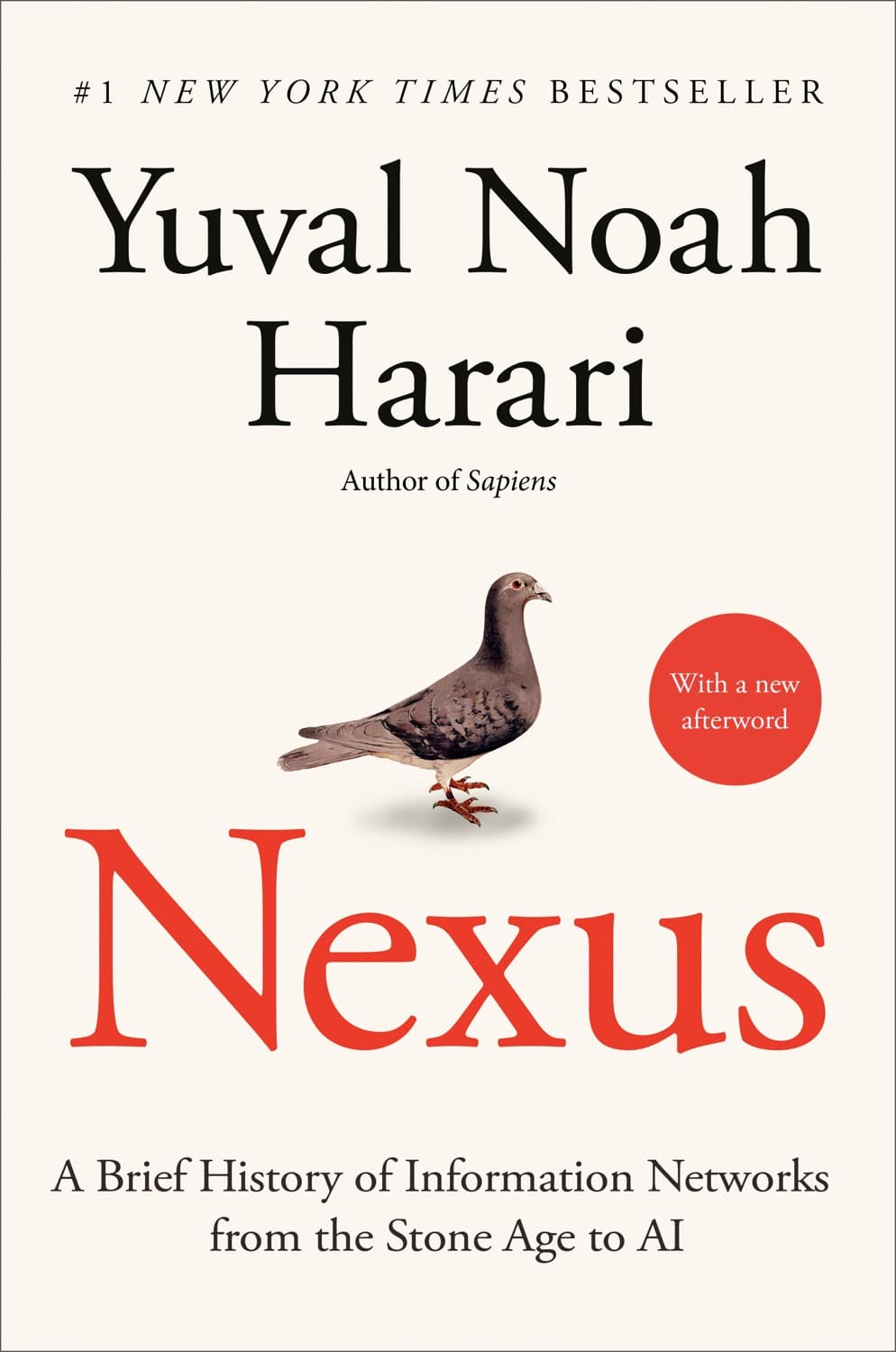
Nexus
Yuval Noah Harari
Free download · 500+ book summaries
What is Nexus about?
How information networks have shaped human civilization, from stone tablets to large language models. Yuval Noah Harari argues we built each new medium without understanding what we were unleashing, and the AI era is no different. A sweeping, unsettling look at the systems that decide what we believe and who holds power.
Key ideas of Nexus
Information Connects, Not Describes
The primary function of information across history has been to weave people into cooperative networks, not to deliver accurate pictures of reality.
Self-Correcting Mechanisms Are Fragile
Societies survive their own mistakes only when they build institutional feedback loops that let errors surface and get fixed without destroying the whole system.
AI as Unaccountable Agent
Unlike all previous media, AI algorithms make consequential decisions through opaque optimization processes that no single human designs, understands, or controls.
Read an excerpt from the summary
Nexus
Sometime around the year 800, in a monastery on the western coast of Ireland, a monk sat down at a copying desk with a goose quill, a pot of iron gall ink, and a codex of scripture that needed to be reproduced before the vellum wore through. He worked slowly. A single page might take a full day. The monastery at Skellig Michael, perched on a pinnacle of rock eight miles off the Kerry coast, held perhaps a dozen brothers, and between them they maintained one of the longest information chains in the Western world: a network of copied manuscripts that stretched back through continental monasteries to Rome to Alexandria to the original texts of a faith that had transformed civilization. The monk did not know most of the people in that chain. He would never meet them. But he was connected to them through the documents that passed between their hands, and through those documents he was connected to an imagined community of believers that spanned a continent and claimed authority over the deepest questions of human existence. He was a node in a network. And the most important thing about what he was doing was not whether every word he copied was accurate. It was that the copying continued.
In the spring of 1937, a Soviet agronomist named Nikolai Vavilov received a form. It was not a threatening document -- no accusation, no warrant. Just a questionnaire from the People's Commissariat of Agriculture, asking him to confirm the academic credentials of colleagues in his institute. Vavilov filled it out carefully, honestly, and sent it back. Within months, several of the people he had named were arrested. The questionnaire had been a trap, and the trap had been bureaucratic, bloodless, and entirely mundane. A piece of paper traveled from a desk to a filing cabinet, a name traveled from a filing cabinet to an arrest order, and a human being traveled from his apartment to the Gulag. Vavilov himself would be arrested in 1940 while collecting plant specimens in Ukraine, tried in a secret proceeding lasting a few minutes, and sentenced to death. He died in prison of starvation in 1943. He was one of the most gifted botanists of the twentieth century, and the Soviet system that killed him never registered the loss. It had no mechanism to do so.
Like it?
Continue in the appWho is it for?
- Anyone who wants to understand why democracies struggle to manage disinformation and algorithmic manipulation.
- Anyone who is curious about the deep historical patterns connecting ancient scripture, Soviet bureaucracy, and social media feeds.
- Anyone who works in technology policy, journalism, or civic institutions and needs a rigorous framework for thinking about AI governance.
- Anyone who felt unsettled by the role Facebook played in the Rohingya genocide and wants a structural explanation, not just a moral one.
About the author: Yuval Noah Harari
Yuval Noah Harari is an Israeli historian and public intellectual best known for his sweeping big-history books that connect archaeology, evolutionary biology, economics, and philosophy into a single narrative arc. He teaches history at the Hebrew University of Jerusalem.
Nexus is his fourth major book for general audiences, following Sapiens, Homo Deus, and 21 Lessons for the 21st Century. He is one of the most widely read nonfiction authors of the past decade, with his books translated into dozens of languages.
Read it in 48 minutes
The summary of Nexus and 500+ more books await in the BookBase app.