 English
 Magyar
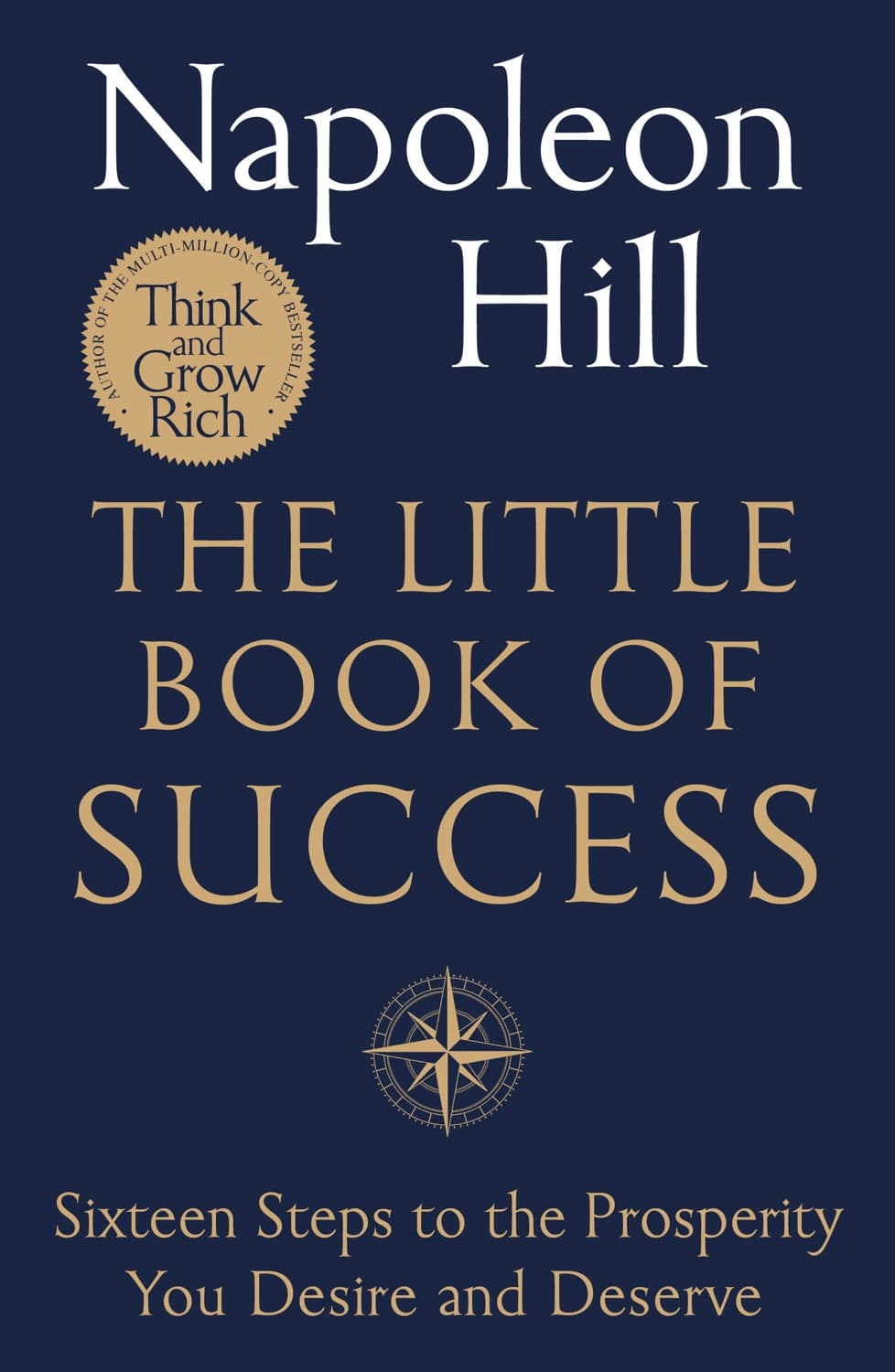
Napoleon Hill's Keys to Positive Thinking
Napoleon Hill
Free download · 500+ book summaries
What is Napoleon Hill's Keys to Positive Thinking about?
Napoleon Hill on the personal disciplines that turn ordinary people into extraordinary achievers. Drawing on decades of interviews with Carnegie, Edison, Ford, and other titans, Hill distills the mindset, habits, and choices that separate those who drift from those who direct their own lives. A timeless playbook on definite purpose, persistence, and self-mastery.
Key ideas of Napoleon Hill's Keys to Positive Thinking
Own Your Mind First
Taking deliberate possession of your own thoughts and attitude is the foundational act that separates drifters from self-directed achievers.
Goals Require Specificity
A goal without a written plan, a concrete deadline, and a named price you are willing to pay is indistinguishable from a wish.
Action Precedes Feeling
You cannot wait to feel motivated or confident before acting, the feeling reliably follows the action, not the other way around.
Read an excerpt from the summary
Napoleon Hill's Keys to Positive Thinking
A pilot who refused to go home
In 1944, a young American fighter pilot named Chuck Yeager was shot down over occupied France. He spent days slipping past German patrols, then dragged a wounded bomber navigator, a fellow evader, over the Pyrenees into Spain. When he finally made it back to his squadron, the Army Air Corps had a plane ticket waiting for him. The rule was simple: pilots who escaped from behind enemy lines went home. For them, the war was over.
Yeager said no. He insisted on staying, and he kept flying combat missions until the war ended. A few years later, in 1947, he climbed into the Bell X-1 and became the first human being to break the sound barrier. Later he said something that explains a lot about how a life bends toward greatness or away from it. Without realizing it, he said, that was the moment he took charge of his own life. Had he quietly accepted the ticket home, he doubts the Air Force would have kept him around at all.
That tiny choice, that refusal to drift, is what this whole book is about.
Napoleon Hill spent half a century studying what separates people who get what they want from people who don't. He interviewed Andrew Carnegie, Henry Ford, Thomas Edison, Theodore Roosevelt and hundreds of others, and boiled what he found down to a system he called Positive Mental Attitude, or PMA. Years after his death, his foundation, working with his longtime collaborator Michael Ritt and the businessman W. Clement Stone, packed the heart of that system into a short, brutally practical guide called Keys to Positive Thinking. It's ten steps with no fluff. The promise on page one is blunt: anyone of average intelligence and average circumstances can reach what any other person has reached, if they're willing to take possession of their own mind.
Like it?
Continue in the appWho is it for?
- Anyone who feels their ambitions keep stalling despite real effort and wants a concrete daily system to break the pattern.
- Anyone who struggles to stay focused on long-term goals when short-term frustrations or negative thinking take over.
- Anyone who has read broad self-help ideas but wants a stripped-down, practical framework distilled from Hill's life's work.
- Anyone who manages or leads others and wants to understand how attitude, trust, and the Golden Rule drive team performance.
About the author: Napoleon Hill
Napoleon Hill was an American author and advisor whose career spanned the first half of the twentieth century. At the direction of Andrew Carnegie, he spent decades interviewing some of the most successful industrialists and public figures of his era, including Henry Ford, Thomas Edison, and Theodore Roosevelt, to identify the common principles behind their achievements.
His findings formed the basis of Think and Grow Rich, one of the best-selling self-help books of all time, and underpinned the Positive Mental Attitude philosophy he later developed with W. Clement Stone. The Napoleon Hill Foundation continues to publish and promote his work.
Read it in 46 minutes
The summary of Napoleon Hill's Keys to Positive Thinking and 500+ more books await in the BookBase app.