 English
 Magyar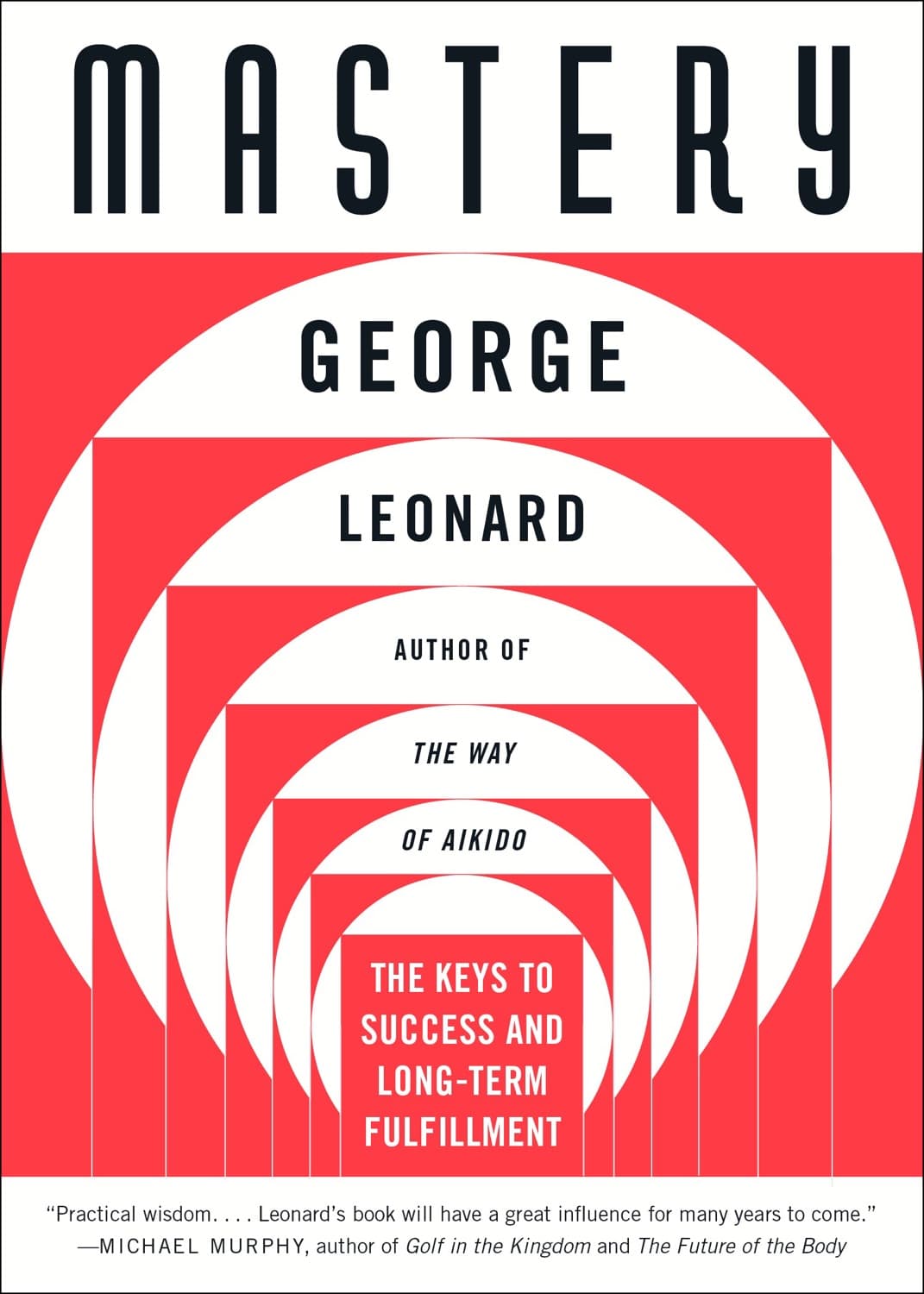
Mastery
George Leonard
Free download · 500+ book summaries
What is Mastery about?
The slow path of mastery, told by an aikido master. George Leonard explains why most people quit just before the breakthrough, what the long plateau really means, and why the people who become great are rarely the most talented. A meditation on practice, patience, and the quiet pleasure of the long game.
Key ideas of Mastery
The Life's Task
Every person carries a deep inclination toward a specific domain, and finding it early is the first step toward genuine mastery.
Deliberate Apprenticeship
Reaching mastery requires years of structured observation, technical skill-building, and careful experimentation before originality becomes possible.
Intuitive Intelligence at Peak Performance
After thousands of hours of practice, masters perceive patterns and solutions at a depth that makes their thinking appear effortless and instinctive.
Read an excerpt from the summary
Mastery
Late at night in 1507, in the basement of the hospital of Santa Maria Nuova in Florence, a man crouched over a fresh corpse by the light of a single candle. He had bribed the night attendants for access. The smell was sickening. The body had been dead long enough for the flesh to have begun its slow dissolution. But Leonardo da Vinci pressed on -- peeling back layers of muscle, cutting through tendon, sketching the architecture of the hand in an obsessive cross-section, then moving on to the neck, the shoulder, the branching web of veins in the forearm. He did this for years. More than thirty cadavers. More than six thousand pages of notes. He was not a licensed physician. He had no obligation to know how a muscle attached to bone or how blood moved through the portal vein. He was a painter. And yet he could not stop. The knowledge compelled him in a way he could not articulate and did not fully understand. Something in the structure of the human body called to him with the same force that gravity calls water downhill.
That pull -- that irrational, persistent, almost biological urgency toward a specific domain of knowledge -- is where Robert Greene's 2012 book Mastery begins. Greene spent years interviewing nine contemporary masters across fields as different as boxing, neuroscience, robotics, and sculpture. He read deeply in the lives of historical masters: Leonardo, Darwin, Mozart, Einstein, Benjamin Franklin, Napoleon, Martha Graham, John Coltrane. What he found, beneath all the surface differences, was a pattern so consistent it amounted to a law. Mastery is not a gift. It is not a product of innate genius. It is the outcome of a specific process -- one that is available, in principle, to anyone willing to follow it from beginning to end.
Like it?
Continue in the appWho is it for?
- Anyone who wants to understand why sustained commitment matters more than raw talent in reaching excellence.
- Anyone who feels stuck in a career that does not match their deepest interests and wants a framework for reorienting.
- Anyone who is early in a craft or profession and wants to understand what the long path to genuine skill actually looks like.
- Anyone who is curious about the lives of historical figures like Leonardo da Vinci, Darwin, Einstein, and Mozart and what their paths reveal about human potential.
About the author: George Leonard
Robert Greene is an American author known for books that examine power, strategy, and human nature through historical case studies and biographical research. He spent years interviewing contemporary masters and reading deeply in the lives of historical figures before writing this book.
His earlier works, including The 48 Laws of Power and The 33 Strategies of War, established him as a writer focused on how influence and competition actually operate in human systems. Mastery represents a turn toward the longer question of what becomes possible when a person commits fully to developing genuine capability in a field that matters to them.
Read it in 45 minutes
The summary of Mastery and 500+ more books await in the BookBase app.