 English
 Magyar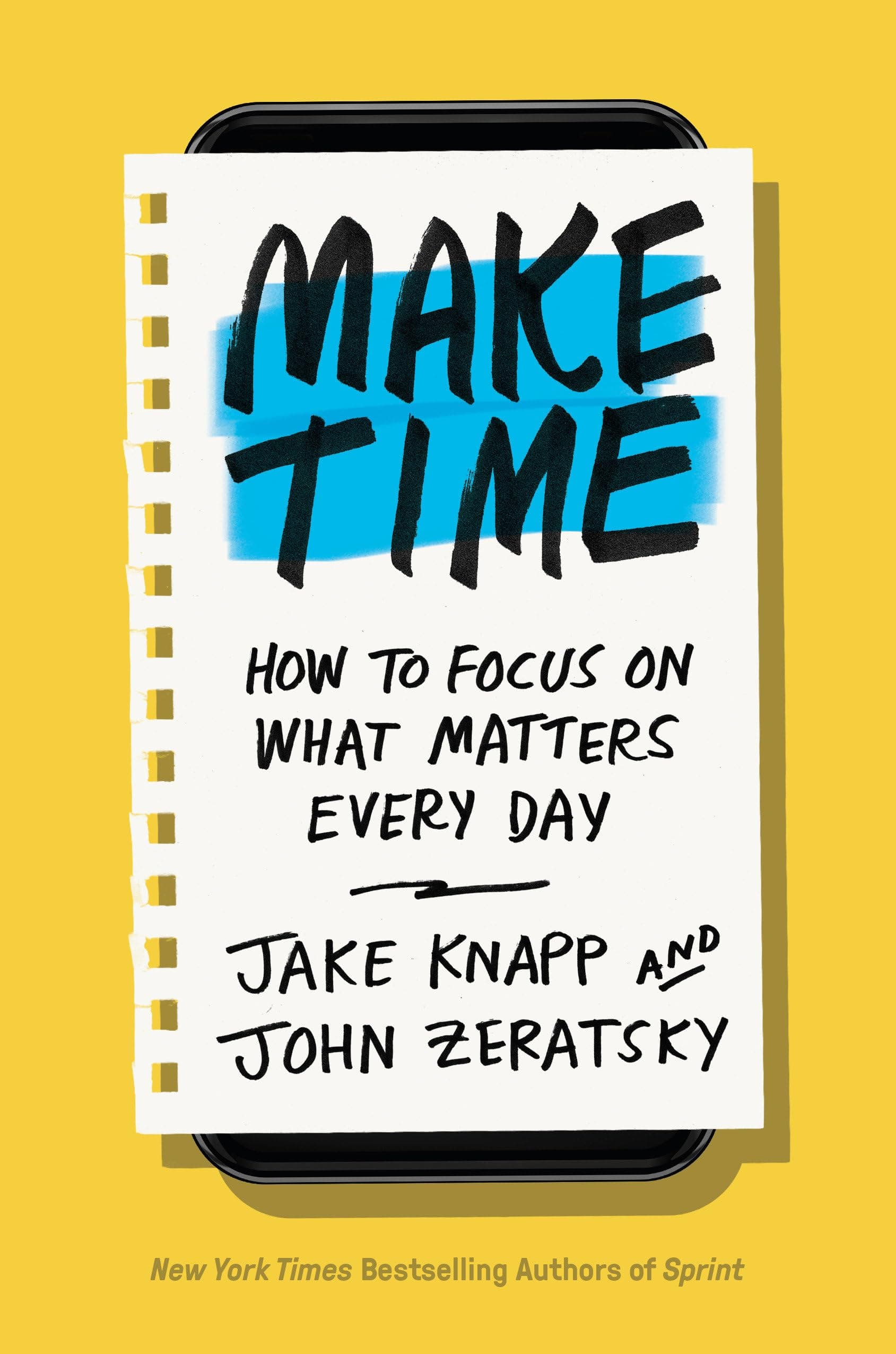
Make Time
Jake Knapp, John Zeratsky
Free download · 500+ book summaries
What is Make Time about?
Make Time shows you how to intentionally make time for the things that truly matter.
Key ideas of Make Time
Change Your Defaults, Not Yourself
Distraction wins not through laziness but through design defaults that must be actively replaced, not fought with willpower.
One Daily Highlight
Choosing a single 60-to-90-minute priority each day creates more satisfaction and focus than managing a long task list.
Body Powers the Brain
Exercise, real food, timed caffeine, and sleep are not optional extras but the energy source that makes sustained focus possible.
Read an excerpt from the summary
The Two Thieves
Here is a question worth sitting with for a minute. When was the last time you finished a workday and could point to one thing you actually did — one thing that mattered to you, not to your inbox, not to your Slack channel, not to a manager three time zones away? If you cannot remember, you are in good company. Jake Knapp and John Zeratsky wrote Make Time because they could not remember either, and they had reason to feel embarrassed about it. Jake had been on the Gmail team at Google. John had helped redesign YouTube around minutes watched. They built the machines that were eating everyone's afternoons, and then they noticed, with some chagrin, that the machines were eating theirs too.
Their argument starts with two villains. The first is the Busy Bandwagon — the unspoken cultural rule that says a calendar should be full, an inbox should be empty, and any minute not visibly producing is a minute that needs an explanation. The second is the Infinity Pool, a phrase the authors coined for any source of content that refills itself the moment you reach the bottom. Twitter, the news cycle, Netflix's autoplay, the email thread that never closes. Pull-to-refresh and the never-ending feed. The two thieves work together. The Busy Bandwagon keeps you reactive during the day; the Infinity Pools clean up whatever shards of attention are left in the evening. The authors note, almost cheerfully, that the average person now spends more than four hours a day on a smartphone and another four watching television. Distraction has become a full-time job.
What makes this hard is not laziness. It is that both thieves are operating as defaults — the pre-selected setting that persists unless somebody actively changes it. Notifications are on by default. Email is open in another tab by default. The TV is the centerpiece of the living room by default. Your calendar is empty for anyone to fill by default. Willpower has to fight every one of these defaults, one at a time, all day long. Willpower is going to lose. The book's central insight is that you do not fight defaults. You change them.
Like it?
Continue in the appWho is it for?
- Anyone who ends most workdays unable to name one thing they truly accomplished.
- Anyone who wants to spend more time on personal projects but keeps losing evenings to apps and TV.
- Anyone who feels busy all the time yet still behind on what actually matters to them.
- Anyone who has tried productivity systems and found they only made them faster at other people's priorities.
About the author: Jake Knapp, John Zeratsky
Jake Knapp and John Zeratsky are former Google and Google Ventures designers. Knapp created the five-day design sprint process used at Google Ventures with companies like Slack and Uber, and later wrote the book Sprint. Zeratsky worked on products including YouTube, where he helped redesign the platform around watch time.
Both authors write from direct experience building the very apps they argue are stealing your attention. That tension gives Make Time much of its credibility.
Read it in 43 minutes
The summary of Make Time and 500+ more books await in the BookBase app.