 English
 Magyar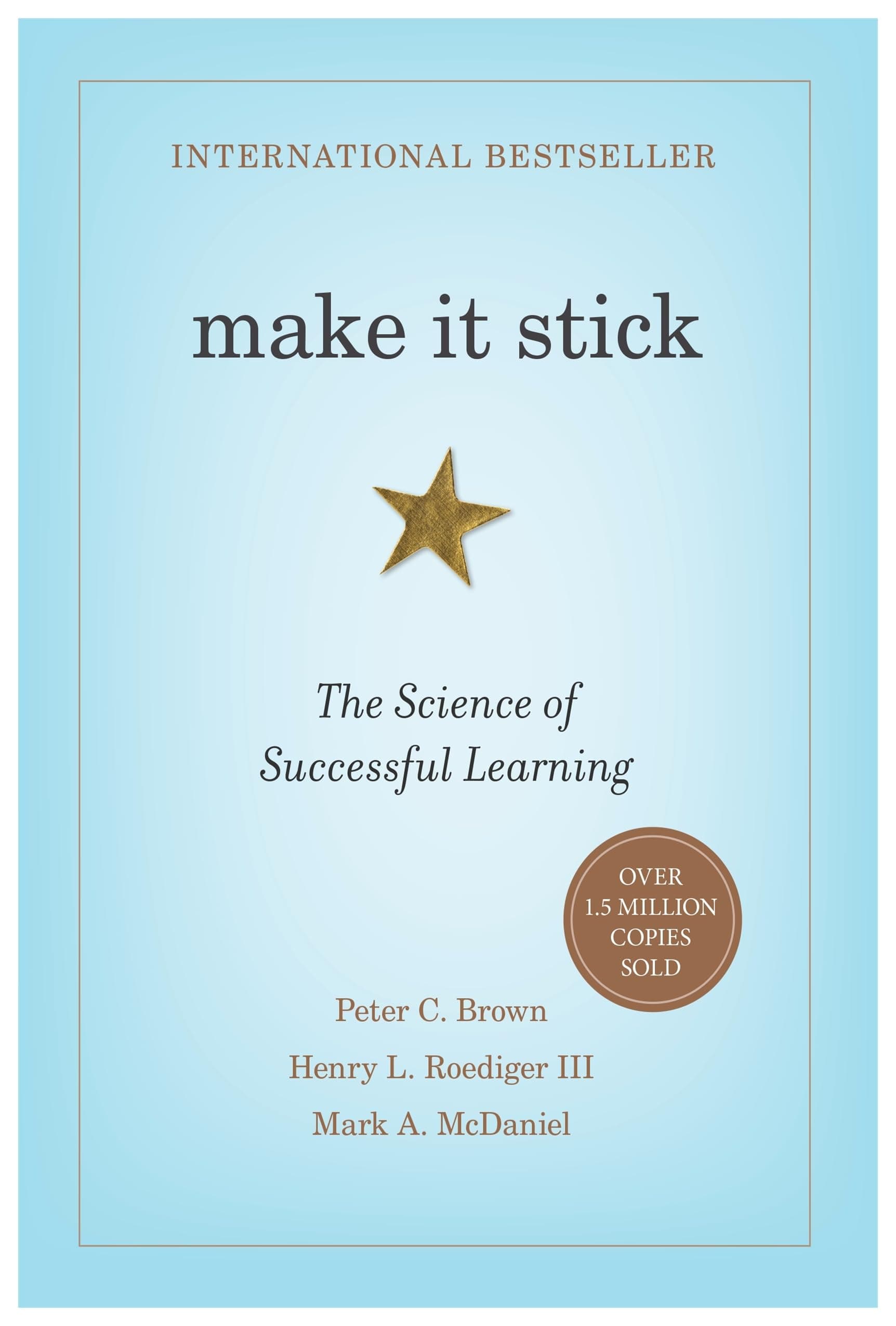
Make it stick
Peter C. Brown
Free download · 500+ book summaries
What is Make it stick about?
Make It Stick was written with the help of researchers who have studied the functioning of memory throughout their lives. The book explores the possibilities of faster memorization and easier learning methods, while debunking myths and common misconceptions.
Key ideas of Make it stick
Retrieval Beats Rereading
Pulling information from memory through self-testing builds far more durable knowledge than rereading or highlighting the same material.
Spacing and Interleaving Work
Spreading practice over time and mixing problem types feels harder but produces skills that hold up under real conditions.
Difficulty Signals Progress
Methods that feel slow and frustrating, like generation and reflection, are exactly the ones cognitive science shows actually work.
Read an excerpt from the summary
Learning Is Misunderstood
Matt Brown was flying a twin-engine Cessna 401 northeast from Harlingen, Texas on a night freight run to Kentucky when the oil pressure on his right engine started bleeding away. He was at eleven thousand feet. He ran through the math without looking anything up. He shut down the right engine, feathered the prop to cut drag, pushed the left engine harder, held opposite rudder to keep the plane straight, and limped ten more miles to a runway. He landed by making a wide left-hand turn — the only direction the plane could still bank without falling out of the sky, because the dead engine was on the right.
That sequence came out of memory. Not a checklist on his lap, not a radio call to dispatch, not a manual he could thumb through. Trained reflex, retrieved cold, under stress. And that, Peter Brown, Henry Roediger, and Mark McDaniel argue in *Make It Stick*, is the entire point of learning. Knowledge that won't show up when you need it is just decoration.
The hard news in this book is that most of us are bad at producing this kind of usable knowledge, and we are bad in a specific, predictable way. The methods we trust most — rereading the chapter, highlighting the textbook, drilling one skill until it feels smooth, cramming the night before — are some of the least effective approaches cognitive science has ever measured. The methods that actually work feel slower and harder while you're doing them. That's the trick, and that's the reason we avoid them.
Roediger and McDaniel are cognitive psychologists at Washington University in St. Louis; Peter Brown is the writer who pulled their research, and the research of about a dozen colleagues, into one book. The collaboration began with a 2002 grant from the James S. McDonnell Foundation to apply cognitive psychology to real classrooms. The book is the public report.
Like it?
Continue in the appWho is it for?
- Anyone who studies by rereading notes and wants to know why it keeps failing.
- Anyone who trains others and needs techniques grounded in cognitive science research.
- Anyone who wants to build skills that hold up under pressure and real-world conditions.
- Anyone who believes their intelligence is fixed and is curious whether that belief is accurate.
About the author: Peter C. Brown
Peter C. Brown is a writer who collaborated with cognitive psychologists Henry Roediger and Mark McDaniel of Washington University in St. Louis to translate decades of memory research into practical guidance for learners. The collaboration grew from a 2002 grant by the James S. McDonnell Foundation to apply cognitive psychology findings to real classrooms.
Brown brings a journalist's clarity to dense experimental literature, making the book accessible to students, teachers, and working professionals rather than academic specialists.
Read it in 50 minutes
The summary of Make it stick and 500+ more books await in the BookBase app.