 English
 Magyar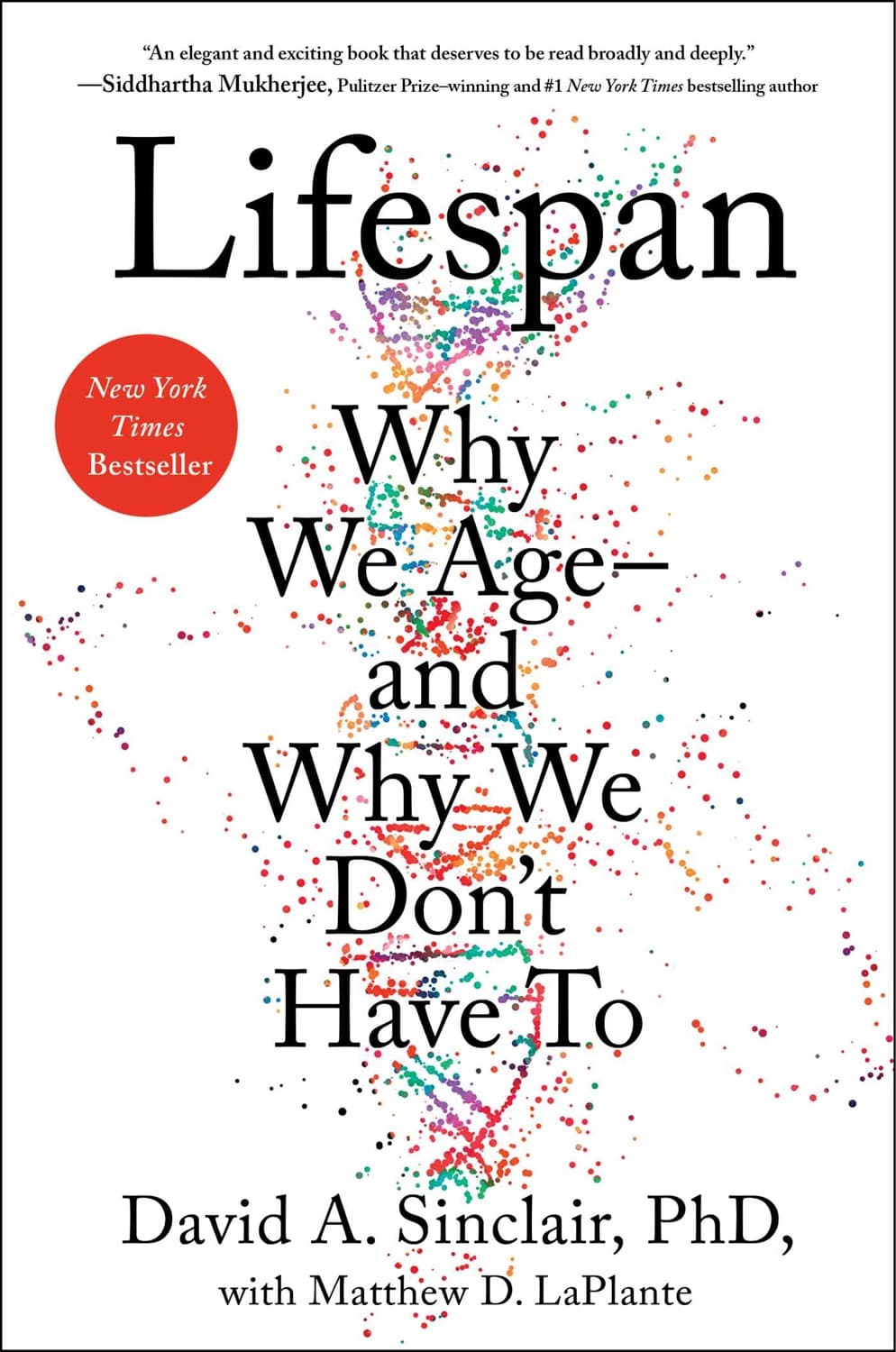
Lifespan
David A. Sinclair
Free download · 500+ book summaries
What is Lifespan about?
Why we age, and why we don't have to. Harvard scientist David Sinclair argues aging is a treatable disease, not an inevitability. He walks through the molecular biology of longevity and the daily habits, supplements, and emerging therapies that may extend healthy human lifespan by decades. The book that put longevity science on the popular map.
Key ideas of Lifespan
Aging as Information Loss
Aging is driven by the epigenome losing fidelity over time, not simply by the random accumulation of cellular damage.
Activating the Survival Circuit
Caloric restriction, intermittent fasting, exercise, and cold exposure all trigger ancient biological pathways that slow cellular aging.
Reversing Age Through Reprogramming
Partial expression of Yamanaka factors can restore a cell's youthful epigenetic state without erasing its identity.
Read an excerpt from the summary
Lifespan: Why We Age -- and Why We Don't Have To
Her name was Vera, and she should not have been in the garden at eighty-something, hauling bags of compost across the Sydney lawn. But there she was -- David Sinclair's maternal grandmother, moving with the kind of energy most people lose by sixty. She ate little. She worked in the dirt most mornings. She laughed loudly and slept well and had no particular interest in slowing down. She outlived her husband by decades. When Sinclair, already deep into his longevity research at Harvard Medical School, would visit her in Australia, he would watch her and wonder: what is she doing that the others are not?
Vera was not a medical miracle. She had no access to experimental compounds. She did not know what a sirtuin was. But she had, apparently by instinct, stumbled onto several of the survival behaviors that Sinclair would spend his career trying to quantify. She under-ate. She moved. She spent time in cold. She was, in his telling, a living argument for the central claim of his 2019 book: aging is not inevitable. It is a disease. And diseases can be treated.
This is the book that made biologists uncomfortable and journalists ecstatic. "Lifespan: Why We Age -- and Why We Don't Have To" is one part rigorous science, one part manifesto, and one part personal testimony. David Sinclair is a geneticist and professor at Harvard Medical School, co-director of the Paul F. Glenn Center for Biology of Aging Research, and one of the most cited researchers in his field. He is also a man with a habit of getting out ahead of the evidence -- something he acknowledges, sometimes, and something his critics remind him of frequently. The book is exhilarating and occasionally overreaching. It is worth reading carefully, because the parts that hold up are extraordinary, and the parts that don't are instructive in their own way.
Like it?
Continue in the appWho is it for?
- Anyone who wants to understand the molecular biology behind why we age and what can be done about it.
- Anyone who is curious about evidence-based habits and supplements that may extend healthy lifespan.
- Anyone interested in how diseases like cancer, Alzheimer's, and diabetes share a common biological root in aging.
- Anyone who wants a rigorous but accessible guide to the cutting edge of longevity science.
About the author: David A. Sinclair
David A. Sinclair is a geneticist and professor at Harvard Medical School, where he co-directs the Paul F. Glenn Center for Biology of Aging Research. He is one of the most cited researchers in his field, with foundational work on sirtuins and the NAD+ pathway dating back to his time in Lenny Guarente's lab at MIT in the 1990s.
Sinclair is also a co-founder of several biotechnology companies working on longevity therapies, including Life Biosciences. He has been recognized by Time magazine as one of the most influential people in the world. He is known for both the rigor of his laboratory science and his willingness to publicly advocate for positions ahead of full clinical consensus.
Read it in 47 minutes
The summary of Lifespan and 500+ more books await in the BookBase app.