 English
 Magyar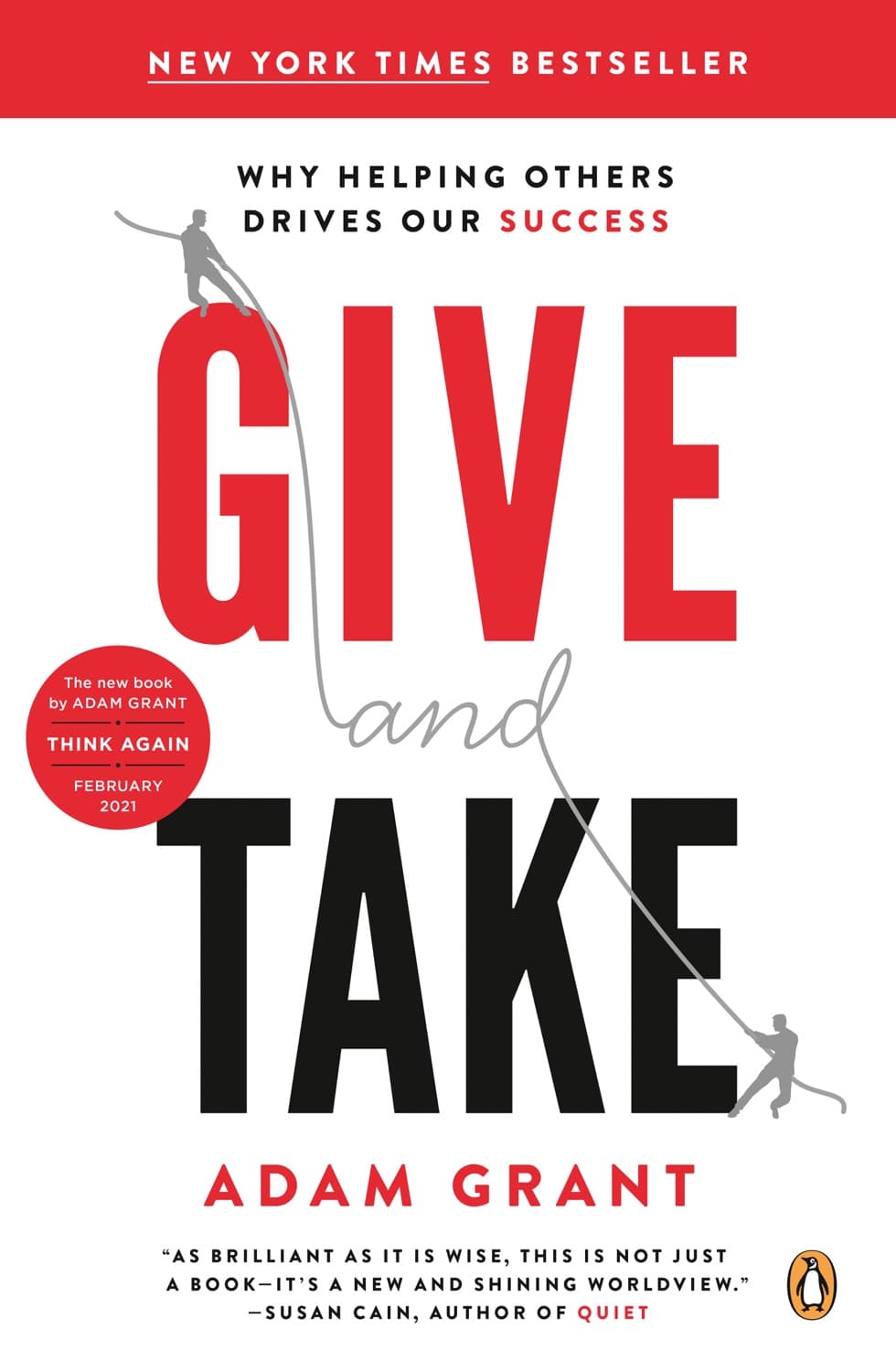
Give and Take
Adam Grant
Free download · 500+ book summaries
What is Give and Take about?
Wharton professor Adam Grant breaks down what really drives long-term success: how you treat others. He maps out three distinct styles, givers, takers, and matchers, and shows why the most successful people are the ones who give more than they get, without burning out. A fresh way to think about networking, leadership, and influence.
Key ideas of Give and Take
Givers Dominate at Both Extremes
Research across professions shows givers land at both the bottom and top of performance rankings, while takers and matchers cluster in the middle.
Otherish Giving Beats Selfless Giving
Successful givers protect their own time and energy, spot takers early, and give strategically rather than saying yes to everything.
Reputation and Networks Compound Over Time
Givers build stronger professional networks through small, consistent acts of help, and their reputations keep paying dividends across a long career.
Read an excerpt from the summary
Give and Take — summary
The strangest term sheet in Silicon Valley
Two dads stood on the sideline of a kids' soccer game in Silicon Valley. One was a serial entrepreneur named Danny Shader, who had already sold two companies for hundreds of millions of dollars. The other was a venture capitalist named David Hornik, a 5'4" computer-music major turned criminologist turned lawyer who collects first editions of *Alice in Wonderland*. They got to talking about Shader's new idea: a way for the 25% of Americans without bank accounts to pay for things online by walking into a 7-Eleven with a barcode.
Hornik loved it. Within a week he handed Shader a term sheet. And here's the part that stops you cold. Every venture capitalist on earth attaches a deadline to a term sheet. The deadline is the whole game. It pressures the founder, prevents shopping, creates urgency. Hornik did the opposite. "Take as much time as you need," he said. He even sent Shader a list of 40 founders he had backed before, encouraging him to call every one and ask whether Hornik was a person worth working with.
Shader took the time, called the references, shopped the deal. And then he signed with someone else. By every conventional rule of negotiation, Hornik had blown it. Except the story doesn't end there. Shader felt strange after he signed. He felt like he was leaving something behind. Before the round closed, he called Hornik and asked if he could invest anyway, even though it would mean Shader's own ownership stake had to shrink. Hornik said yes. The company, PayNearMe, grew thirty percent a month. Hornik now sits on twenty-eight similar deals, with an 89% close rate where the industry average is closer to 50.
Like it?
Continue in the appWho is it for?
- Anyone who wonders whether being generous at work is a liability rather than an asset.
- Anyone who wants to build a professional network that actually opens doors over the long term.
- Anyone managing a team and curious about what leadership style produces the best group performance.
- Anyone who has burned out from helping others and wants a more sustainable way to give.
About the author: Adam Grant
Adam Grant is an organizational psychologist and professor at the Wharton School of the University of Pennsylvania, where he has been recognized as one of the top-rated teachers multiple times. His research focuses on how motivation, generosity, and work styles shape individual and organizational success.
Grant is also a bestselling author and host of the podcast WorkLife with Adam Grant. Give and Take was his first book and became a New York Times and Wall Street Journal bestseller, drawing on studies from dozens of industries to challenge conventional wisdom about what drives long-term achievement.
Read it in 46 minutes
The summary of Give and Take and 500+ more books await in the BookBase app.