 English
 Magyar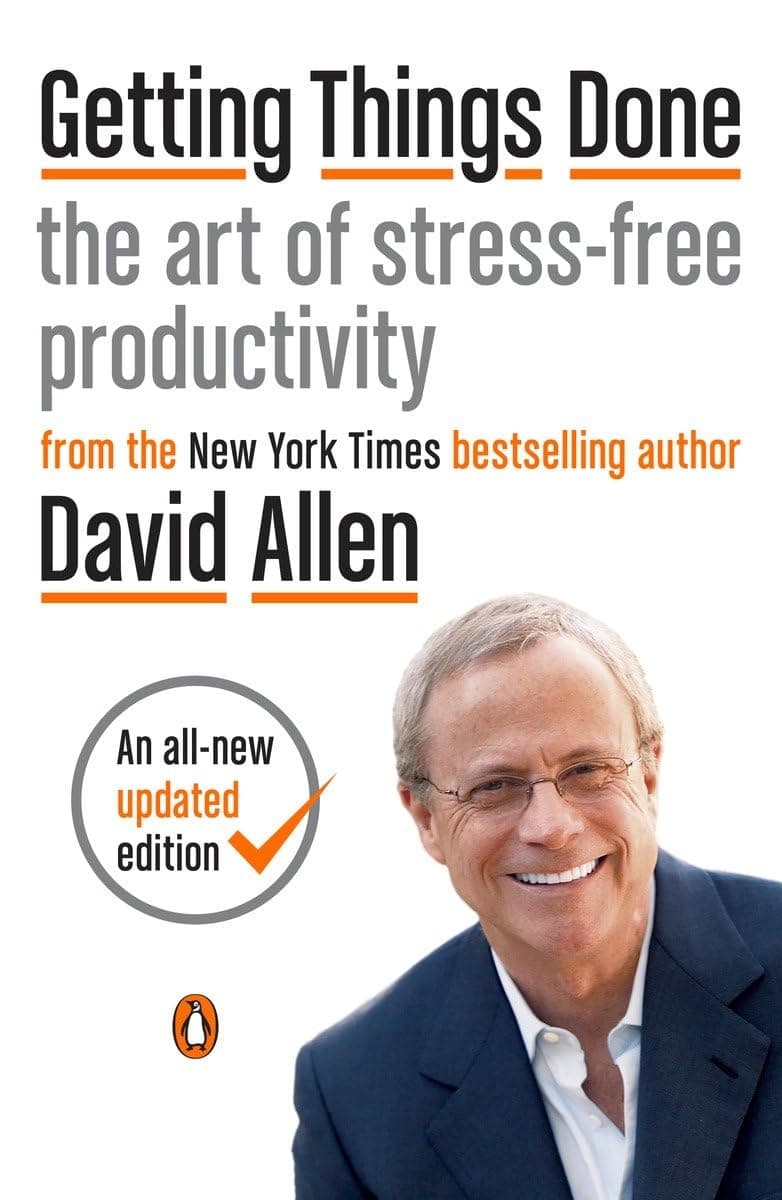
Getting Things Done
David Allen
Free download · 500+ book summaries
What is Getting Things Done about?
Getting Things Done allows you to master the basics of managing various workflows, which can be achieved by implementing a new system and acquiring a new skill.
Key ideas of Getting Things Done
Capture Every Open Loop
Writing down every incomplete commitment frees your brain from tracking obligations and eliminates the low-grade anxiety that drains focus throughout the day.
The Next-Action Question
Defining the very next physical action for every project removes the hidden bottleneck that keeps most tasks stuck, not laziness or lack of time.
Weekly Review as the Keystone Habit
A thorough weekly scan of every list and inbox keeps the whole system current and trustworthy, which is what allows the mind to genuinely let go between sessions.
Read an excerpt from the summary
Why Your Head Is the Worst Place to Keep Your To-Do List
Most people think their problem is having too much to do. David Allen has spent forty years arguing they have it backwards. The problem is not the volume of work. The problem is that every uncompleted task you can think of is currently competing for a small slice of your attention, and that competition is exhausting you before you have done any actual work.
Allen calls this background noise ambient angst. It is the Sunday evening dread you cannot explain, the low hum of pressure that follows you into showers and dinners and your kids' soccer games. It is the moment at 2 a.m. when you sit up in bed because you have just remembered you never replied to your sister-in-law. None of these moments are about the task itself. They are about the fact that your brain has been forced to act as the filing cabinet for every commitment you have ever made, and a filing cabinet is a terrible thing for a brain to be.
This is the foundation on which Getting Things Done is built. The book, first published in 2001 and revised in 2015, sold millions of copies because Allen put a name and a system around a feeling that knowledge workers had been suffering from for decades without knowing what to call it. Peter Drucker had described the shift in advance. Where industrial work used to have visible edges, knowledge work has none. The factory worker knows when the shift ends. The marketing manager could in theory keep refining the deck forever. The schoolteacher could in theory keep improving the lesson plan forever. The startup founder could in theory keep iterating on the product forever. Nothing ever ends, and there are always more inputs incoming, and somewhere along the way your mind starts believing that every one of those open loops needs to be solved right now, including the ones you have not even consciously articulated.
Like it?
Continue in the appWho is it for?
- Anyone who feels constantly behind despite working hard and never knowing what to tackle next.
- Anyone who lies awake at night replaying unfinished tasks or commitments they are afraid to forget.
- Anyone managing many projects at once and struggling to keep all the moving parts from slipping.
- Anyone who has tried productivity systems before but found them too rigid or too easy to abandon.
About the author: David Allen
David Allen is a productivity consultant who developed the Getting Things Done methodology over several decades of coaching executives and knowledge workers. His work centers on the idea that stress comes not from the volume of work but from poorly managed commitments.
He has advised organizations across a wide range of industries and is widely credited with giving knowledge workers a practical, repeatable framework for managing complex workloads. Getting Things Done, first published in 2001 and revised in 2015, is one of the best-selling books on personal productivity.
Read it in 44 minutes
The summary of Getting Things Done and 500+ more books await in the BookBase app.