 English
 Magyar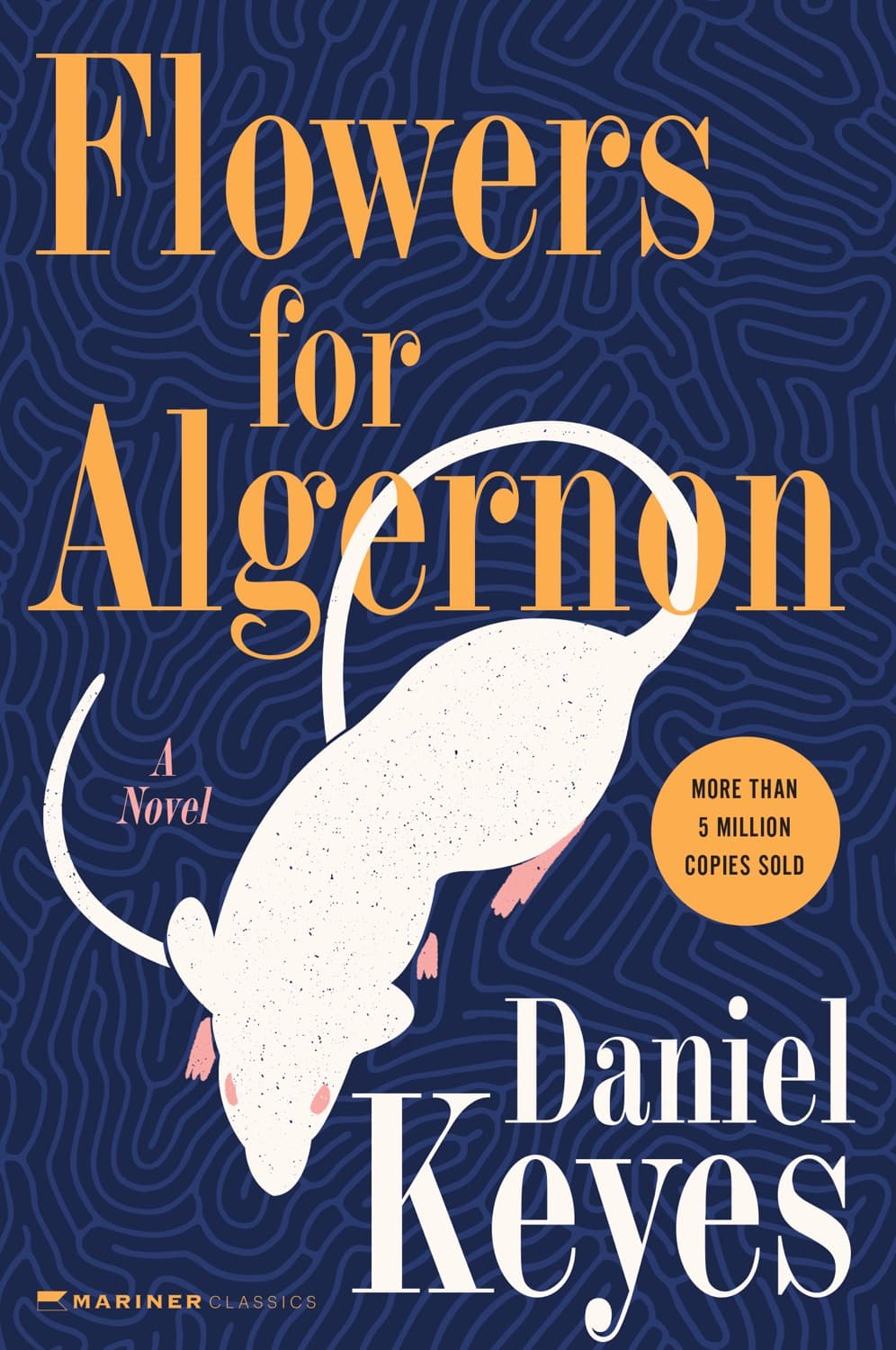
Flowers for Algernon
Daniel Keyes
Free download · 500+ book summaries
What is Flowers for Algernon about?
Charlie Gordon, a man with an IQ of 68, undergoes an experimental surgery that triples his intelligence and changes everything he believed about himself. Daniel Keyes's haunting novel about consciousness, identity, and what we owe each other. A book you read once and remember forever.
Key ideas of Flowers for Algernon
Intelligence Without Wisdom
Charlie's surgically boosted IQ sharpens his perception of pain and isolation without giving him the human connection he most needs.
The Ethics of Experiment
Dr. Nemur's team treats Charlie as a data point rather than a person, exposing how scientific ambition can crowd out basic human accountability.
Worth Beyond Cognition
Charlie's loyalty, grief, and capacity for love exist at IQ 68 and IQ 185 alike, proving his humanity was never tied to test scores.
Read an excerpt from the summary
Flowers for Algernon
The first entry reads: "progris riport 1 martch 3."
Three words and a date. Misspelled, cramped, painfully earnest. That is how Charlie Gordon introduces himself to the world -- a 32-year-old man with an IQ of 68, a custodian at Donner's Bakery in New York City, and a hunger to learn that he cannot quite name. He does not know why he wants so badly to read. He does not know why his teacher, Miss Alice Kinnian, looks at him sometimes with something that might be sadness. He does not know that the doctors who have selected him for an experimental brain surgery are about to change everything he is, everything he was, and everything he will become.
Daniel Keyes published the novel version of *Flowers for Algernon* in 1966, seven years after the original novella appeared in *The Magazine of Fantasy & Science Fiction* and won the Hugo Award for Best Short Fiction. The novella took five years to sell -- rejected repeatedly, including by Doubleday, who wanted Keyes to change the ending so Charlie kept his intelligence. Keyes gave back the advance rather than change it. He was right. The expanded novel, finally published by Harcourt, tied for the Nebula Award for Best Novel with Samuel Delany's *Babel-17*. Over the decades it has been read by millions, taught in schools across the world, challenged, banned, and returned to the shelf -- not because of its science fiction premise, but because of the brutally honest question it refuses to stop asking: What does it mean to be a person? What do we owe each other? And when we take a human being and make them "better" by one narrow measurement, what exactly are we doing to them?
Like it?
Continue in the appWho is it for?
- Anyone who wants a classic novel that questions how society decides who counts as fully human.
- Anyone who is drawn to stories told in an unusual narrative form, here a man's diary entries whose prose style changes as his mind expands and contracts.
- Anyone curious about the ethics of medical experimentation and what researchers owe the people they study.
- Anyone who has felt excluded or underestimated and wants a book that takes that experience seriously.
About the author: Daniel Keyes
Daniel Keyes was an American author and English professor who spent five years trying to sell the original novella version of this story before it appeared in The Magazine of Fantasy and Science Fiction in 1959, winning the Hugo Award for Best Short Fiction. When publishers pushed him to change the ending so Charlie kept his intelligence, Keyes returned an advance rather than comply.
The expanded novel, published by Harcourt in 1966, tied for the Nebula Award for Best Novel. Keyes taught at Ohio University for much of his career and continued writing fiction and nonfiction. He died in 2014.
Read it in 42 minutes
The summary of Flowers for Algernon and 500+ more books await in the BookBase app.