 English
 Magyar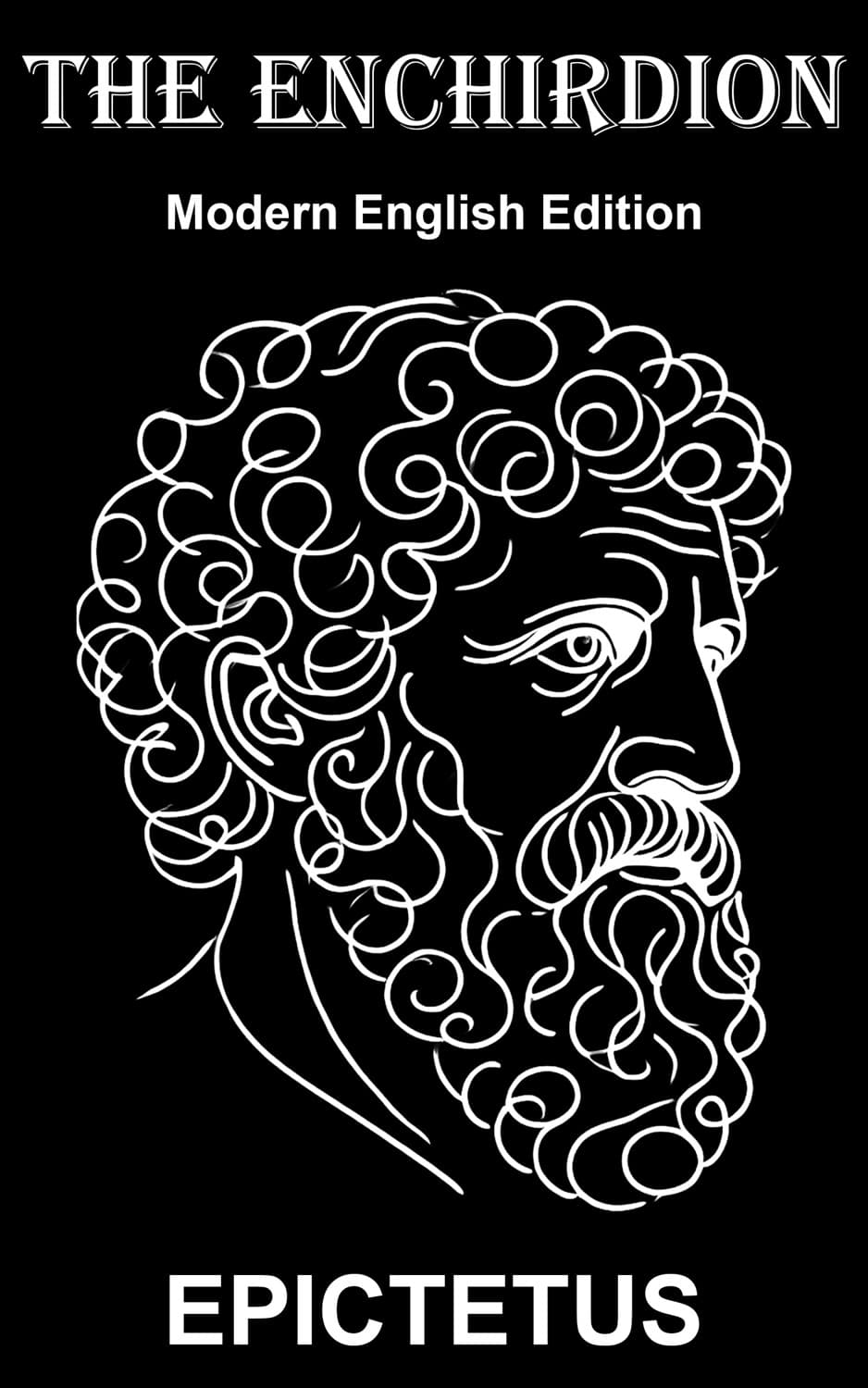
Enchiridion
Epictetus
Free download · 500+ book summaries
What is Enchiridion about?
The handbook of Stoic philosophy, distilled. Epictetus's two-thousand-year-old guide on what is in your control and what is not, on how to live with discipline, and on facing pain, loss, and ambition without losing yourself. Short enough to fit in your pocket, deep enough to last a lifetime.
Key ideas of Enchiridion
The Dichotomy of Control
Everything in life falls into two categories: what you control (your own judgments and responses) and what you do not, and confusing the two causes all avoidable suffering.
Judgment Shapes Suffering
People are not disturbed by events themselves but by the beliefs they attach to events, making psychological distress something you can examine and revise.
Inner Freedom Through Discipline
Practicing restraint over desire, action, and assent builds a freedom that no external force, including torture or loss, can take away.
Read an excerpt from the summary
Enchiridion
In the autumn of 65 CE, a young slave in Rome watched his master, Epaphroditus -- a secretary to the emperor Nero -- grip his leg and begin to twist. Epaphroditus was making a point. The slave's name was Epictetus. He said, calmly, "You are going to break it." Epaphroditus kept twisting. The bone snapped. Epictetus looked at his master and said, "Did I not tell you that you would break it?"
That story, preserved through generations of Stoic tradition, may be embellished. But the portrait it paints is not. Epictetus walked with a permanent limp for the remaining seventy years of his life. He never owned property. He was expelled from Rome by imperial decree. He lived in a rented house in a provincial Greek port town and taught philosophy to anyone who came to listen. He wrote nothing himself -- every word we have from him was taken down by students and published after the fact. He died around 135 CE without wealth, without political influence, without a body that fully worked.
He is also the most direct ancestor of modern cognitive behavioral therapy. He shaped the inner life of Marcus Aurelius. Frederick the Great of Prussia carried a copy of his handbook on military campaigns. Admiral James Stockdale memorized his words before being shot down over North Vietnam in 1965, and credited them -- literally -- with keeping him sane through seven and a half years of torture and solitary confinement in the Hoa Lo Prison.
The book that did all of that is not long. The Enchiridion -- the word means "small thing to have in hand," a handbook -- runs to roughly 50 short chapters. A slow reader finishes it in two hours. Arrian, a wealthy young Roman student who would later become consul and governor of Cappadocia, compiled it from notes he took in Epictetus's lecture hall in Nicopolis, Greece, around 125 CE. He also compiled a longer set of notes called the Discourses, but the Enchiridion is the distillation. The portable version. The thing you could copy onto a few sheets of papyrus and carry in a saddlebag.
Like it?
Continue in the appWho is it for?
- Anyone who wants a grounded, practical philosophy for handling loss, failure, and uncertainty without falling apart.
- Anyone who feels their sense of worth depends too heavily on other people's opinions or on outcomes they cannot control.
- Anyone curious why Stoicism has influenced everyone from Marcus Aurelius and Prussian kings to modern cognitive behavioral therapists.
- Anyone looking for a short, repeatable guide they can return to when life gets hard rather than a self-help book to read once.
About the author: Epictetus
Epictetus was born around 55 CE in Hierapolis, in present-day western Turkey, and spent his early life as a slave in Rome. His owner permitted him to study philosophy under Musonius Rufus, one of the leading Stoic teachers of the era. After being freed, Epictetus taught philosophy in Rome until the emperor Domitian expelled all philosophers from the city in 93 CE. He relocated to Nicopolis, Greece, where he ran a school and taught until his death around 135 CE.
Epictetus wrote nothing himself. Every word in the Enchiridion and the Discourses was recorded by his student Arrian, a Roman who later became a consul and historian. Despite owning almost nothing and never holding political office, Epictetus shaped the inner life of Marcus Aurelius, influenced the design of modern cognitive behavioral therapy through Albert Ellis, and was credited by Admiral James Stockdale with sustaining him through years of captivity and torture in North Vietnam.
Read it in 42 minutes
The summary of Enchiridion and 500+ more books await in the BookBase app.