 English
 Magyar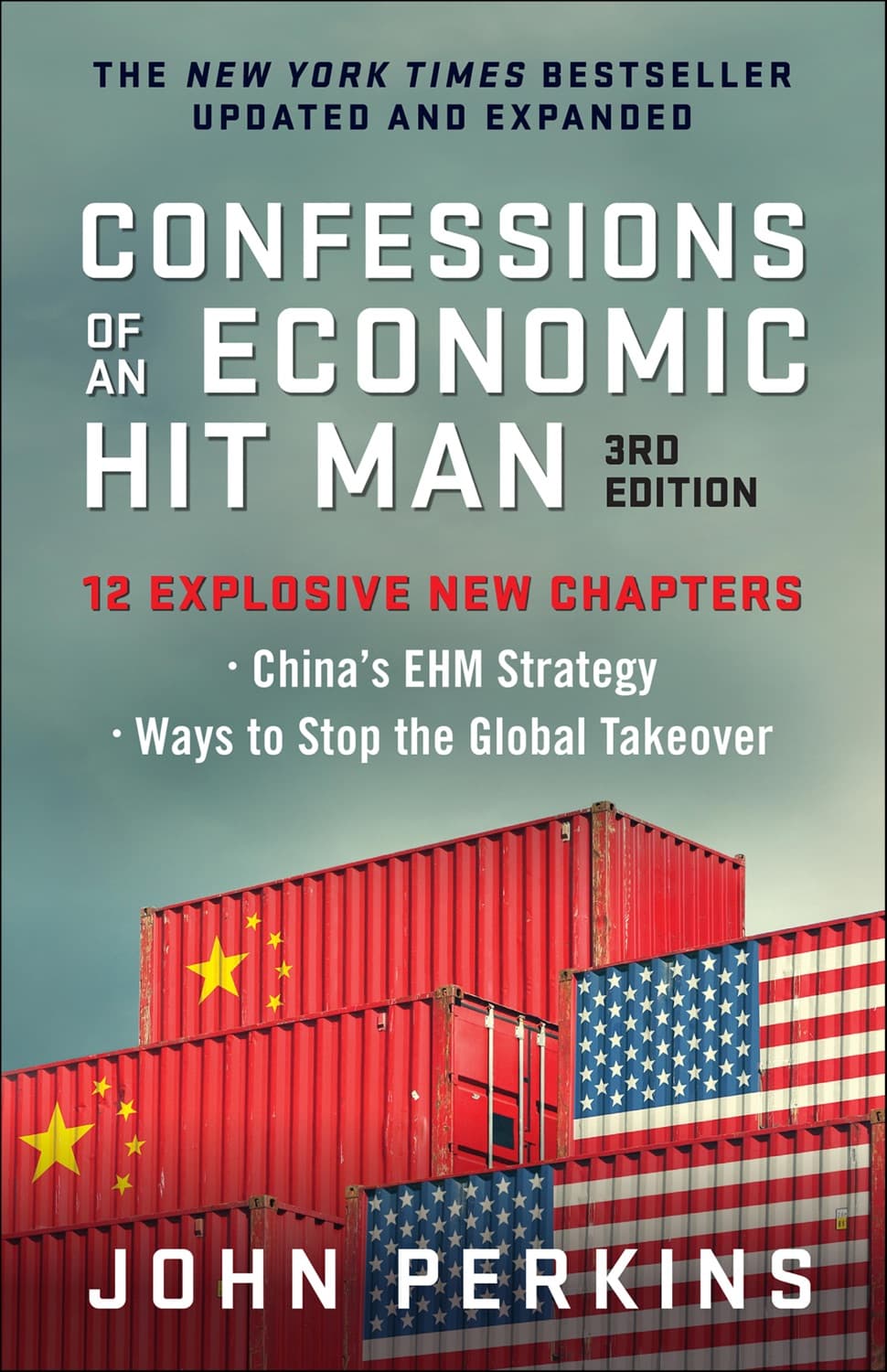
Confessions of an Economic Hit Man
John Perkins
Free download · 500+ book summaries
What is Confessions of an Economic Hit Man about?
A former insider's confession about how American consultants quietly manipulated developing nations into accepting crippling loans, all to cement corporate and geopolitical power. John Perkins names the names, walks through the mechanics, and reveals the hidden machinery behind decades of foreign policy.
Key ideas of Confessions of an Economic Hit Man
The Debt Trap Mechanism
Consultants inflated economic forecasts to justify massive loans, leaving developing nations with unpayable debt that gave American interests lasting leverage over their governments.
Three-Tier Coercion System
When debt diplomacy failed, the system escalated through covert operatives to outright military force, as the fates of leaders like Roldós and Torrijos suggest.
Petrodollar Architecture
Recycling oil revenues into US Treasuries and American contracts kept dollar dominance intact and made the lending cycle self-financing on a global scale.
Read an excerpt from the summary
Confessions of an Economic Hit Man
In 1971, a twenty-six-year-old American named John Perkins arrived on the island of Java carrying an attaché case, a stack of economic models, and instructions that nobody had written down anywhere. His employer was a Boston consulting firm called Chas. T. Main. His assignment was to produce a forecast for Indonesia's electricity needs over the next twenty years. His forecast came back showing that demand would grow at nineteen percent a year -- a figure that, if true, would justify a multi-billion-dollar loan from the World Bank for dams, power plants, and transmission infrastructure across the archipelago.
The loan came through. American engineering firms won the contracts. The infrastructure was built. And Indonesia was left with a debt it could not repay -- which, according to the theory Perkins would spend the rest of his life trying to explain, was the whole point.
Perkins published *Confessions of an Economic Hit Man* in 2004. It spent five years on the New York Times bestseller list. It was updated in 2016 and again in 2023. The book has been translated into dozens of languages and has sold millions of copies. And it has been contested, dismissed, praised, and cited in roughly equal measure.
The central argument is not complicated. A small class of financial professionals, working on behalf of a network of American corporations, banks, and government agencies, deliberately engineered debt traps for developing countries. The mechanism was simple: inflate the economic forecasts that justified massive infrastructure loans, watch the host country's government take the money, watch American companies collect the contracts, then watch the debt become unpayable. Once the country owed more than it could service, the leverage was total. You could demand favorable oil contracts, military base access, UN votes, structural adjustment programs that gutted public services, or alignment in any foreign policy matter that Washington cared about. The debt was not a side effect of development lending. It was the product.
Like it?
Continue in the appWho is it for?
- Anyone who wants to understand how sovereign debt has been used as a tool of geopolitical control.
- Anyone who is curious about the gap between the stated goals of the World Bank and IMF and their documented outcomes.
- Anyone who follows international news and wants a first-person frame for patterns like the Belt and Road Initiative or Greek austerity.
- Anyone who has worked in consulting, finance, or government and wonders how individually defensible decisions add up to harmful systems.
About the author: John Perkins
John Perkins worked as a chief economist at the Boston consulting firm Chas. T. Main from the early 1970s, advising on infrastructure projects across Indonesia, Ecuador, Saudi Arabia, Panama, and other countries. After leaving the firm in 1981 he founded Independent Power Systems and later Dream Change, an environmental advocacy organization.
He is also a co-founder of the Pachamama Alliance, which works with indigenous Amazon communities. Since publishing this book in 2004 he has expanded its argument through updated editions in 2016 and 2023, and in follow-up books including The Secret History of the American Empire.
Read it in 48 minutes
The summary of Confessions of an Economic Hit Man and 500+ more books await in the BookBase app.