 English
 Magyar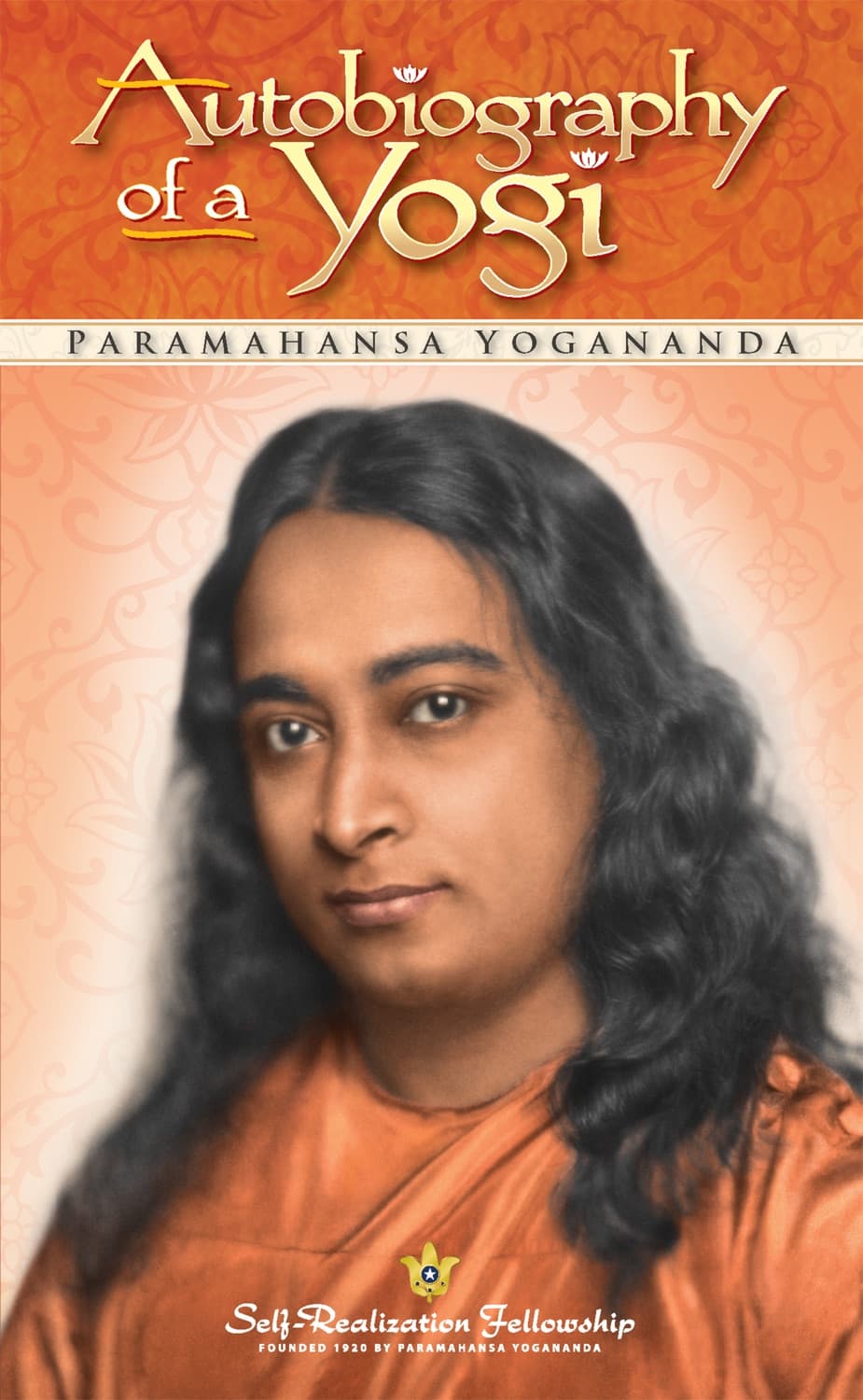
Autobiography of a Yogi
Paramahansa Yogananda
Free download · 500+ book summaries
What is Autobiography of a Yogi about?
The book Steve Jobs gave to every guest at his memorial. Yogananda's spiritual classic traces a young Bengali boy's path from miracle-haunted childhood to teaching meditation across the world, weaving science, devotion, and direct mystical experience into one luminous narrative. A foundational text for anyone curious about consciousness, self-realization, and the unseen architecture beneath everyday life.
Key ideas of Autobiography of a Yogi
Ordinary Life as Spiritual Ground
Lahiri Mahasaya proved that deep meditation practice belongs to householders with jobs and families, not only to cave-dwelling renunciants.
The Mind as a Radio
A trained, quiet mind can perceive the signals already present in its environment, while restless inner noise drowns them out entirely.
Inner State Shapes Outer Life
The mental and emotional state you carry each day cumulatively shapes your circumstances, decisions, and relationships more than external events do.
Read an excerpt from the summary
Autobiography of a Yogi — summary
The book Steve Jobs gave to every guest at his memorial
When Steve Jobs died in 2011, his loved ones found a strange gift waiting at the memorial service. Each attendee received a small brown box. Inside was a single book, hand-picked by Jobs himself: "Autobiography of a Yogi" by an Indian monk named Paramahansa Yogananda. Jobs had read it once a year, every year, since he was a teenager in India. The book sat on his iPad as the only one he ever bothered to download. He wanted his last conversation with the people he loved to be a book about a Bengali boy who saw God.
That alone should make you curious. A man who built the most rational, design-obsessed company on earth used his final moment to hand out a 600-page book full of flying saints, resurrected gurus, and a Himalayan master who supposedly never aged. Why? What did Jobs see in this strange, dazzling, sometimes baffling autobiography that made it the one book he wanted his friends to walk away with?
This summary answers three questions. What actually happens in the book, beyond the miracles people argue about? What can a 21st-century reader, with bills and deadlines and a healthy skeptical streak, actually use from a yogi's life story? And why has it kept selling for over 80 years, in 50 languages, when most spiritual memoirs disappear in a season? You do not need to believe in levitation to get something out of this book. You only need to be willing to sit with someone who took the inner life as seriously as a scientist takes data.
A boy who remembered being someone else
Yogananda was born Mukunda Lal Ghosh in 1893, in a Bengali family that took religion seriously but lived a normal middle-class life. His father worked for the railway. His mother ran the household. The strange thing about Mukunda, from the beginning, was that he claimed to remember a previous life. As a tiny child, he said he could feel himself sitting in a Himalayan cave, snow-covered and silent, in a body that was not his current one. He could not yet speak in full sentences, but he could already feel the loss of that older identity.
Like it?
Continue in the appWho is it for?
- Anyone who feels that a serious spiritual life requires abandoning their ordinary work and family.
- Anyone who is curious about meditation, consciousness, and the inner life but comes from a skeptical, science-minded background.
- Anyone who is searching for a calmer relationship with fear, impermanence, and the prospect of death.
- Anyone who wants to understand the roots of the modern yoga and mindfulness movement from its primary source.
About the author: Paramahansa Yogananda
Paramahansa Yogananda (1893-1952) was born Mukunda Lal Ghosh in Gorakhpur, India, into a devout Bengali family. He trained for years under the Indian swami Sri Yukteswar Giri before sailing to America in 1920 to speak at a religious congress in Boston.
He settled in Los Angeles and founded the Self-Realization Fellowship in 1925, teaching Kriya Yoga to Western students for three decades. Autobiography of a Yogi, first published in 1946, became one of the most widely read spiritual memoirs of the twentieth century and has remained continuously in print across more than fifty languages.
Read it in 43 minutes
The summary of Autobiography of a Yogi and 500+ more books await in the BookBase app.