 English
 Magyar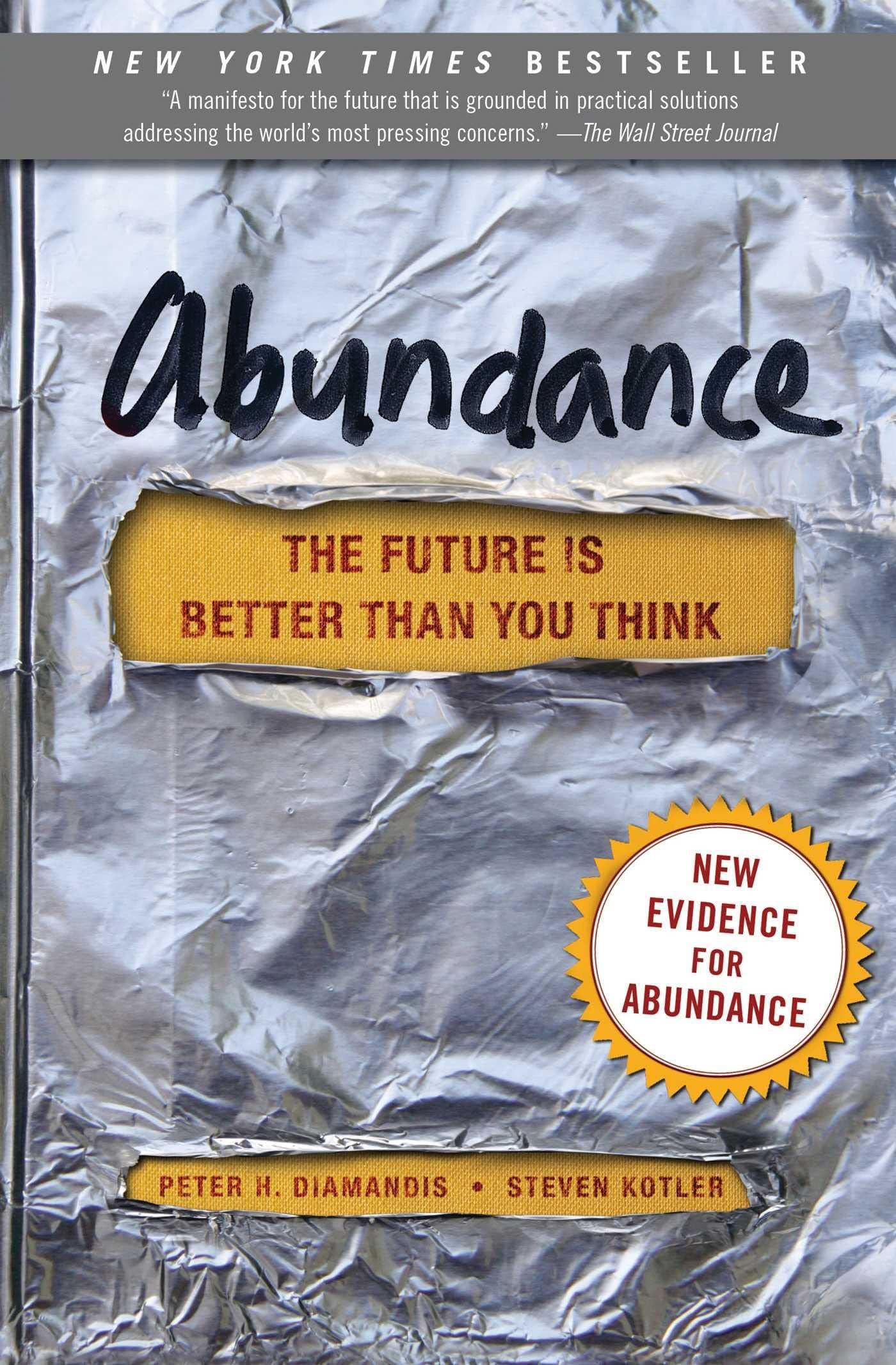
Abundance
Peter H. Diamandis
Free download · 500+ book summaries
What is Abundance about?
Abundance presents the emerging key technological trends to give a glimpse into a future much brighter than we might think, helping us adopt the optimism necessary to make it a reality.
Key ideas of Abundance
Scarcity Is Inaccessibility
Most things we treat as scarce are simply inaccessible, and the right technology dissolves the constraint entirely, as aluminum's story shows.
Exponential Technology Curves
Computing, biotech, energy, and manufacturing all follow exponential improvement curves that make transformative abundance achievable within a generation.
Three Forces Accelerating Progress
DIY innovators, technophilanthropists, and the rising billion of newly connected people are each pushing humanity's hardest problems toward solutions.
Read an excerpt from the summary
Chapter 1: The Goldsmith Who Lost His Head
In the first century, a goldsmith brought a strange dinner plate to the court of Emperor Tiberius. The metal was light, the color of moonlight, dull but rust-free, and the goldsmith claimed he had made it from common clay. He expected a reward. Tiberius had him beheaded. The emperor's logic was airtight on its own terms. If clay could be turned into a metal lighter than silver, his vast hoards of gold and silver would lose their value. So he killed the man and buried the secret with him.
The story comes from Pliny the Elder, and the metal was aluminum. For roughly two thousand years after that beheading, the third most abundant element in the Earth's crust remained more valuable than gold. Napoleon the Third hosted dinners where his honored guests ate with aluminum utensils while everyone else made do with mere gold. Then Charles Martin Hall and Paul Heroult independently figured out how to liberate aluminum from bauxite using electricity, and within a few years the most precious metal on Earth was being used to wrap leftover sandwiches.
Notice what Tiberius could not see. The aluminum was already there, in the soil under his feet, in the cliffs above his villas. The constraint was not the element. The constraint was the lack of a tool to free it. The deeper trap, the one Diamandis circles back to in every chapter, is that Tiberius's mind was working perfectly within an older frame. Scarcity made his wealth meaningful. A miracle that ended scarcity also ended that meaning. Killing the goldsmith was rational if you accepted the premise. The premise was wrong.
Like it?
Continue in the appWho is it for?
- Anyone who wants a data-driven case for why human progress is accelerating despite alarming headlines.
- Anyone who is building a company, product, or policy aimed at solving large-scale global problems.
- Anyone who feels pessimistic about the future of energy, food, water, or healthcare.
- Anyone who wants to understand how exponential technologies like AI, biotech, and solar will reshape everyday life.
About the author: Peter H. Diamandis
Peter H. Diamandis is an entrepreneur and futurist best known as the founder and executive chairman of the X PRIZE Foundation, which runs large-scale incentive competitions to accelerate solutions to global challenges. He co-founded Singularity University with Ray Kurzweil at NASA Ames Research Park to teach exponential thinking to founders and policy makers.
Diamandis holds degrees from MIT and Harvard Medical School and has been involved in founding or co-founding more than twenty companies in the space, longevity, and technology sectors. He is a frequent speaker and writer on the intersection of exponential technology and global development.
Read it in 49 minutes
The summary of Abundance and 500+ more books await in the BookBase app.