 English
 Magyar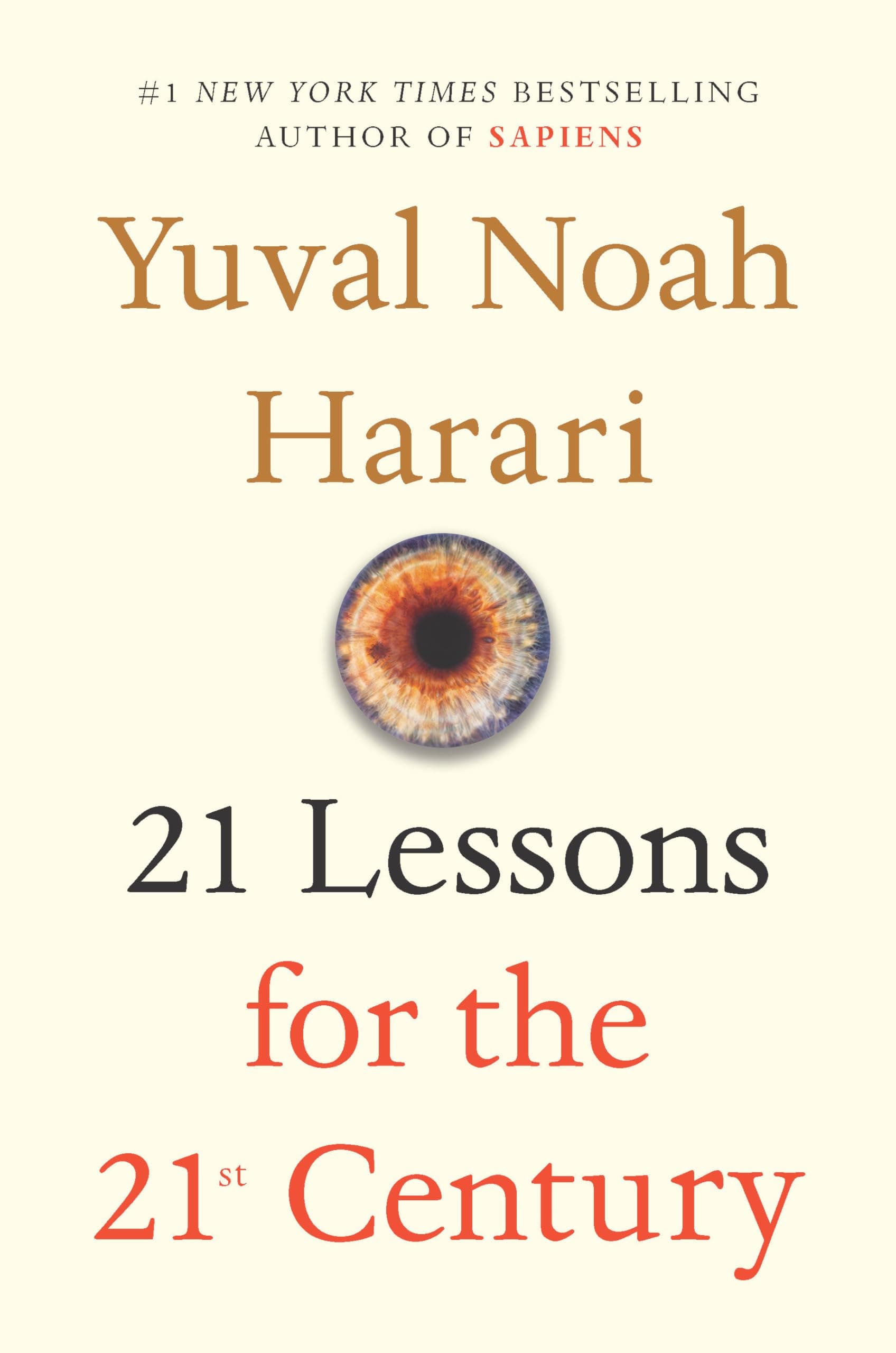
21 Lessons for the 21st Century
Yuval Noah Harari
Free download · 500+ book summaries
What is 21 Lessons for the 21st Century about?
"21 Lessons for the 21st Century" sheds light on the most pressing political, cultural, and economic challenges of our time, created by technology, while helping to prepare for an uncertain future.
Key ideas of 21 Lessons for the 21st Century
Stories That Shape Civilization
Humans cooperate through shared fictions, and when the liberal story collapsed after 2008, no replacement emerged to fill the gap.
Automation and Irrelevance
AI threatens not just jobs but human purpose, as algorithms outperform the cognitive pattern-recognition we once called intuition.
Data Ownership and Power
Whoever controls personal data will gain unprecedented political and economic dominance, potentially splitting humanity into biological castes.
Read an excerpt from the summary
In 1938, an educated person could choose from three big stories about where the world was headed: fascist, communist, or liberal. By 1968, two remained. By 1998, the liberal package had won outright — free markets, free elections, human rights, the end of history. When Yuval Noah Harari sat down to write *21 Lessons for the 21st Century* in 2018, the count had fallen to zero. Not because a new story had won, but because the old one had hollowed out and nothing had taken its place.
That zero is the room the book is written into. Harari's first book, *Sapiens*, zoomed all the way out to the human past. His second, *Homo Deus*, zoomed forward to a post-human future. This one stays uncomfortably close to the present — the next few decades — and asks what to do with a civilization that lost its plot midway through the chapter. The animating line is short and useful: "In a world deluged by irrelevant information, clarity is power." The book is not a manual. It is a writer trying to think clearly in public about twenty-one things at once, knowing each deserves a shelf to itself.
The View From Now
The structure walks outward and then back in. Part one asks what biotech and artificial intelligence are doing to liberal certainties. Part two asks whether the political units we still believe in — nations, religions, civilizations — can handle problems that do not respect borders. Part three turns to the fears that come with all of that: terrorism, war, the temptation to feel that we are the center of history. Part four is about truth, or the fact that we are a species that runs on stories whether they are true or not. Part five, the most personal section, asks what an individual should actually do with a head full of all this. Harari notes early that he criticizes liberal democracy not because it is uniquely bad but because it is "the most successful and most versatile political model humans have so far developed." The criticism is meant as maintenance, not demolition.
Like it?
Continue in the appWho is it for?
- Anyone who wants to understand why liberal democracy feels fragile and what forces are actually driving that erosion.
- Anyone who worries about automation and wants a clear-eyed view of how AI will reshape work and human identity.
- Anyone curious about how data, technology, and bioengineering may reshape politics and equality in the coming decades.
- Anyone looking for a grounded framework to think through nationalism, religion, terrorism, and global cooperation at once.
About the author: Yuval Noah Harari
Yuval Noah Harari is an Israeli historian and professor at the Hebrew University of Jerusalem. He is the author of the international bestsellers Sapiens and Homo Deus, which have been translated into dozens of languages and sold tens of millions of copies worldwide.
Harari's writing draws on history, evolutionary biology, economics, and philosophy to examine long-term trends in human civilization. He is known for synthesizing large bodies of research into accessible, argument-driven narratives aimed at general readers.
Read it in 54 minutes
The summary of 21 Lessons for the 21st Century and 500+ more books await in the BookBase app.