 English
 Magyar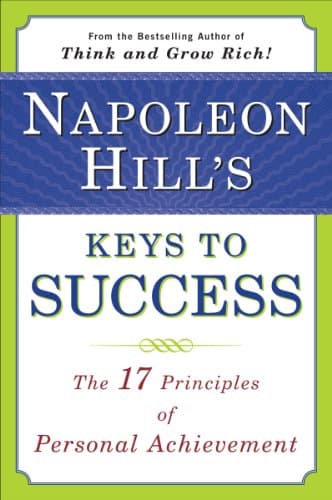
17 Principles of success
Napoleon Hill
Free download · 500+ book summaries
What is 17 Principles of success about?
Who is Napoleon Hill and why should you take his advice? This author, who lived in America between 1883 and 1970, published mainly in the self-improvement genre - and was one of the first authors to do so. He dedicated his life to discovering how people become successful, and his goal was to be able to articulate the qualities that are essential to achieving success. This book is based on two of his earlier books, both bestsellers: the Law of Success (1929) and Think and Grow Rich (1937). These principles he writes about are an excellent summary of what you need to do to succeed.
Key ideas of 17 Principles of success
Definiteness of Purpose
A clear, written goal with a deadline and a stated price you're willing to pay is the starting point for every other principle in the book.
Going the Extra Mile
Rendering more and better service than you're paid for, before any reward is promised, is how you attract opportunity and advance without waiting for permission.
Habit as Destiny
Every principle only becomes permanent once it hardens into automatic habit, because a single repeated act builds character and character shapes a life's direction.
Read an excerpt from the summary
The Stopwatch and the Twenty-Year Bargain
In the fall of 1908, a young reporter from the hills of Virginia walked into the office of the richest man on earth, expecting to spend an hour on a magazine article. He walked out with the assignment that would consume the next two decades of his life.
The reporter was Napoleon Hill. The man across the desk was Andrew Carnegie, the steel magnate, seventy-three years old and worth a fortune almost beyond counting. The interview that was scheduled to last an hour stretched into three days. Somewhere in that marathon conversation, Carnegie said a thing that stuck: it was a shame, he told Hill, that each new generation had to find the road to success by trial and error, when the principles behind it were really clear-cut. Successful people followed them. Most people never named them, never wrote them down, never taught them. So they stayed hidden in plain sight.
Then Carnegie made an offer. Would Hill take on the job of organizing the world's first practical philosophy of personal achievement? It would mean interviewing the most accomplished people in America, finding the threads that ran through all of them, and turning those threads into something an ordinary person could learn.
What Hill didn't know was that Carnegie was timing him. Hidden under the desk was a stopwatch. Carnegie had decided that if it took the young man longer than sixty seconds to say yes, he wasn't the right person, because, as he put it, a man who can't reach a decision promptly can't be depended on to carry through any decision he makes. Hill said yes in twenty-nine seconds.
Like it?
Continue in the appWho is it for?
- Anyone who feels directionless and wants a concrete framework for turning vague ambitions into a defined, actionable goal.
- Anyone who is early in their career and looking for timeless principles on how to build professional momentum and earn recognition.
- Anyone who has experienced a setback and needs a grounded perspective on how defeat and failure can be turned into useful information rather than a verdict.
- Anyone who wants to understand what the most studied success writers of the twentieth century actually found when they looked closely at accomplished people.
About the author: Napoleon Hill
Napoleon Hill (1883-1970) was an American author and one of the earliest writers to systematically study the habits and mindsets of successful people as a discipline. He spent roughly twenty years interviewing industrialists, inventors, and public figures, including Andrew Carnegie, Thomas Edison, and Henry Ford, looking for the common principles behind their achievements.
His 1937 book Think and Grow Rich remains one of the best-selling self-help books ever published, and the principles collected in this volume draw directly from that work and his earlier Law of Success (1928).
Read it in 42 minutes
The summary of 17 Principles of success and 500+ more books await in the BookBase app.