 English
 Magyar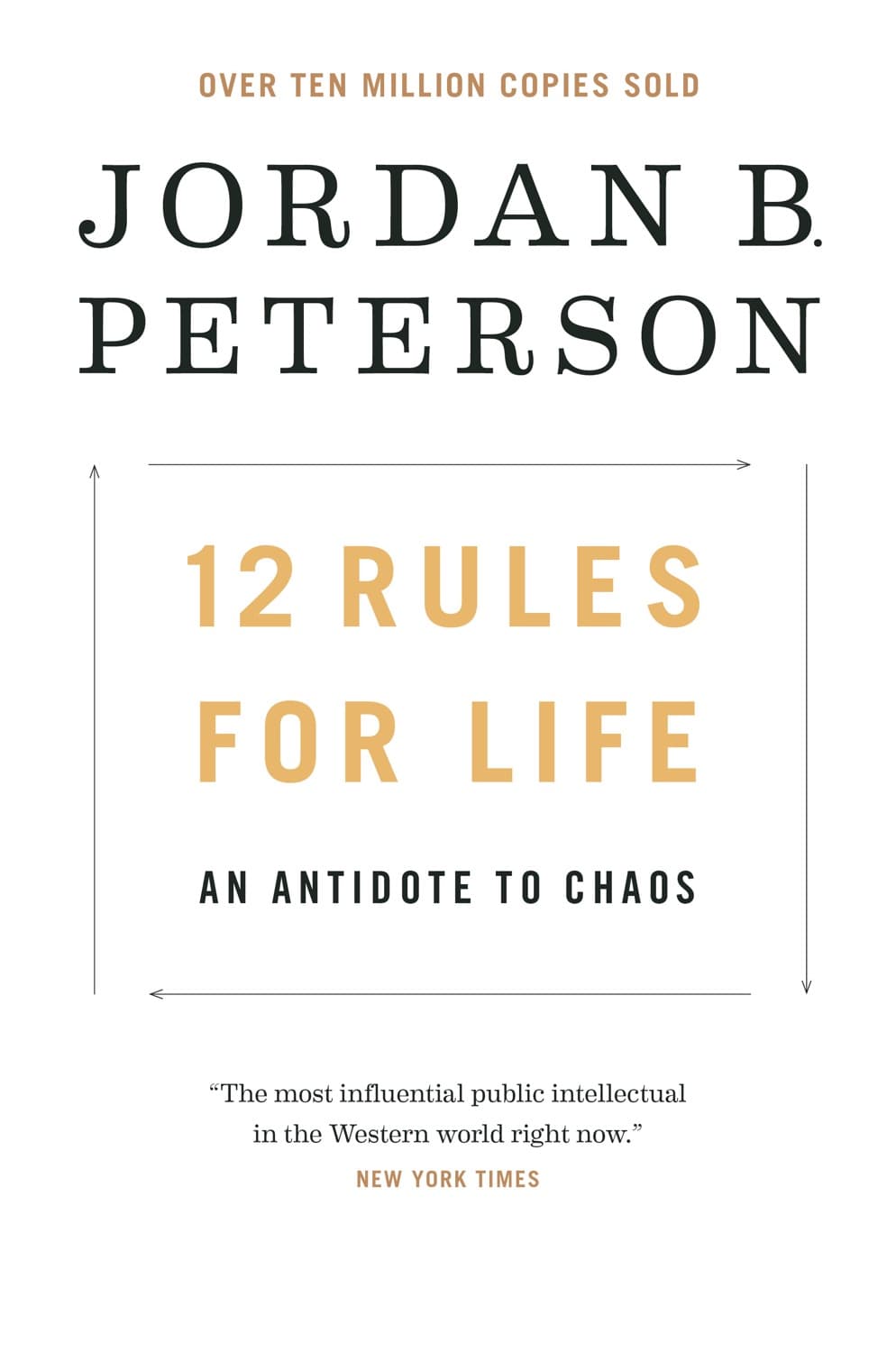
12 Rules for Life
Jordan Peterson
Free download · 500+ book summaries
What is 12 Rules for Life about?
Twelve rules for finding meaning when modern life feels chaotic. Jordan Peterson combines clinical psychology, mythology, and biology into an urgent, demanding moral framework: stand up straight, set your house in order, treat yourself like someone you're responsible for. The book that turned an obscure professor into a global cultural figure.
Key ideas of 12 Rules for Life
Posture Shapes Brain Chemistry
Standing upright sends a biological signal that shifts serotonin and affects how you feel, move, and are perceived by others.
Responsibility as Self-Care
Treating yourself like someone worth helping means making hard, honest choices for your future, not just seeking immediate comfort.
Meaning Over Expedience
Organizing life around what genuinely matters, even at real cost, produces resilience and satisfaction that comfort-seeking never delivers.
Read an excerpt from the summary
12 Rules for Life: An Antidote to Chaos
On January 16, 2018, Cathy Newman sat across from Jordan Peterson in a Channel 4 studio in London and asked him, in various formulations, the same question thirty-five times: "So you're saying..." Each time, Peterson corrected her. Each time, she tried again. The twenty-nine-minute interview was combative, often baffling, and ended with a moment that froze millions of viewers -- Newman pausing, visibly derailed, before admitting: "You got me there." Within days, clips had been viewed tens of millions of times. Peterson's book, published just eight days earlier, was suddenly selling faster than anyone at Random House Canada had prepared for. By August of that year it had moved two million copies. By 2023, more than ten million, in forty-five languages.
The book is called "12 Rules for Life: An Antidote to Chaos." It is not a self-help book in any conventional sense. It is part clinical psychology manual, part Jungian mythology, part Old Testament sermon, and part direct provocation to a culture Peterson believes has confused compassion with cowardice. The twelve rules are real rules -- concrete, sometimes uncomfortable, and argued for with a ferocity that makes most popular nonfiction read like a politely worded memo. Some of those arguments wander far from their stated rules. Some rely on science that Peterson presents as more settled than it is. But the core of the book -- that meaning, responsibility, and honest speech are the antidotes to the suffering life inevitably delivers -- lands with the force of something people already suspected but had not yet seen written down.
Like it?
Continue in the appWho is it for?
- Anyone who feels unmoored and wants a practical, demanding framework for taking responsibility over their own life.
- Anyone who struggles with self-neglect and finds it easier to care for others than to act in their own genuine interest.
- Anyone who wants to understand why honesty, precise speech, and meaningful suffering matter more than avoiding discomfort.
- Anyone who is drawn to psychology, mythology, and evolutionary biology as lenses for understanding human behavior.
About the author: Jordan Peterson
Jordan Peterson is a clinical psychologist and professor who taught at Harvard University before joining the University of Toronto. He spent decades in private practice seeing patients alongside his academic work, and that combination of clinical experience and scholarly range shapes every chapter of this book.
His first book, Maps of Meaning, published in 1999, synthesized Jungian psychology, comparative mythology, and neuroscience into a theory of how people construct meaning. 12 Rules for Life is, in many ways, that framework translated into language anyone can read on a commute.
Read it in 44 minutes
The summary of 12 Rules for Life and 500+ more books await in the BookBase app.