Ch. 1free to read
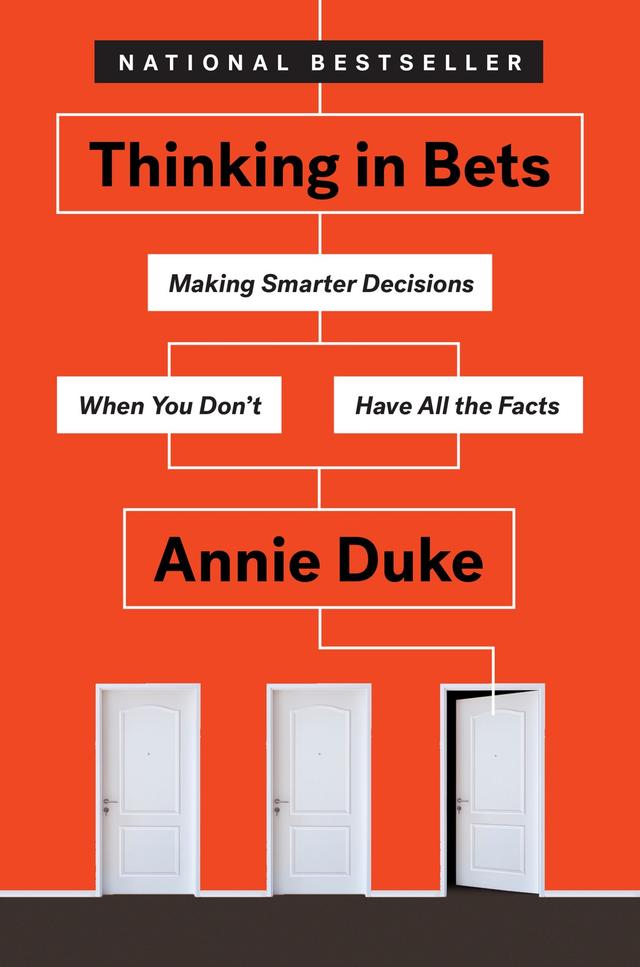
Thinking in Bets
What It’s About
Your decisions feel like they're either good or bad based on how they turn out. But much of that outcome is simply luck. After twenty years of professional poker, Annie Duke learned something most people never grasp: the quality of your decision is separate from the quality of your result. You'll learn to think in probabilities instead of absolutes, and how to build a decision group that keeps you honest when you start slipping. This kind of thinking quietly transforms your whole life.
Three Key Ideas
Decisions vs. Results
The quality of a decision is separate from its outcome, and confusing the two makes real learning from experience impossible.
Beliefs as Bets
Every belief and choice is a wager, and treating them as such forces honest examination of how confident we actually are.
Truth-Seeking Groups
A small circle committed to accountability and genuine dissent helps catch the self-serving biases that individuals consistently miss on their own.
Read a Sample
Thinking in Bets: Summary
She was twenty-six, and on paper her life was perfectly mapped out. A Columbia degree, an NSF fellowship, a PhD program in cognitive psychology at the University of Pennsylvania, a ready-made career as a research scientist. Then she got sick, left academia, moved to Montana, and suddenly had no money. Her brother, a professional poker player, mentioned a legal poker game in the basement of a small-town bar. Annie Duke walked in to take a look. She didn't walk out for twenty years.
Poker hooked her, not for the Las Vegas glamour but for something else entirely. She realized that at the card table she was doing exactly what she had wanted to do in the lab: making decisions under uncertainty, then watching what came of them. Except here it ran live every minute, with real money. And while she went on to win more than four million dollars in tournaments, poker taught her the one thing she believes decides our whole lives. That our fate is shaped by just two factors: the quality of our decisions and luck. Anyone who can't tell the two apart will never truly learn to decide well.
This book is about separating the quality of our decisions from their results. We'll look at why we almost always judge our own choices wrongly, how to make uncertainty a friend instead of an enemy, and what concrete tools can help us decide better starting tomorrow. By the end, you'll look at every "good" and "bad" decision you've ever made with new eyes.
Life is poker, not chess
Who It’s For
- Anyone who wants to make better decisions under uncertainty in business or everyday life.
- Anyone who tends to beat themselves up over bad outcomes without examining whether the decision itself was sound.
- Anyone in a leadership role who needs to build a culture of honest feedback and productive disagreement.
- Anyone curious about how poker strategy applies to risk, probability, and long-term thinking.
About the Author: Annie Duke
Annie Duke spent two decades as a professional poker player, winning more than four million dollars in tournament prize money. Before poker she studied cognitive psychology at the University of Pennsylvania, and that background shaped the way she later analyzed decision-making at the card table.
After leaving poker she became a consultant and speaker on decision strategy. She has worked with organizations across business and sports, and she is also the author of How to Decide and Quit.