Ch. 1free to read
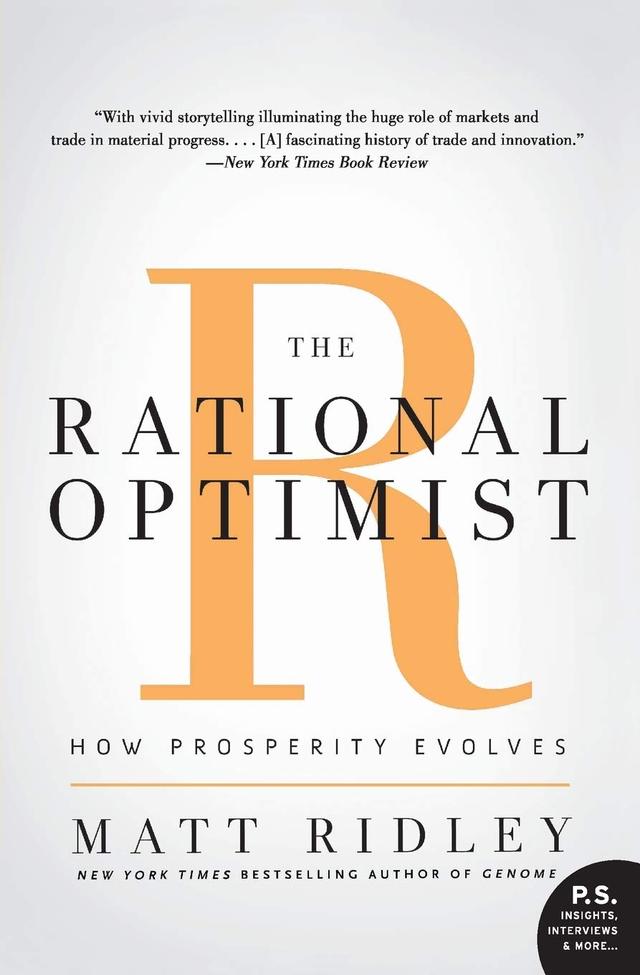
The Rational Optimist
What It’s About
The Rational Optimist addresses the major challenges humanity has faced since the beginning of civilization and describes how trade and specialization have led to innovative solutions for overcoming each new obstacle. Using insights from science, economics, and historical examples, the author reveals multiple reasons to remain optimistic about the difficulties we face today or may encounter in the future.
Three Key Ideas
Trade Drives Human Progress
Exchange between communities, not isolated effort, built the trust and knowledge networks that lifted living standards across history.
Innovation Beats Doom
Every wave of scarcity, from overpopulation to famine, has been overcome by new technologies developed through specialization and trade.
Ideas Grow When Shared
Collective knowledge compounds over time, and open exchange through cities, trade routes, and now the internet keeps accelerating human improvement.
Read a Sample
The book in 3 sentences: Trade and the exchange of ideas have made people richer, healthier and safer than ever before. Humans are the most advanced species on Earth because they can share knowledge and learn from one another. You can learn how economic development has contributed to global prosperity. Favorite quotes: “Random violence makes the news precisely because it is so rare, while routine kindness does not make the news because it is so common.” “My argument is that the human species has become a collective problem-solving machine, solving problems by changing its habits.” “The failure to invent and adopt new ideas can, in itself, be dangerous and even immoral.”
Key points: The positive effects of the invention of cooking. The downsides of innovation. The driving force behind human progress. The Positive Effects of the Invention of Cooking
Turn on the TV or open the news today and you'll run into plenty of experts. They'll warn you about the dangers of the modern world and tell you to fear the catastrophes that are on their way. They claim that new diseases are unstoppable, famine will kill billions, overpopulation will destroy the environment, and climate change will devastate the planet.
Many of these experts say we'll find the answer to these looming disasters in the past. Earlier societies didn't have our modern problems, they argue, so they must've been simpler and more idyllic. Some even claim we should model our society on theirs. In reality, this romanticized view of history is far from the truth. Life in the past was truly terrible.
Until the Industrial Revolution, life was dominated by violence, famine, disease, and early death. In early hunter-gatherer societies, neighboring tribes fought over scarce resources, so violence was common. Many ancient burial sites show evidence of whole communities massacred with blows to the head, along with wounds from arrows, spears, and lances.
Who It’s For
- Anyone who wants a data-grounded case for why the world is getting better, not worse.
- Anyone who is curious about how trade and specialization shaped civilization from cooking to the internet.
- Anyone who finds mainstream pessimism about technology, climate, and overpopulation unconvincing but lacks the arguments to push back.
- Anyone who enjoys big-picture economic history told through vivid, concrete examples across thousands of years.
About the Author: Matt Ridley
Matt Ridley is a British science writer and journalist known for making complex ideas in science, economics, and evolution accessible to general readers. He has written widely on genetics, human nature, and prosperity.
He argues consistently that bottom-up innovation and free exchange produce better outcomes than top-down control, a theme that runs through all his major books.