Ch. 1free to read
The Hero's Journey
What It’s About
Joseph Campbell's lifework distilled: the universal pattern behind every myth, religion, and meaningful life. Trace the call to adventure, the descent into the unknown, and the transformation that makes return possible. A field manual for anyone navigating change, vocation, or the search for meaning.
Three Key Ideas
Follow Your Bliss
The things that fascinated you before anyone told you they were useless are a compass pointing at what your life is actually built for.
The Monomyth Pattern
Every culture independently developed the same story structure because it maps the universal transitions every human nervous system goes through.
Myth as Transparent Metaphor
A myth is a window onto something that cannot be named directly, not a factual claim to defend or dismiss.
Read a Sample
The Hero's Journey: summary
The boy at the Wild West Show
In 1910, a six-year-old boy named Joseph Campbell went with his father to Buffalo Bill's Wild West Show at Madison Square Garden. The boy could not take his eyes off the American Indian performers. Something inside him quietly shifted.
By the time he was eleven, Joe Campbell had read every book about American Indians in the children's section of the New Rochelle public library, and the librarians let him into the adult stacks. By thirteen, in his own slightly cocky words, he knew more about Indian life than most of the anthropologists he would meet decades later. He never planned this. Nobody assigned it. He simply followed the pull of one afternoon he could not stop thinking about, and the pull turned into a life. Half a century later, he would call this the call to adventure, and argue that every meaningful life starts the same way: with a small, stubborn fascination that almost nobody around you takes seriously.
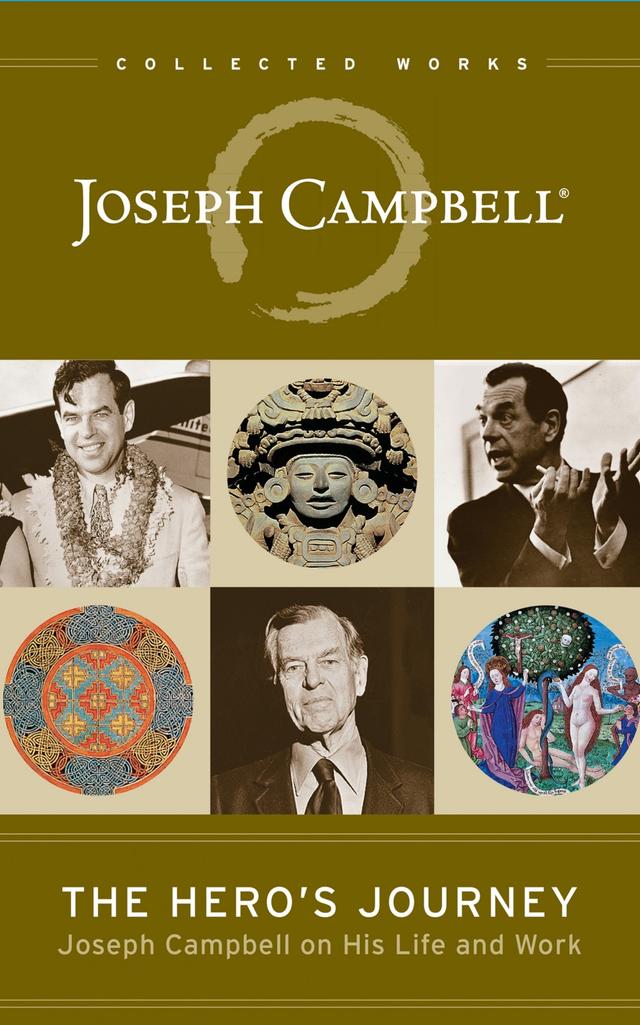
That is the seed of *The Hero's Journey*, the 1990 book edited by Phil Cousineau from conversations with Campbell recorded for a documentary about his life. It is not a textbook. It is an old man, near the end of his life, walking back through everything he learned and asking what really matters. The book answers three questions for the reader: where does a meaningful life come from, why do all the great myths sound strangely similar, and what do you do when the religion or the career path you inherited has stopped speaking to you. The answers turn out to be surprisingly practical.
Who It’s For
- Anyone who feels they took the safe path and suspects they are living someone else's life.
- Anyone who wants to understand why the same story structure shows up in every culture across human history.
- Anyone navigating a major life transition and looking for a framework that makes sense of the difficulty.
- Anyone curious about the psychological roots of religion, myth, and the stories that have moved people for millennia.
About the Author: Joseph Campbell
Joseph Campbell (1904-1987) was an American professor of literature and comparative mythology at Sarah Lawrence College, where he taught for thirty-eight years. He is best known for The Hero with a Thousand Faces (1949), which identified a universal story pattern he called the monomyth, and for the PBS series The Power of Myth, recorded with Bill Moyers shortly before his death.
Campbell spent his career synthesizing mythology, Jungian psychology, anthropology, and world religion into a single framework for understanding human meaning-making. His work directly influenced George Lucas in the creation of Star Wars and shaped a generation of filmmakers, writers, and thinkers.