Ch. 1free to read
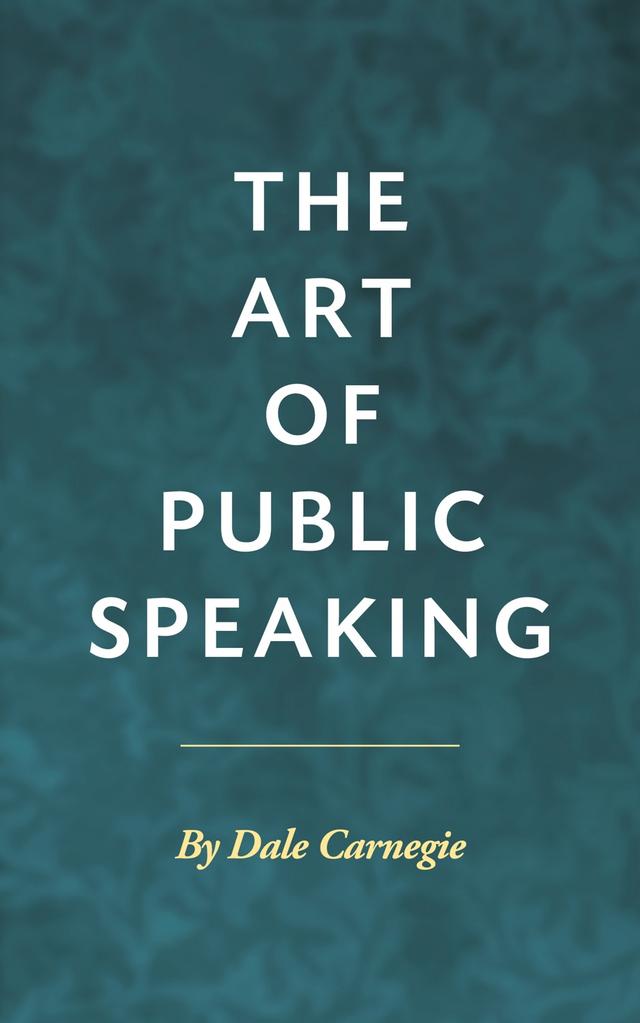
The Art of Public Speaking
What It’s About
A foundational classic on persuasive speech and confident delivery, Dale Carnegie's enduring guide teaches the principles of preparation, voice, and audience connection that turn nervous speakers into compelling communicators. Practical methods for building confidence, structuring talks, and engaging any audience with clarity and authority.
Three Key Ideas
Overcoming Stage Fright Through Exposure
Fear of speaking is a sign of sensitivity, not weakness, and the only cure is repeated practice in front of real audiences.
Vocal Variety and the Power of Pause
Monotony is the cardinal sin of public speaking, and deliberate variation in pitch, pace, and silence makes ideas land with lasting force.
Genuine Feeling Beats Polished Technique
Audiences feel the difference between performed enthusiasm and real conviction, and only authentic feeling moves people to action.
Read a Sample
The Art of Public Speaking: Summary
The night Washington Irving fell apart in front of Charles Dickens
Let's set the scene. New York in the 1840s, at a grand banquet in honor of Charles Dickens, who's touring America. The man who's been picked to introduce the world's most famous novelist is Washington Irving, the country's best-loved writer and the man who gave us Sleepy Hollow and Rip Van Winkle. He stands up and begins. Halfway through, he stops, stumbles, and sits back down. Leaning toward a friend, he whispers one sentence: "There, I told you I would fail, and I did."
That tiny moment is the way into Dale Carnegie's first book, written about twenty years before he became famous. It isn't the bestseller you've heard of. *The Art of Public Speaking*, written with J. Berg Esenwein in 1915, is the odd, sprawling textbook he poured his first years of speech coaching into before he boiled it all down into *How to Win Friends and Influence People*. Reading it today is like watching a master builder pour the foundation for a skyscraper he hasn't even imagined yet. You'll find every theme that would later make him a household name, only bigger, slower, and more honest about how frightening speaking really is.
The book asks three questions that still keep people awake the night before a wedding toast. Why do confident, intelligent people fall apart the moment a hundred pairs of eyes turn their way? What separates the speaker who puts a room to sleep from the one who gets a roomful of strangers to cry, laugh, or write a check? And in a world that mostly rewards quiet competence, how do you train yourself to actually move people when it counts?
Who It’s For
- Anyone who freezes up before presentations and wants a practical, proven path to confident delivery.
- Anyone who speaks regularly at work and wants to hold a room rather than just fill the time.
- Anyone preparing for a high-stakes moment like a wedding toast, a sales pitch, or a public address.
- Anyone who wants to communicate with more authority and leave a lasting impression in everyday conversation.
About the Author: Dale Carnegie
Dale Carnegie (1888-1955) was an American writer and lecturer best known for his 1936 book How to Win Friends and Influence People, one of the best-selling self-help books of all time. He spent decades coaching business professionals and public figures in communication and interpersonal skills.
The Art of Public Speaking, co-written with J. Berg Esenwein in 1915, predates his famous later work and draws on Carnegie's extensive experience as a speech instructor. It laid the groundwork for the principles of persuasion and audience connection that would define his career.