Ch. 1free to read
Sociologia
What It’s About
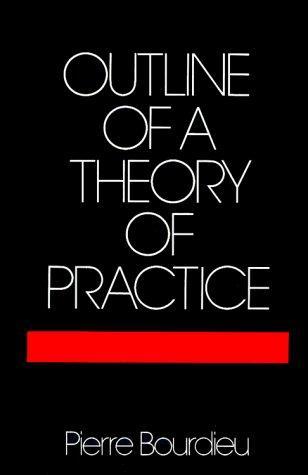
You believe your taste is yours alone, your desires are your choices, your place in life is earned. Bourdieu reveals the brutal secret: you are shaped by your origins in ways you cannot see or escape. Your accent, your reflexes, what feels natural or impossible: these are your class, inscribed in your body. The book shows how inequality rebuilds itself across generations, invisible because it feels like freedom.
Read a Sample
Sociologia: the invisible rails your life runs on
Picture yourself walking into a party where you don't know a soul. Someone comes over, you trade three sentences, and by the time you reach for your glass you've already "read" them. You've read them from their accent, their shoes, the way they order their coffee and hold the glass. You didn't decide to do it. It just happened. In a single instant you placed them somewhere on a map you didn't even know you were carrying around in your head.
Now for the uncomfortable part. They're reading you in exactly the same way. In that same second, just as automatically, they're placing you on their own map. Your clothes, your words, what you find beautiful and what you find tasteless: all of it gives you away. It doesn't reveal who you are inside. It reveals where you come from.
That insight fueled an entire life's work. The French sociologist Pierre Bourdieu spent his career studying how society settles so deeply into us that we experience its rules as our own free choices. This book is not a novel, and it is not one continuous work either. It is a collection of Bourdieu's most important essays, introduced by a Brazilian editor, Renato Ortiz. Still, it has a clean arc, and we're going to follow it. First comes the question of how we can know anything at all about society. Then come the three big concepts: habitus, field, and capital. Finally, we'll see how all of this explains our taste and the way we talk.
The big question Bourdieu answers is simple and unsettling. If nobody ever forces it, why does inequality reproduce itself generation after generation? Why does something you actually inherited feel like it's yours? And if you see through the game, can you step out of it at all?