Ch. 1free to read
Lessons in Stoicism
What It’s About
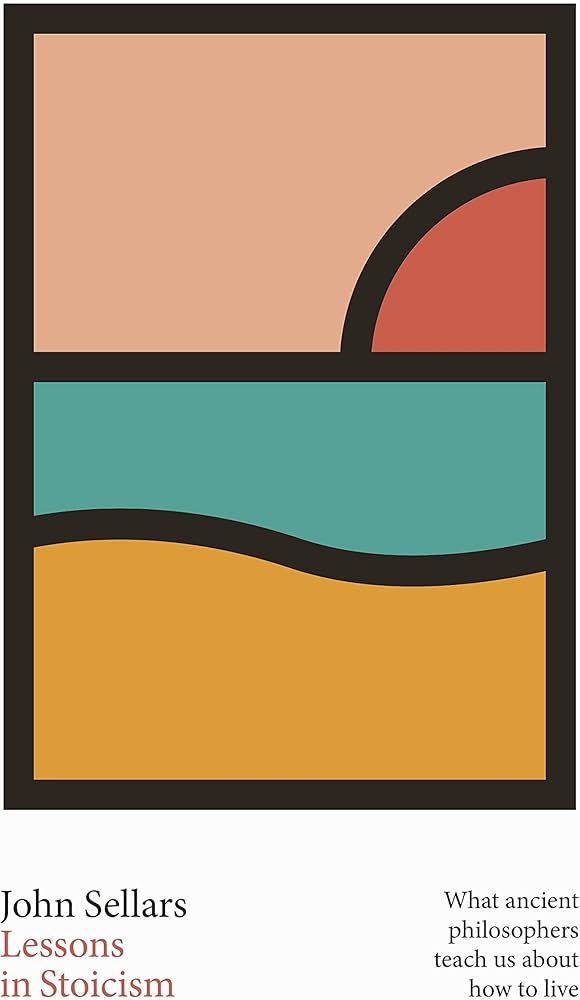
Lessons in Stoicism summarizes the enduring wisdom of ancient Stoic philosophers, focusing on their practical applications for managing emotions, facing adversity, and contemplating death. By distilling these ancient teachings into relevant guidance for modern life, it shows how Stoicism can help you make the most of your everyday experiences.
Three Key Ideas
The Dichotomy of Control
Epictetus drew a clear line between what is up to us, our judgments and responses, and what is not, freeing us from chasing things we cannot govern.
Emotions Follow Judgments
Destructive emotions like anger and bitterness arise from mistaken beliefs, and revising those beliefs at their root is the only reliable way to change how we feel.
Philosophy as Daily Practice
Seneca, Epictetus, and Marcus all treated philosophical principles as habits to rehearse each morning and evening, not ideas to merely read and admire.
Read a Sample
Why the Stoic on the Internet Isn't What He Looks Like
A man walks into a school in a small Greek town and asks the teacher what to do about his angry brother. The teacher, a former slave named Epictetus, gives him an answer he didn't ask for. Nothing. You can do nothing about your brother. The problem, Epictetus tells him, isn't your brother at all. The problem is the man standing here in the doorway, asking the wrong question.
This is what real Stoicism looks like, and it isn't what most people think. The "stoic" with a lowercase s is the man who frowns into the middle distance, swallows his feelings, and tells you to suck it up. He's all over the self-help sections of bookstores and all over social media, posing in sunglasses next to misquoted Marcus Aurelius. He is not what Seneca, Epictetus, or Marcus actually taught. John Sellars wrote this short book, under a hundred pages, to clear the air.
The three Romans at the heart of it never met each other in the flesh. Seneca, born in Spain, was tutor and then adviser to the emperor Nero. Epictetus, born a slave in what is now Turkey, eventually ran a school in the Greek backwater of Nicopolis. Marcus Aurelius was emperor of Rome from 161 to 180. They lived across a hundred-year stretch and never crossed paths. What they shared was a philosophy founded three centuries earlier in Athens by Zeno of Cyprus, taught from a colonnade called the Painted Stoa, which is where the word Stoic comes from.
The earlier Stoics, Zeno, Cleanthes, Chrysippus, wrote piles of books and we have almost none of them. The texts didn't make the jump from papyrus to parchment when the technology changed, so we know them through fragments and quotations preserved by later writers. What survives whole is the three Romans: Seneca's essays and letters, Epictetus's lectures transcribed by his pupil Arrian, and Marcus's private notebook, the Meditations, which was never meant for anyone else to read.
Who It’s For
- Anyone who feels overwhelmed by anxiety, anger, or frustration and wants practical tools grounded in ancient philosophy.
- Anyone who has heard of Stoicism online but suspects the popular version leaves out something important.
- Anyone facing a period of adversity, loss, or uncertainty and looking for a tested framework to stay steady.
- Anyone who wants a short, honest introduction to Epictetus, Seneca, and Marcus Aurelius without academic jargon.
About the Author: John Sellars
John Sellars is a philosopher and scholar specializing in ancient philosophy, with a particular focus on Stoicism and its reception in later thought. He teaches at Royal Holloway, University of London.
He has written and edited several books on Stoic philosophy and its history, making ancient texts accessible to general readers without sacrificing rigor. He is also associated with the Modern Stoicism project, which promotes evidence-based engagement with Stoic ideas today.