Ch. 1free to read
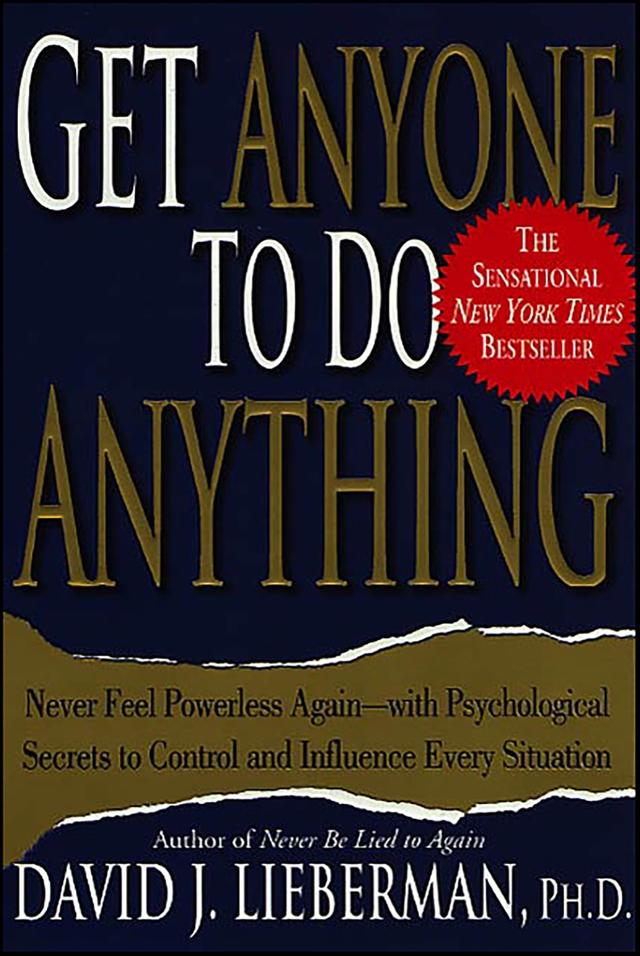
Get Anyone to Do Anything
What It’s About
Human behavior follows predictable psychological laws, not chance. If you understand these rules, you can influence almost anyone to listen, open up, or see things your way. Lieberman reveals that liking, attraction, and trust all stem from the same source. It's not about who you are, but how people feel about themselves in your presence.
Three Key Ideas
The Law of Association
People project their current mood onto whoever is nearby, so timing your interactions around good feelings dramatically increases liking and cooperation.
Scarcity and Perceived Value
What is rare feels more valuable, so rationing your availability in relationships and anchoring high in negotiations both shift how others treat you.
Identity-Based Influence
Lasting behavior change comes from connecting a request to how someone sees themselves, not from arguing harder or offering better logical reasons.
Read a Sample
Get Anyone to Do Anything: Summary
Picture yourself at a bus stop when you suddenly feel sick. You're nauseous, your head is pounding, and all you want is to get home. A stranger next to you keeps trying to make small talk about the weather. You never want to see this person again. Yet they did nothing wrong. They just happened to be there while you felt terrible.
Now flip the scene. Same stranger, same bus stop, but this time you're planning a vacation on your phone. You're smiling, in a great mood, and suddenly that person seems more likable. You might even ask for their number. The person is the same. The difference is how you felt while they stood beside you.
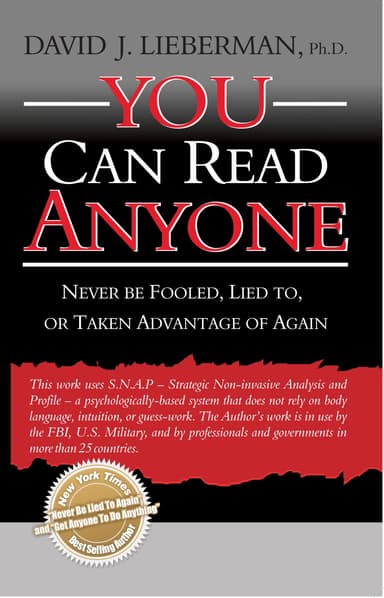
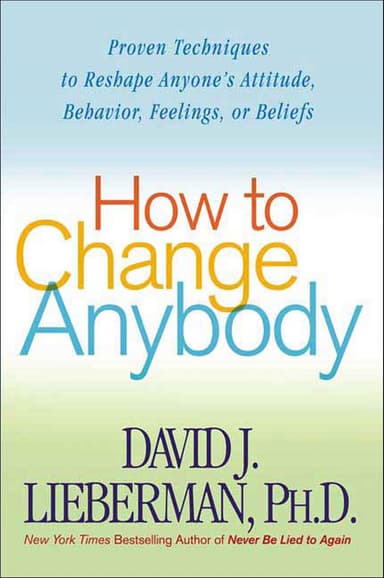
The psychologist David J. Lieberman built a whole book around this one, almost embarrassingly simple insight: human behavior isn't random. It follows predictable psychological laws. Not tricks, laws. They work like gravity, except they operate in human relationships. Most of us use them without realizing it and without aim, and sometimes they get us a good result and sometimes the exact opposite. The book promises that once you understand these laws and use them on purpose, you can steer the outcome in almost any situation. That covers how to get anyone to like you, open up to you, take your advice or forgive you. And maybe even more important, how to never again be taken in by someone trying to manipulate you.
Why we like someone, and why we don't
Who It’s For
- Anyone who wants to build stronger personal and professional relationships without resorting to manipulation.
- Anyone who struggles to get cooperation from stubborn or resistant people at work or at home.
- Anyone who wants to recognize when psychological tactics are being used against them so they can push back.
- Anyone who needs practical, research-backed scripts for difficult conversations, apologies, and asking for favors.
About the Author: David J. Lieberman
Dr. David J. Lieberman is an American psychologist and the author of several books on human behavior, influence, and interpersonal dynamics. He draws on behavioral psychology research to translate academic findings into practical, everyday techniques.
His work sits in the tradition of Robert Cialdini and Dale Carnegie, focusing on how people make decisions and how understanding those processes can improve relationships rather than exploit them.