Ch. 1free to read
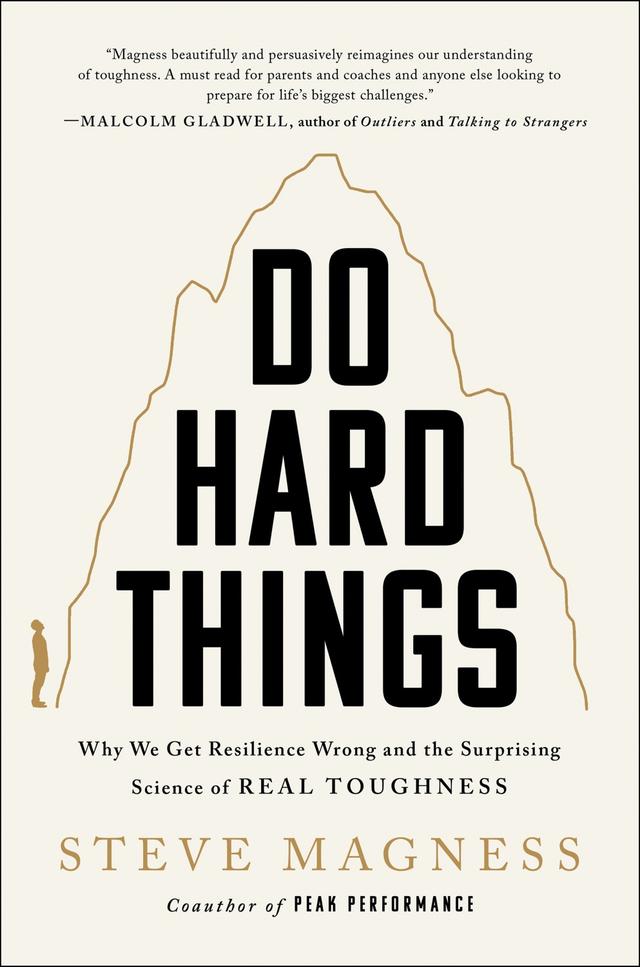
Do Hard Things
What It’s About
True strength isn't about grinding through pain and fear—it's about listening to them and still making the right call. In this book, Steve Magness dismantles the old toughness myth that relies on emotional suppression and brute force, showing it actually creates fragility. Real resilience rests on four pillars: facing reality as it is, tuning into your emotions, making deliberate choices, and building a supportive environment. You'll discover how to tackle genuine challenges without falling apart when things get hard.
Three Key Ideas
Toughness Myths Breed Fragility
Authoritarian coaching and forced emotional suppression produce people who collapse under real stress, not resilient performers.
Accurate Self-Knowledge Protects Performance
Knowing precisely what you can handle and what a task demands shields you from panic when difficulty exceeds expectation.
Emotions Are Signals, Not Enemies
Bodily feelings carry useful information, and naming them accurately restores control and improves decision-making under pressure.
Read a Sample
Do Hard Things: A Summary
A boy is lying on the track, and he can't breathe. He's running a one-mile race, and his dream is to finish it in under four minutes. At nine hundred meters, something goes wrong. His vocal cords, which should open to let air in, snap shut instead. He makes high, wheezing sounds, like someone who's drowning. Then he collapses on the track, panic-stricken. Not because he's weak. Because his body is doing exactly what he was taught to do his whole life: trying to bulldoze through something you cannot bulldoze through.
This boy is named Steve Magness, and he spends a year going from specialist to specialist before anyone figures out what's wrong with him. Paradoxical vocal cord dysfunction. His vocal cords overreact to stress and clamp shut at the very moment he most needs them open. And the solution is not what you'd expect. He doesn't need to fight harder. He needs to let go. He has to learn to relax and breathe steadily at exactly the moment the discomfort is highest. Out of that one realization grew an entire book about what we get wrong when we say: be tough.
This book asks the question most of us never do: is toughness really what we think it is? Magness tears down the old, macho model of toughness and builds a different one in its place, standing on four pillars. We'll look at why the "grit your teeth and push through" approach fails, how our emotions send us messages, and why the strongest people are the ones who dare to look weak. By the end, you'll see that word, tough, with new eyes.
The Tough Coach Who Raised Fragile People
Who It’s For
- Anyone who wants to understand why "grit your teeth and push through" advice often backfires.
- Anyone who leads a team, coaches athletes, or raises children and wants to build genuine resilience.
- Anyone who struggles with anxiety, self-doubt, or burnout and is looking for a grounded, science-backed framework.
- Anyone who is curious about the psychology of peak performance and what actually separates elite performers from the rest.
About the Author: Steve Magness
Steve Magness is a performance coach and sports scientist who has worked with Olympic athletes and professional runners. He is the co-author of Peak Performance and The Passion Paradox.
His personal experience with a paradoxical vocal cord dysfunction, where pushing harder made things worse, led him to question mainstream toughness culture and build the evidence-based model this book presents.