Ch. 1free to read
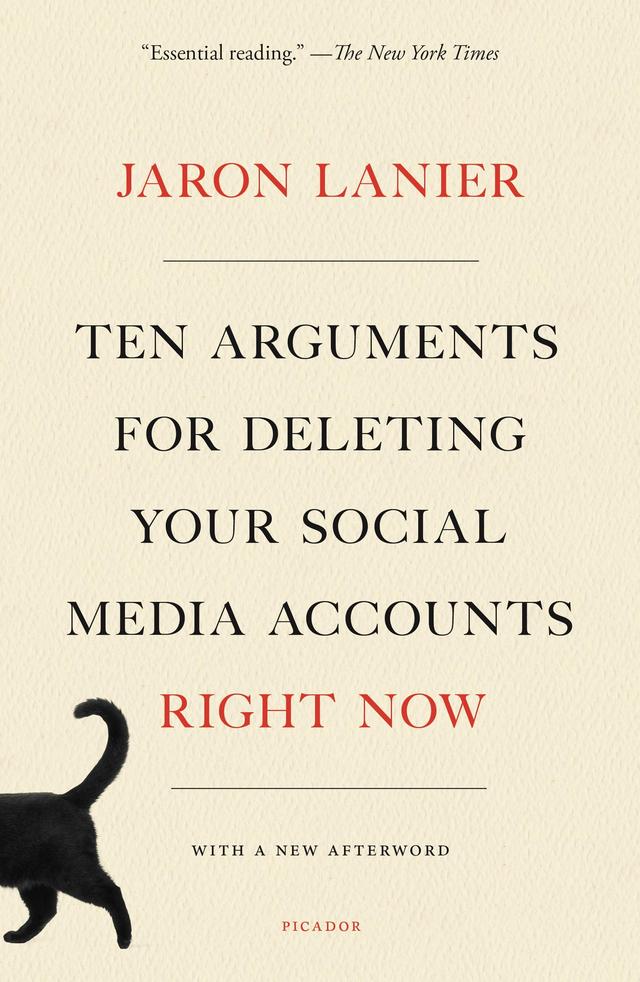
10 Arguments for Deleting Your Social Media Account
What It’s About
The book Ten Arguments for Deleting Your Social Media Accounts Right Now shows why you should leave social media. It makes it impossible to experience true joy, turns you into a jerk, erodes the truth, kills empathy, takes away free will, keeps the world in madness, destroys credibility, blocks economic dignity, creates chaos in politics, and, not to mention, it hates you.
Three Key Ideas
Algorithmic Behavior Modification
Social media platforms use unpredictable reward schedules and personalized feeds to condition users' behavior at scale, eroding genuine free will.
BUMMER Business Model
The core problem is a business model that lets third parties pay to modify users' behavior, which systematically amplifies negativity and misinformation.
Social Media Degrades Democracy
Personalized feeds destroy shared reality, fuel tribalism, and have been exploited to suppress votes and incite real-world violence across the globe.
Read a Sample
Introduction: How to Be a Cat
Jaron Lanier opens with a question about animals. Think about how a dog differs from a cat. Over thousands of years, dogs have been bred and trained to obey. Whistle, and the dog comes running. A cat is different. Cats wandered into human settlements on their own terms, decided the hunting was good, and stayed. They never fully gave up their independence. You can live with a cat for years, and it'll still do exactly what it wants. Nobody's ever managed to make a cat heel.
Lanier wants you to be a cat.
The trouble is that the technology most of us carry in our pockets is designed to turn us into dogs. It doesn't use force, or anything as crude as an obvious command. It uses a constant, invisible system of rewards and punishments tuned to shape what we do. The phone buzzes. We come running. Lanier isn't a technophobe shouting from the sidelines. He's one of the founding figures of virtual reality, a Silicon Valley insider who built some of the early tools of the digital age and still works in the industry. That's exactly why his warning lands harder. He's describing a machine he helped build, and he's telling you to walk away from it.
He finished this book in early 2018, just as the Cambridge Analytica scandal broke. The manuscript was already at the printer when news spread that a political consulting firm had harvested the data of millions of Facebook users to target them with manipulative messaging. A grassroots movement sprang up under the banner of deleting Facebook. Lanier had sharp words for the commentators who agreed the situation was outrageous but kept their own accounts open anyway. If you're free to quit and you don't, he argued, you're not standing in solidarity with people who feel trapped. You're reinforcing the very system that traps them.
Who It’s For
- Anyone who feels anxious, distracted, or worse about themselves after scrolling social media feeds.
- Anyone who wants to understand how online platforms are designed to shape political opinion and behavior.
- Anyone who works in tech and wants an insider's honest account of what the attention economy actually does to people.
- Anyone who is concerned about the state of public truth, democratic participation, and economic fairness in the digital age.
About the Author: Jaron Lanier
Jaron Lanier is a computer scientist, musician, and author who is widely regarded as a founding figure of virtual reality. He worked in Silicon Valley from the early days of the digital age and has spent decades inside the technology industry, giving his critiques of it an unusual firsthand authority.
He has written several books examining the social and economic consequences of digital technology, including Who Owns the Future, in which he first developed the concept of data as labor. His background as both a builder and a critic of these systems sets him apart from most commentators on tech.